
Product Category
k5 Brg · IT5 Coupling · G1.0 Balance · ZERO BL
ST / 001 — 008
Zero-Backlash Ground
Servo Transmission Shafts
Precision CNC ground servo transmission shafts for zero-backlash servo drive trains — bearing seats k5 (press-fit), spline and coupling interfaces IT5, dynamic balance ISO 1940-1 G1.0, Ra 0.4 µm ground. Engineered for servo motor gearboxes, direct-drive axes, robot reducers, and precision positioning stages.
k5
Brg Seat Fit
IT5
Spline / Coupling
G1.0
Balance Grade
PART DWG · ST-000 SERVO TRANSMISSION SHAFT · 42CrMo4 IH HRC 58
ISO 9001 · k5 GROUND · G1.0 BALANCED
Zero-Backlash · k5
G1.0 Balanced
Servo · Gearbox · Robot · CNC · Direct-Drive · Spindle
Drive Trains
42CrMo4 · 20CrMnTi · GCr15 · SUS440C · Al 7075
Materials
48hr Quote · 5-Day Proto
Service
k5
Bearing Seat Fit
standard servo grade
standard servo grade
IT5
Spline / Coupling
zero-backlash interface
zero-backlash interface
G1.0
Dynamic Balance
ISO 1940-1 standard
ISO 1940-1 standard
5 Days
Fastest Delivery
prototype shafts
prototype shafts
Our Work
Request Similar Part →
Servo Transmission Shafts We Have Made
Precision CNC machined servo transmission shafts for automotive, robotics, aerospace, medical, and industrial applications.
 42CrMo4 · Industrial
Servo Transmission Shaft — Industrial
42CrMo4 · Hardened · 200 pcs
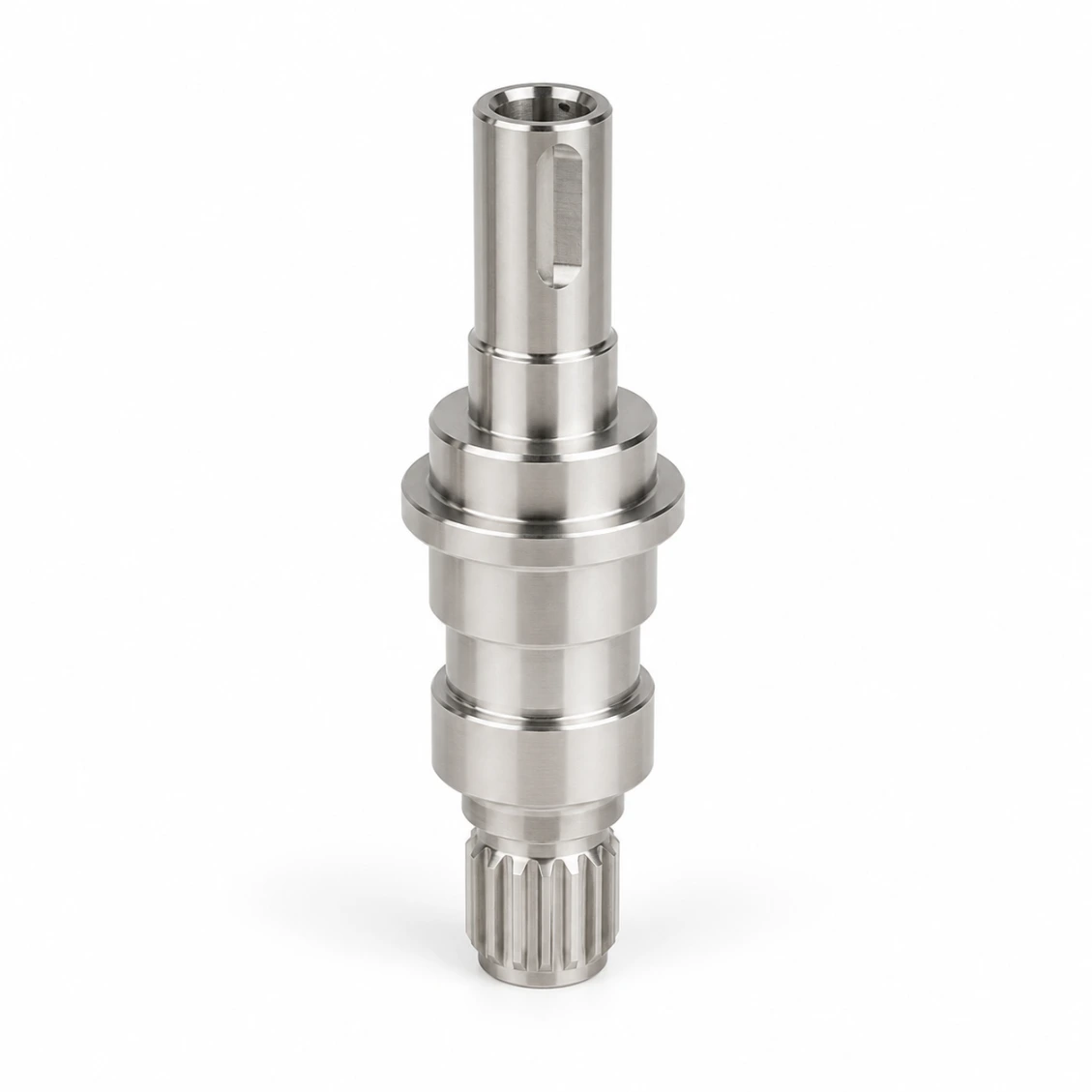 SUS316L · Medical
Servo Transmission Shaft — Medical Device
SUS316L · Passivated · 50 pcs
 Al 7075 · Robot
Servo Transmission Shaft — Robot
Al 7075 · Anodized · 80 pcs
 Ti Grade 5 · Aero
Servo Transmission Shaft — Aerospace
Ti Grade 5 · 15 pcs
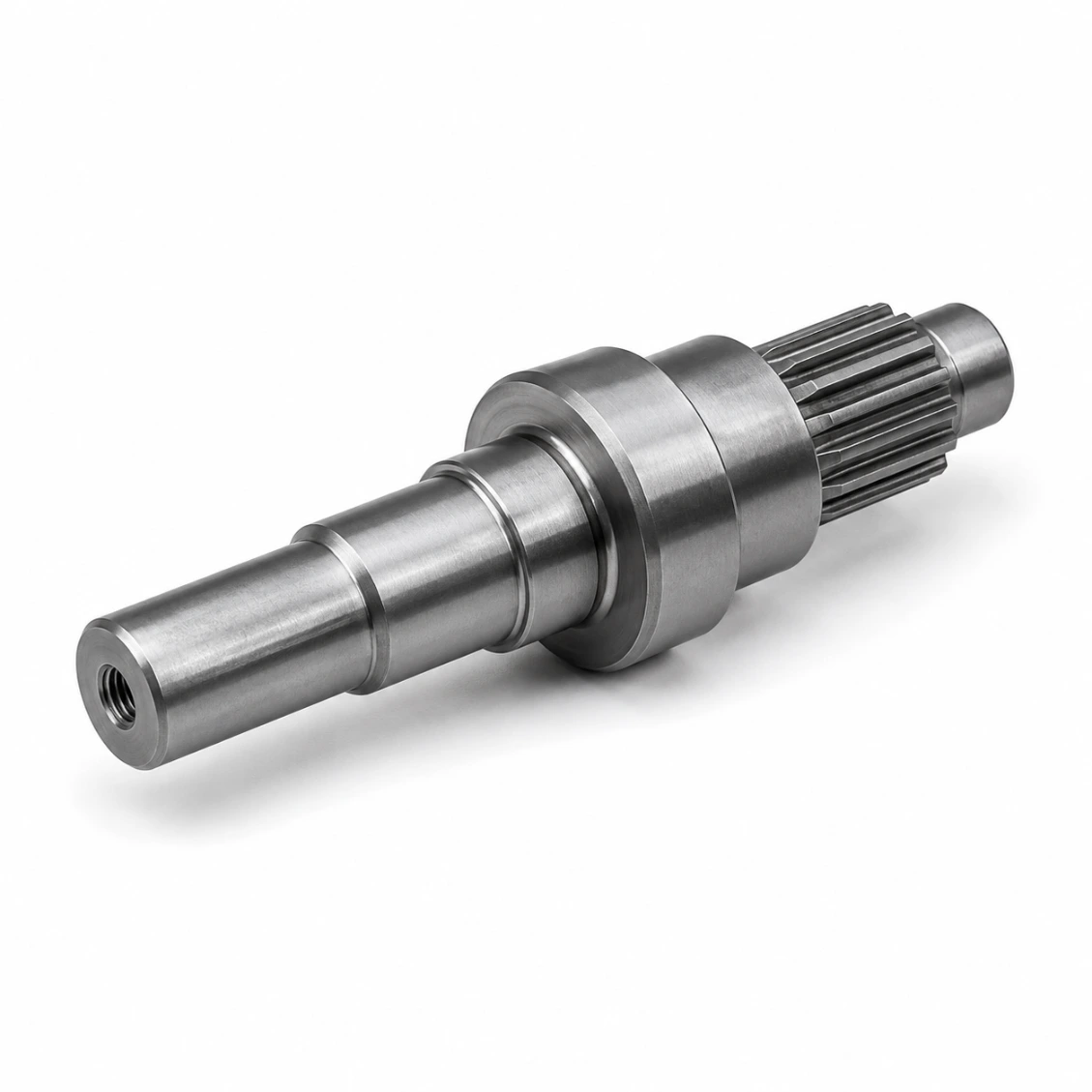 C45 · General
Servo Transmission Shaft — General
C45 · 300 pcs
 SUS303 · Instrument
Servo Transmission Shaft — Instrument
SUS303 · Ra 0.2µm · 100 pcs
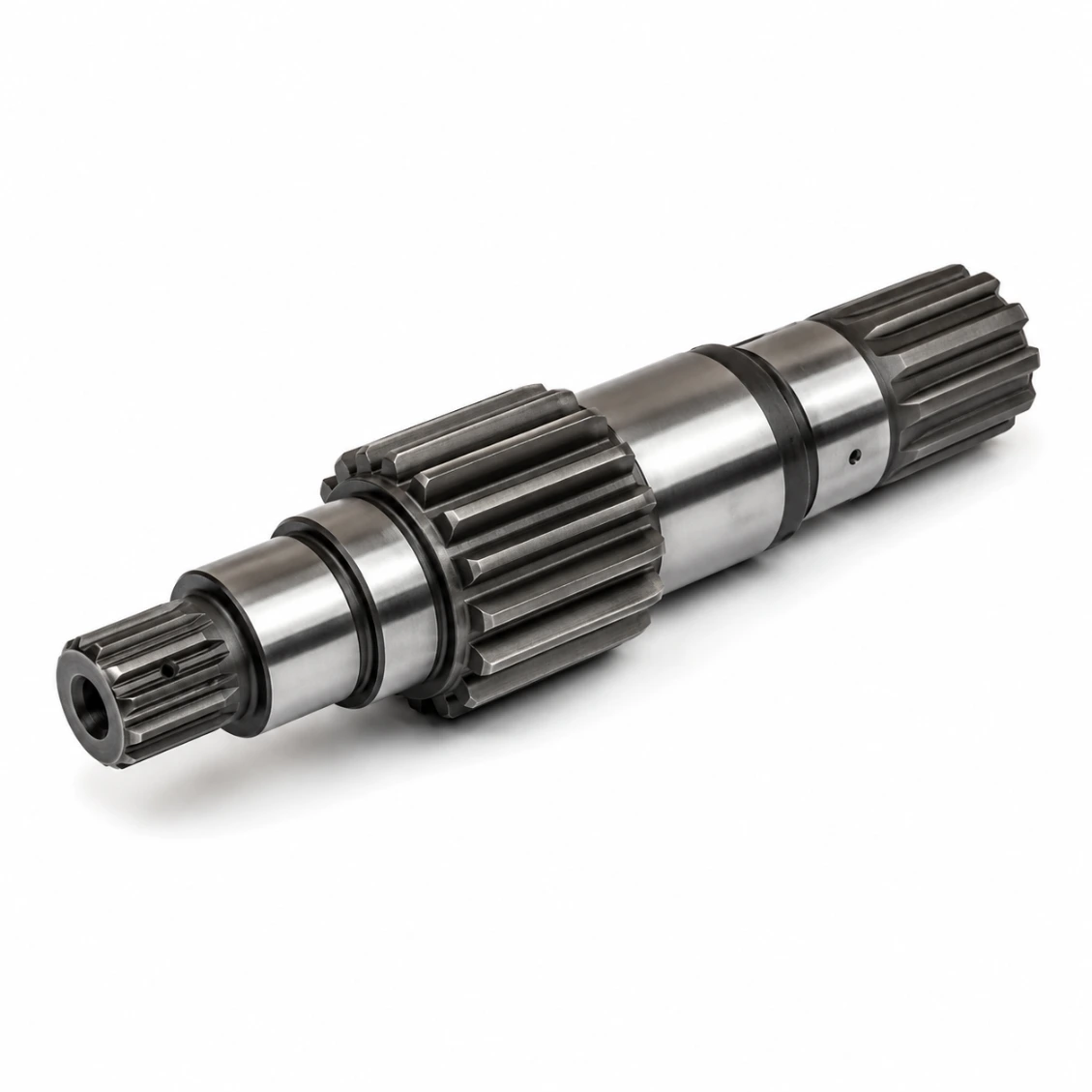 20CrMnTi · Drive
Servo Transmission Shaft — High Torque
20CrMnTi · Carburized · 150 pcs
 CMM Verified
Servo Transmission Shaft — Full CMM Report
Every piece CMM + balance verified
How It Works
From Drawing to Finished Part
Upload your drawing — material, tolerances, and surface treatment. Quote in 48 hours.
01
Upload Drawing
STEP, DXF, PDF, or sketch with key dimensions and tolerances.
02
Quote in 48h
Material, process, surface treatment, and firm lead time.
03
CNC Machine & Inspect
Precision turning, grinding, CMM verification, surface treatment.
04
Ship Worldwide
Full dimensional report. DHL / FedEx / sea freight.
Reviews
Trusted Servo Transmission Shafts Manufacturer
★★★★★
"Excellent dimensional consistency across every batch. CMM report matched our incoming inspection perfectly. Lead time as promised."
AK
Alex K.
Mechanical Engineer · Germany
★★★★★
"HXC's DFM review caught two design issues before production. Finished parts were perfect first time. Strongly recommended."
SL
Sophie L.
Design Engineer · France
★★★★★
"Three years sourcing precision shafts from HXC. Quality consistent, lead times reliable, engineers always responsive."
JT
James T.
Senior Engineer · UK
FAQ
Servo Transmission Shafts — Frequently Asked Questions
Technical and sourcing questions answered by our engineers.
A servo transmission shaft is a precision shaft that connects a servo motor to its driven load through a zero-backlash drive train — typically consisting of bearing journals, a coupling interface at the motor end, and a gear / spline / belt interface at the load end. The shaft must have: accurate bearing seat tolerances (k5) to prevent fretting; correct coupling interfaces for zero-backlash transmission; and dynamic balance G1.0 for smooth, quiet operation at servo speeds.
Common servo coupling interfaces: Keyway (simple, low cost, but has backlash from keyway clearance — not ideal for zero-backlash); Clamping hub coupling (zero backlash, radially clamped — requires h6 shaft OD); Spline (DIN 5480 grade 5–6 for zero-backlash); Bellows / disc coupling flange (bolted, zero backlash, accommodates misalignment). For servo axes, clamping hub or disc coupling is recommended over keyways to achieve zero backlash.
Servo drives operate at speeds where residual shaft imbalance creates significant vibration. At 3,000 RPM, a 1 gram·mm imbalance on a 5 kg shaft produces a force of approximately 5 N — enough to cause detectable vibration in a precision machine. At 6,000 RPM, the same imbalance produces 20 N — causing measurable axis position noise. HXC balances all servo transmission shafts to G1.0 (or G0.4 on request) to keep vibration below measurable levels.
The first critical speed (resonant speed) of the shaft must be above the maximum operating speed — ideally by a factor of 1.3× or more for safety. Critical speed is proportional to shaft diameter and inversely proportional to shaft length. For most servo transmission shafts, critical speed is not a concern at typical servo speeds (under 6,000 RPM); for high-speed direct-drive spindles (above 20,000 RPM), rotor dynamics analysis is required and HXC engineers can advise on shaft sizing.
Prototype (1–5 pcs, hardened + ground + balanced): 5–8 days. Small batch (10–50 pcs): 8–12 days. Production (100–1,000 pcs): 10–16 days. Stainless or titanium: add 2–4 days. G0.4 balance grade: add 1–2 days. Rush production available.
42CrMo4 (induction hardened) for general servo gearboxes — the most common choice. 20CrMnTi (carburized) for robot reducers and high-cycle drive trains. GCr15 (SUJ2 / 100Cr6) through-hardened bearing steel for direct-drive axes. SUS440C hardenable stainless for clean-room and vacuum-chamber servo. SUS303/316L for pharma and lab automation. Al 7075 hard-anodized for lab-automation lightweight axes.
Standard ground OD: Ra 0.4 µm. Precision bearing seats: Ra 0.2 µm. Mirror finish for high-speed seal seats: Ra 0.1 µm. All measured by contact profilometer and reported on the inspection certificate.
Yes — DIN 5480 splines, DIN 6885 keyways, threaded ends, cross-holes, D-flats, and tapered ends are all machined in the same 5-axis turn-mill setup. Concentricity between coupling end, bearing journals, and load output stays within 0.003 mm TIR — the single setup is what makes zero-backlash transmission achievable.
Yes — and they often do. A typical servo transmission shaft has a clamping hub interface at the motor end (smooth h6 OD) and a spline at the load end (DIN 5480 IT5). Or a keyway-driven gear at one end and a disc-coupling flange at the other. Specify each end separately on your drawing — HXC engineers will confirm the geometry before quoting.