info@hxcnc.com Shenzhen, China Reply within 24 hours
ISO 9001 : 2015 Get Instant Quote

Brass CNC Machining

Brass CNC
Machining

C360 Free-Cutting Brass C260 Cartridge Brass Machinability Rating 100% Bar-Fed & Swiss Turning Plumbing · Electrical · Instrumentation

Precision CNC machining of C360 and C260 brass — the fastest-machining engineering metal available. Fittings, connectors, valve bodies, instrument hardware, and high-volume precision turned components with excellent surface finish directly off the machine.

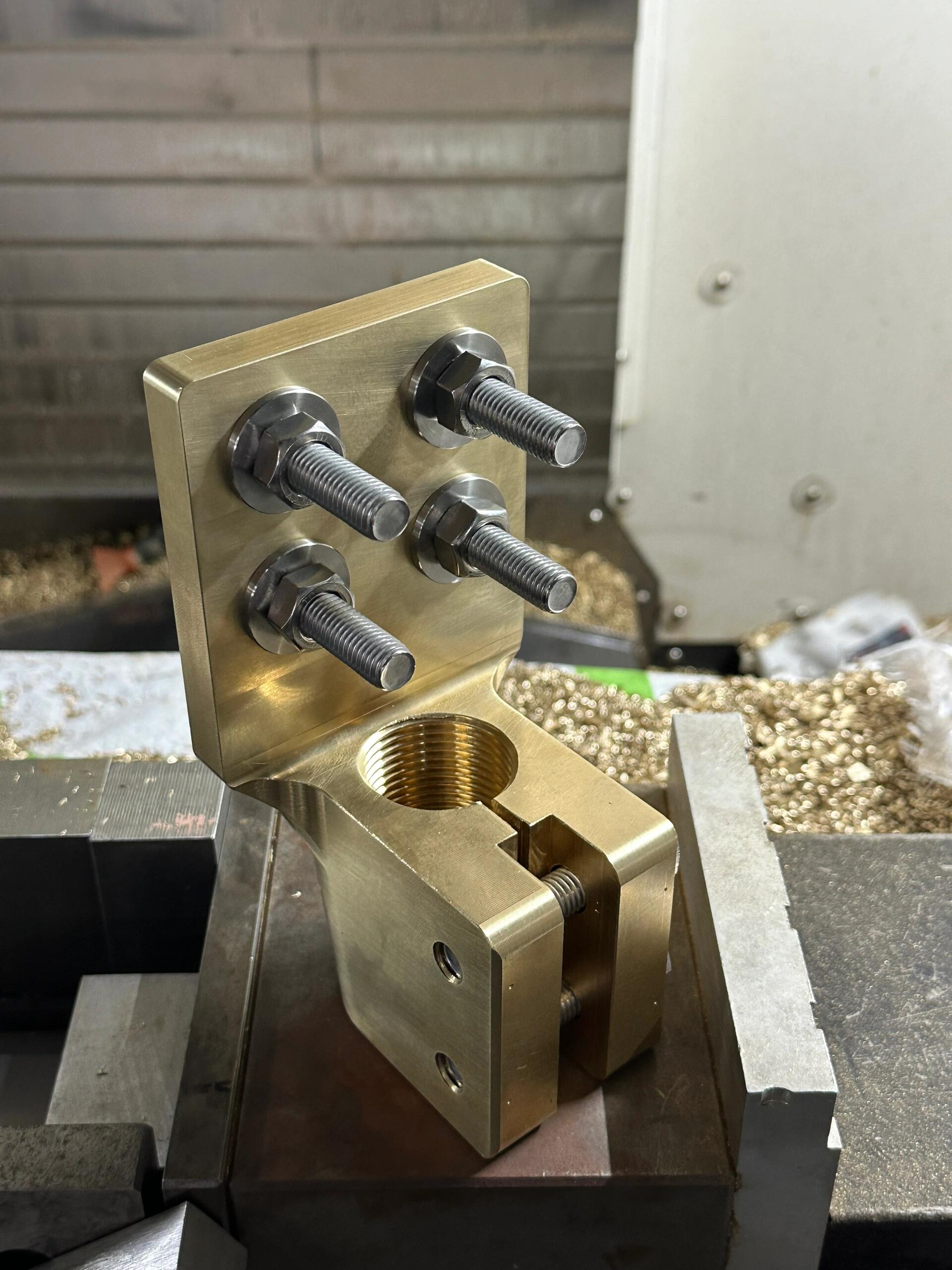
Brass CNC Machined Fittings and Connectors
Machinability
100% Rating
Brass Bar-Fed CNC Turning
Brass Plumbing Fittings CNC
C360/C260
Primary Grades
100%
Machinability Rating
±0.01mm
Standard Tolerance
24hr
Quote Turnaround
C360 Free-Cutting Brass C260 Cartridge Brass Machinability Rating 100% Bar-Fed CNC Turning Swiss Turning Plumbing Fittings & Valves Electrical Connectors Instrumentation Hardware Prototype to 100K+ Production C360 Free-Cutting Brass C260 Cartridge Brass Machinability Rating 100% Bar-Fed CNC Turning Swiss Turning Plumbing Fittings & Valves Electrical Connectors Instrumentation Hardware Prototype to 100K+ Production
Material Grades

Brass Grades We Machine

C360
UNS C36000 · Free-Cutting Brass · 61.5Cu / 35.5Zn / 3Pb
Free-Cutting Brass — Machinability Reference Standard
Machinability Rating 100% — The Reference Metal
The fastest-machining engineering metal available. Lead particles embedded in the brass matrix act as built-in chip breakers and lubricants — producing short, clean chips, exceptional surface finish, and dramatically reduced cutting forces. C360 is the machinability baseline against which all other metals are measured. Ideal for any high-volume precision turned part where corrosion requirements permit lead and there are no RoHS restrictions.
Machinability: 100% (reference standard)
Lead content: ~3% — not RoHS / potable water compliant
Corrosion resistance: Good (atmospheric, fresh water)
FittingsValve BodiesConnectorsHardwareScrew Products
View C360 Details
C260
UNS C26000 · Cartridge Brass · 70Cu / 30Zn · Lead-Free
Cartridge Brass — Lead-Free, High Ductility
Lead-Free · RoHS Compliant · Best Ductility
Higher copper content (70%) than C360 gives C260 superior ductility, cold formability, and a warm, richer gold appearance. Lead-free — suitable for drinking water applications (NSF/ANSI 61), RoHS-regulated electrical equipment, and food-contact components. Lower machinability than C360 but still significantly easier to machine than steel. The correct brass when lead restrictions apply or when parts require cold forming, deep drawing, or stamping in addition to machining.
Machinability: ~30% — still faster than most steels
Lead-free — RoHS & NSF/ANSI 61 potable water compliant
Excellent cold formability for combined form+machine parts
Drinking WaterRoHS PartsDecorativeFormed PartsElectrical
View C260 Details
Which grade should I specify?
Choose C360 when…
Maximum throughput is the priority · No RoHS restriction · No potable water / food contact · General industrial fittings, connectors, valves, instrument hardware · High-volume bar-fed or Swiss turning where every second of cycle time matters
Choose C260 when…
RoHS compliance required · Drinking water / potable water contact (NSF/ANSI 61) · Food contact application · Part will also be cold-formed, deep-drawn, or stamped · Decorative finish requires richer gold color · Lead-free required by customer specification
?
Not sure? Ask us
Upload your drawing and tell us the application — we will confirm the right grade, plating options, and any compliance considerations before quoting.
Why Brass

C360 — The Fastest Machining Metal Available

100%
Machinability Rating
C360 is the reference standard — all other metals are rated relative to it. No engineering metal machines faster.
3–5×
Faster Than Stainless
C360 runs at 3–5× the cutting speed of 304 stainless steel with longer tool life and better surface finish per pass.
Ra 0.4
Surface Finish As-Turned
Bright, smooth Ra 0.4 μm surface directly off the CNC lathe — no secondary polishing required for most applications.
↓ Cost
Lowest Machining Cost
Short cycle times + long tool life + no secondary finishing = the lowest machining cost per part of any engineering metal.

Machinability ratings measure the relative cutting speed achievable at standard tool life — higher is faster, more economical, and produces better surface finish. C360 at 100% is the universally accepted reference material.

C360 Brass
100%
Reference
6061 Aluminium
~90%
Close Second
1018 Carbon Steel
~78%
Good
303 Stainless
~45%
Moderate
C260 Brass
~30%
Lead-Free
Important context: C260 at ~30% may look modest, but it still significantly outperforms most steels and all stainless grades. For lead-free applications, C260 remains an excellent machining choice.
Grade Comparison

C360 vs C260 — Detailed Comparison

Property C360 Free-Cutting C260 Cartridge 304 SS (ref) 1018 Steel (ref)
Composition 61.5Cu / 35.5Zn / 3Pb 70Cu / 30Zn (lead-free) 18Cr / 8Ni / Fe Fe / 0.18C
Machinability ★★★★★ 100% ★★★ ~30% ★★ ~45% ★★★ ~78%
Tensile Strength ~340–470 MPa ~300–900 MPa (varies) ~515 MPa ~400 MPa
Cold Formability Limited Excellent Moderate Good
Weldability Not Recommended Braze preferred Excellent (304L) Excellent
RoHS Compliant ✗ No (Lead) ✓ Yes ✓ Yes ✓ Yes
Potable Water (NSF 61) ✗ Not Permitted ✓ Compliant Depends on grade ✗ Not Typical
Electrical Conductivity ~26% IACS ~28% IACS ~2% IACS ~9% IACS
Surface Finish As-Turned Ra 0.4 μm (excellent) Ra 0.8 μm (good) Ra 0.8–1.6 μm Ra 0.8–1.6 μm
Best Use Case High-volume bar-fed turning, fittings, valves, connectors Lead-free parts, RoHS, potable water, formed parts Corrosion-critical parts Structural, weldable parts
Manufacturing Capability

How We Machine Brass Parts

Bar-Fed CNC Turning C360 Brass High Volume
PROCESS / 01
Bar-Fed CNC Turning
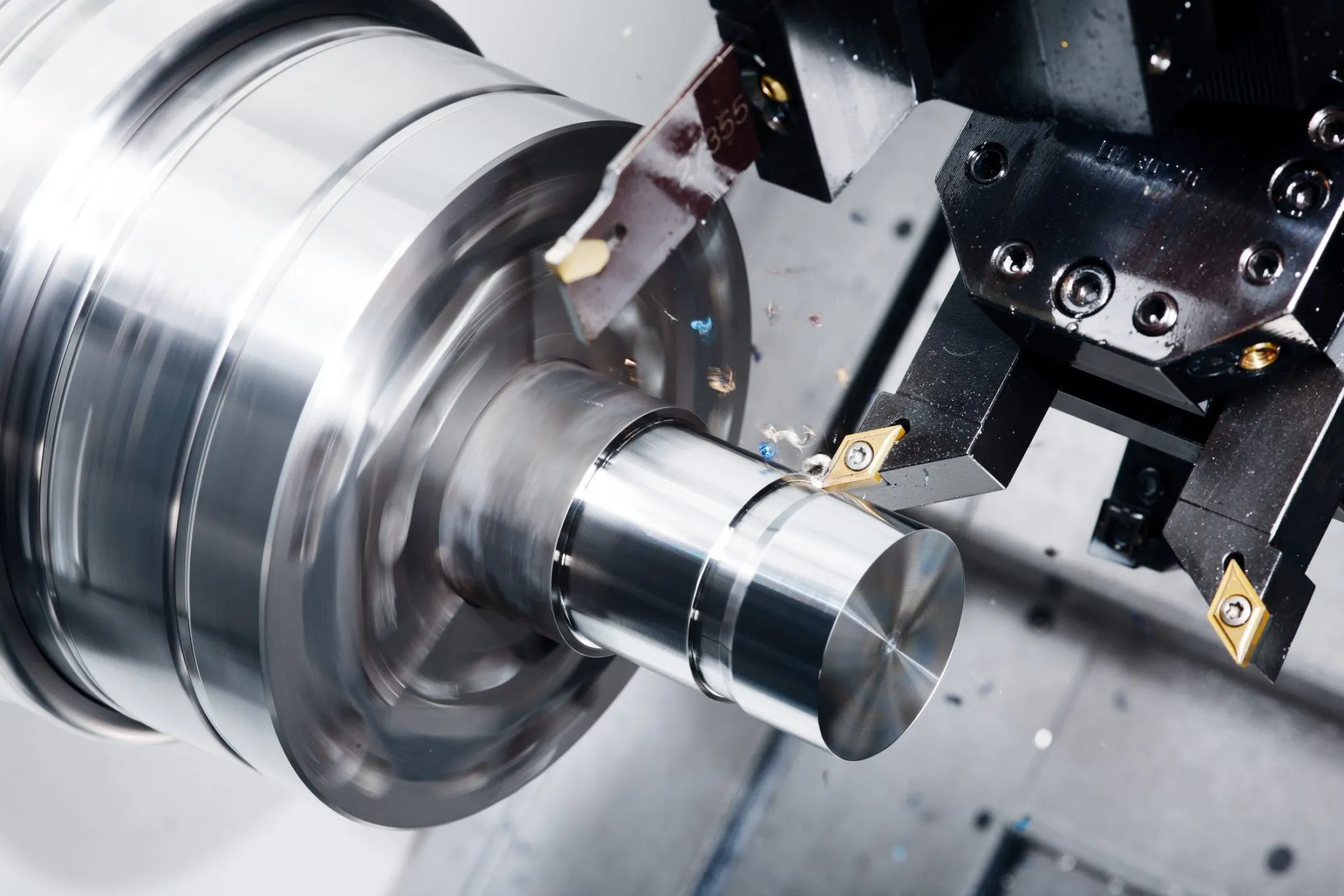
Automated bar-fed CNC turning is where C360 brass delivers maximum value. Short, clean chips at high cutting speeds allow unattended lights-out production of fittings, connectors, threaded parts, and instrument hardware at cycle times no other metal can match.
C360 / C260High VolumeLights-OutFittings
Swiss CNC Turning Brass Small Diameter Parts
PROCESS / 02
Swiss CNC Turning
Small-diameter brass parts (Ø0.5–32 mm) in C360 on Swiss-type lathes — the natural pairing for precision instrument hardware, miniature connectors, and complex small turned parts. C360's chip control at high L/D ratios prevents re-cutting and nesting in Swiss headstocks.
Ø0.5–32 mmPrecisionComplex Form
CNC Milling Brass Valve Body Housing
PROCESS / 03
CNC Milling
3-axis and 5-axis milling of brass valve bodies, manifolds, housings, decorative panels, and structural brass components. Brass mills with minimal burr formation and exceptional surface finish — many milled brass parts require no secondary deburring.
Valve BodiesManifoldsHousingsPanels
Application Gallery

Typical Brass Parts We Produce

C360 Brass Plumbing Fittings ValvesC360
Plumbing Fittings & Valve Bodies
MaterialC360 (standard) / C260 (potable water)
ProcessBar-Fed Turning · NPT / BSP Threading · Nickel Plate
IndustryPlumbing · HVAC · Fluid Control
C360 Brass Electrical Connectors TerminalsC360 / C260
Electrical Connectors & Terminals
MaterialC260 (RoHS) / C360 (non-regulated)
ProcessBar-Fed Turning · Swiss · Gold or Tin Plate
IndustryElectronics · Telecom · Automotive
C360 Brass Pneumatic Hydraulic FittingsC360
Pneumatic & Hydraulic Fittings
MaterialC360 — standard for industrial service
ProcessBar-Fed Turning · Live Tooling · Thread Turning
IndustryPneumatics · Hydraulics · Industrial Automation
Industries Served

Brass for Diverse Applications

🔧
Plumbing / HVAC
C360 / C260
Electronics
C260 / C360
Pneumatics
C360
Instrumentation
C360 / C260
Decorative
C260
Aerospace
C360
From Bar Stock to Finished Part

How We Produce Brass Parts

STEP 01
Bar Stock
C360 or C260 drawn brass bar sourced with mill cert — alloy composition verified. C260 orders include ICP lead analysis for potable water compliance documentation on request.
STEP 02
CNC Machining
Bar-fed turning, Swiss turning, or CNC milling at optimized brass cutting parameters. C360's excellent chip control enables high-speed unattended production runs.
STEP 03
Secondary Operations
Live-tooling cross-holes, flats, and slots completed in-line. Deburring — brass typically produces minimal burrs, reducing this step compared to steel or stainless.
STEP 04
Surface Treatment
Nickel, tin, gold, or chrome plating coordinated as part of the order. Clear lacquer or polishing for decorative brass. Plating cert provided on request.
STEP 05
Inspection & Delivery
Thread gauging, dimensional check, mill cert, and RoHS DoC (C260) packed with order. Bulk pack for high-volume production; individual protection for precision parts.
Post-Processing

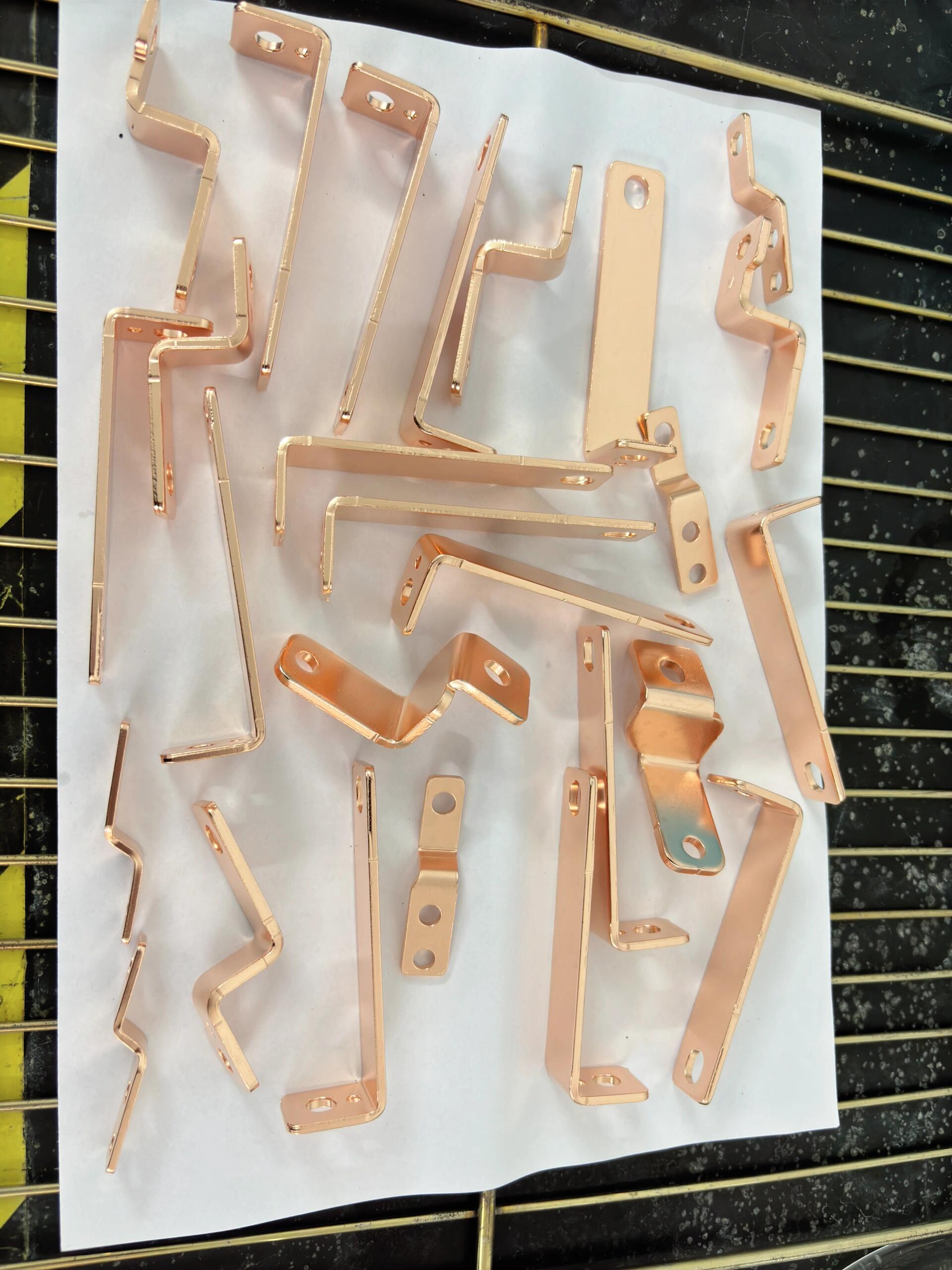
Surface Treatments for Brass Parts

All Finishes →

Brass has good inherent corrosion resistance but oxidizes over time in air — surface treatment improves long-term appearance and corrosion performance, or adds functional properties like solderability, electrical conductivity, or wear resistance.
Electroless Nickel Plating
The most common functional plating for brass machined parts. Uniform 25–50 μm nickel-phosphorus deposit on all surfaces including internal bores, threads, and complex geometry. Excellent corrosion resistance, mild wear protection, and consistent silver-white appearance.
Uniform CoverageCorrosion ResistFittings / Valves
Tin Plating
Bright or matte tin plating (5–25 μm) for brass electrical connectors and terminals. Excellent solderability, good corrosion resistance, RoHS-compliant. Standard finish for PCB terminal pins, connector bodies, and contact elements requiring reliable solder joint formation.
RoHS SafeSolderableConnectors
Gold Plating
Hard gold (0.1–3 μm) over nickel underlayer for RF connectors, precision contacts, and low-contact-resistance applications. Gold prevents oxidation and tarnish on contact surfaces — critical for reliable signal transmission. Flash gold (0.05–0.1 μm) for corrosion protection at lower cost.
RF ConnectorsLow Contact Res.0.1–3 μm
Polishing & Clear Lacquer
Mechanical polishing to mirror or satin finish, followed by clear lacquer to preserve the natural brass appearance. Standard for decorative hardware, architectural fittings, consumer products, and any part where the warm gold color of brass is part of the design intent.
DecorativeMirror / SatinC260 Preferred
100%
C360 Machinability
±0.01mm
Standard Tolerance
Ra 0.4μm
As-Turned Finish
24hr
Quote Turnaround
High-Volume Brass CNC Turning Workshop
Why Work With Us

Why Choose Us for Brass Machining

BR
Both Grades — C360 and C260 — Machined Daily
We run both grades every day across bar-fed turning, Swiss turning, and milling centers. Cutting parameters, tooling, and chip evacuation are optimized for brass — maximum throughput from first part.
GS
Grade Advice — Switch to Brass, Save Cost Without Compromise
We routinely identify opportunities where 303 stainless or other metals can be replaced by C360 brass without sacrificing application performance — reducing cycle time and cost significantly.
DC
RoHS / NSF Compliance Documentation for C260
RoHS Declaration of Conformity, NSF/ANSI 61-supporting ICP chemical analysis reports, and mill certs available for C260 parts. Documentation ready for audit — not produced on request after delivery.
HV
Prototype to 100K+ Production — Same Quality System
From 50-piece engineering samples to 100,000-piece monthly production runs. Same thread gauging, same dimensional inspection, same material certification process regardless of quantity.
FAQ

Frequently Asked Questions

Common questions about C360 and C260 brass — grade selection, machinability, RoHS compliance, surface finishing, and applications.

Brass is a copper-zinc alloy family that combines excellent machinability, good corrosion resistance, attractive appearance, and low friction properties. In CNC machining, brass is valued for its outstanding chip-breaking characteristics, ability to hold tight tolerances, and the bright, smooth surface finish it produces directly off the machine. Common applications include plumbing fittings, electrical connectors, valve bodies, precision instrument hardware, decorative components, and any part requiring a combination of corrosion resistance, conductivity, and high-quality aesthetics.
C360 (Free-Cutting Brass) and C260 (Cartridge Brass) differ in zinc content and the addition of lead. C360 contains approximately 61.5% copper, 35.5% zinc, and 3% lead — the lead dramatically improves machinability, making C360 the fastest-cutting brass available. C260 contains 70% copper and 30% zinc, with no lead — it has lower machinability than C360 but significantly better cold-forming ability, ductility, and is suitable for applications requiring RoHS compliance or potable water contact. For pure machining applications without regulatory constraints, C360 is preferred; for formed parts or lead-free specifications, C260 is the correct choice.
No. C360 brass contains approximately 3% lead, which is a restricted substance under the RoHS directive. C360 cannot be used in electrical or electronic equipment subject to RoHS regulations, nor in food-contact or potable water applications. For applications requiring lead-free brass, specify C260. We provide RoHS Declaration of Conformity and ICP chemical analysis reports for C260 orders used in regulated applications.
Brass is one of the most dimensionally stable and predictable metals to machine. Standard CNC turning and milling tolerance for C360 and C260 is ±0.01 mm. Tighter tolerances of ±0.005 mm are routinely achievable on precision turned features, and ±0.002 mm is achievable on specific critical dimensions with appropriate tooling and process control. The excellent machinability of C360 allows consistent dimensional results across high-volume production runs.
Common surface treatments for brass CNC machined parts include: electroless nickel plating (corrosion resistance, uniform coverage on complex geometry), tin plating (solderability, RoHS safe for connectors), gold plating (low-contact-resistance RF connectors and precision contacts), silver plating, zinc-nickel, and clear lacquer or polishing for decorative brass parts. We coordinate all of these treatments as part of the order.
C360 Free-Cutting Brass is used for: threaded fittings and connectors, plumbing valves and valve bodies, pneumatic and hydraulic fittings, electrical connector housings, precision instrument hardware, standoffs and spacers, screw machine products, camera and optical equipment hardware, and any high-volume precision turned component where cycle time and surface finish quality are important. Its machinability rating of 100% makes it the fastest and most economical metal to machine.
Brass can be joined by brazing, soldering, and welding, but conventional MIG/TIG welding is challenging due to zinc volatilization. Brazing with silver-based filler alloys is the preferred joining method for brass assemblies. C260 is more weldable than C360 — C360's lead content further complicates welding. For most brass assembly applications, mechanical joining (threading, press fit) or brazing is specified instead of welding.
C360 Free-Cutting Brass has a machinability rating of 100% — it is the reference material against which all other metals are benchmarked. For comparison: C260 brass rates approximately 30%, 303 stainless rates approximately 45%, 1018 carbon steel rates approximately 78%, and 6061 aluminum rates approximately 90%. This means C360 can be machined at significantly higher cutting speeds with longer tool life and better surface finish than virtually any other engineering metal, making it the most economical choice for high-volume precision turning where material properties permit.
Get a Quote

Send Your Drawing.
Get a Quote.

Every enquiry includes a DFM review — tolerance feasibility, material confirmation, and process approach confirmed before production starts. MOQ 1 piece.

24hr
Quote Response
MOQ 1
Prototypes OK
ISO
9001:2015
📐
DFM Review on Every Enquiry
Tolerance feasibility, fixturing strategy, and material confirmation. Specific, actionable feedback — not generic pushback.
🎯
First Article Inspection — Standard
FAI report on every new run. Material certs and surface treatment certs included with every shipment.
🔄
Same Process: Prototype to Production
Process plan from your prototype applies to production batches. No re-qualification when you scale.
3 / 4 / 5-Axis CNC + Turning
Complex structural parts, shafts, housings, and transmission components. Metals and engineering plastics.
ISO 9001:2015 3/4/5-Axis Milling CNC Turning CMM Inspection Global Delivery