
Gold Plating
Services
Premium gold electroplating for electronics, semiconductor packaging, aerospace connectors, and luxury decorative applications — with precise control over karat grade, thickness, and alloy composition.

We offer the full range of gold alloy compositions to match your requirements for hardness, color, corrosion resistance, and cost efficiency.
Pure Gold (Soft)
99.9%+ purity. Maximum corrosion resistance for wire bonding and semiconductor applications requiring ultra-pure deposits.
Hard Gold
75% gold + cobalt or nickel alloy. Hardness 130–200 HV for high-wear connector contacts requiring multi-cycle durability.
Jewelry Grade
58.3% gold. Excellent durability for decorative applications, jewelry findings, watch components, and luxury hardware.
Economy Grade
41.7% gold. Cost-effective for decorative applications with moderate corrosion and wear requirements.
Precise bath chemistry, temperature control, and current density management ensure consistent gold deposit quality and alloy composition.
Substrate Preparation
Multi-stage cleaning, activation, and nickel barrier undercoating to ensure perfect gold adhesion and prevent base metal diffusion.
Nickel Barrier Layer
Nickel undercoat acts as diffusion barrier preventing base metal migration into gold, extending contact reliability service life.
Gold Deposition
Controlled gold cyanide bath with precise current, temperature, and chemistry delivers uniform, bright, low-porosity gold deposits.
XRF & Verification
XRF thickness and alloy composition verification, porosity testing, solderability, and wire bondability testing per customer spec.
Recent gold plating projects across connectors, semiconductor, aerospace, and luxury goods sectors.

High-Cycle Electrical Connector Pins
Hard gold (18K cobalt-hardened) on precision connector pins. 1.0 μm deposit, MIL-G-45204 qualified, >500,000 cycle durability tested by customer.
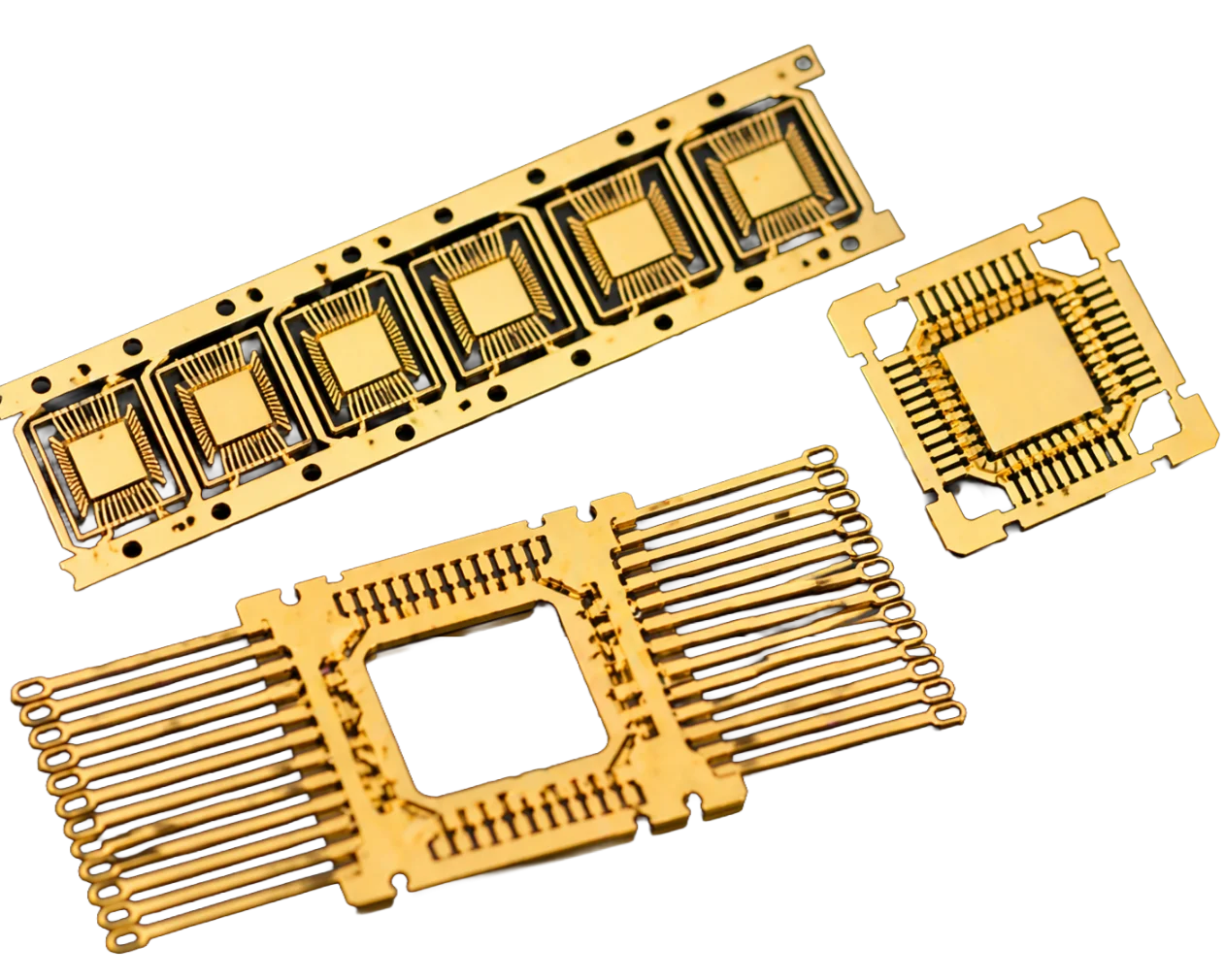
Wire Bonding Pads & Lead Frames
Soft gold (24K) on IC lead frames for wire bonding. Ultra-pure deposit, <5 ppm impurities, wire pull test >8 gf verified by customer lab.

Watch Components & Decorative Hardware
18K gold plating on stainless steel watch buckles and crown components. 2.0 μm deposit, bright mirror finish, tarnish-resistant for luxury market.
Electronic Connectors
Hard gold on connector contacts for low contact resistance, wear resistance, and long service life in high-cycle applications.
Semiconductor
Wire bonding pads, lead frames, and die attach surfaces requiring ultra-pure soft gold for reliable bonding processes.
Aerospace & Defense
MIL-spec gold on avionics connectors, waveguides, and microwave components for extreme reliability and longevity.
Luxury & Decorative
Jewelry, watch components, luxury hardware, and premium consumer products requiring durable decorative gold finishes.
Medical Devices
Implantable device contacts, biosensor electrodes, and diagnostic equipment requiring biocompatible gold surfaces.
Space Applications
Satellite components, solar cell interconnects, and space-grade connectors requiring gold for vacuum and radiation resistance.
XRF Alloy Composition Verification
Every gold deposit is XRF-verified for both thickness and alloy composition (gold%, cobalt%) to ensure specification compliance on every batch.
Class A Porosity Control
Our multi-layer nickel undercoat and optimised gold bath chemistry achieve Class A zero-porosity deposits per IPC and AMS standards.
Precious Metal Accountability
Full precious metal input/output accounting with lot traceability. Gold-bearing scrap and solutions are processed for complete metal recovery.
MIL & AMS Qualified
Process qualifications to MIL-G-45204 and AMS 2422 available. Full first article inspection and documentation for aerospace customers.
Everything you need to know before ordering. Contact our team →