
Cast Iron CNC Machining
Cast Iron
CNC Machining
Gray Cast Iron
Ductile (Nodular) Iron
Alloy Cast Iron
Engine Blocks · Housings · Bases
Wear Parts · Valves · Brake Components
Precision CNC machining of gray cast iron, ductile (nodular) iron, and alloy cast iron for engine components, machine tool bases, pump housings, valve bodies, brake parts, and heavy-duty structural components where rigidity, vibration damping, and wear resistance are essential.

Compressive Strength
3–5× Tensile
Gray Cast Iron EN-GJL ✦
Ductile / Nodular Iron EN-GJS ✦
Alloy Cast Iron · Ni-Hard · Hi-Chrome ✦
Engine Blocks & Cylinder Heads ✦
Hydraulic Valve Bodies ✦
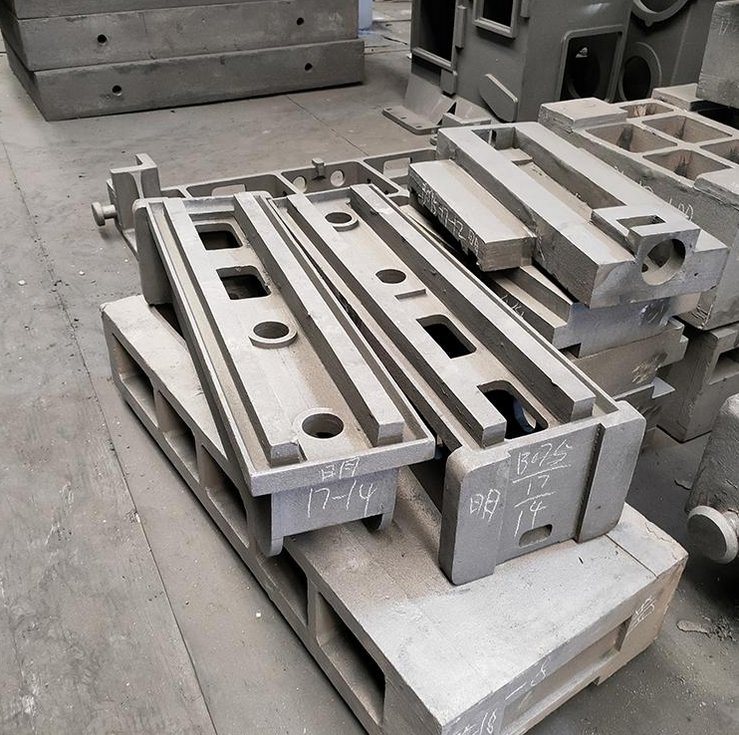
Machine Tool Bases & Beds ✦
Wear-Resistant Impellers & Liners ✦
Brake Drums & Discs ✦
Crankshafts & Differential Housings ✦
Gray Cast Iron EN-GJL ✦
Ductile / Nodular Iron EN-GJS ✦
Alloy Cast Iron · Ni-Hard · Hi-Chrome ✦
Engine Blocks & Cylinder Heads ✦
Hydraulic Valve Bodies ✦
Machine Tool Bases & Beds ✦
Wear-Resistant Impellers & Liners ✦
Brake Drums & Discs ✦
Crankshafts & Differential Housings ✦
Material Grades
Three Cast Iron Grades, Three Different Strengths
GJL / HT
ASTM A48 · ISO EN-GJL · GB HT Series
Flake Graphite Cast Iron — The Industry Workhorse
The most widely used and most cost-effective cast iron. Graphite precipitates as interconnected flakes within the iron matrix, giving gray iron its defining characteristics: outstanding vibration damping, self-lubrication (graphite acts as a dry lubricant), excellent machinability, and good compressive strength. The gray fracture surface is the origin of its name. Used in virtually every industry that requires large, complex castings machined to precision.
150–350 MPa
Tensile Strength
600–1400 MPa
Compressive Strength
HB 170–260
Hardness
Excellent
Machinability
Common Grade Standards
ASTM A48 Class 20–40
EN-GJL-150 to GJL-300
GB HT150 / HT200 / HT250 / HT300
Chemical Composition (Typical)
| Carbon (C) | 3.0–3.5% |
| Silicon (Si) | 1.8–2.8% |
| Manganese (Mn) | 0.5–0.9% |
| Phosphorus (P) | ≤0.25% |
| Sulfur (S) | ≤0.12% |
Exceptional vibration damping — ideal for machine tool bases
Self-lubricating graphite flakes — good for sliding wear surfaces
Low tensile strength — brittle; not for impact or tensile loading
Hard as-cast skin must be cleared on first machining pass
Engine BlocksCylinder HeadsBrake DrumsMachine BedsPump Housings
View Gray Iron Details
GJS / QT
ASTM A536 · ISO EN-GJS · GB QT Series
Spheroidal Graphite Iron — Steel-Like Strength, Iron Machinability
Produced by adding magnesium to the melt before casting, which transforms graphite from flakes into spherical nodules. This one change transforms the mechanical properties dramatically: tensile strength jumps to 400–900 MPa, elongation reaches up to 18%, and impact resistance approaches that of steel — while machinability remains close to gray iron. Ductile iron bridges the gap between gray cast iron and cast steel, making it the preferred choice for highly loaded structural castings.
400–900 MPa
Tensile Strength
Up to 18%
Elongation
HB 140–300
Hardness
Good
Machinability
Common Grade Standards
ASTM A536 Gr. 65-45-12
ASTM A536 Gr. 80-55-06
EN-GJS-400-18 / 500-7 / 700-2
GB QT400 / QT500 / QT700
Chemical Composition (Typical)
| Carbon (C) | 3.5–3.9% |
| Silicon (Si) | 2.0–2.8% |
| Magnesium (Mg) | 0.03–0.06% |
| Manganese (Mn) | 0.1–0.5% |
| Sulfur (S) | ≤0.02% |
High tensile strength with ductility — unlike gray iron it resists impact
Good fatigue resistance — suitable for cyclic loading applications
Can be heat-treated (annealed, normalized, Q&T) to adjust properties
Better machinability than cast steel of equivalent strength
CrankshaftsGearsHydraulic ValvesDiff. HousingsSuspension Parts
View Ductile Iron Details
ALLOY CI
Hi-Chrome · Ni-Hard · Ni-Resist · ASTM A532
Engineered for Extreme Wear, Heat & Corrosion Resistance
Alloy cast irons incorporate deliberate additions of chromium, nickel, molybdenum, or copper to produce properties impossible in standard gray or ductile iron. High-chromium white iron (15–30% Cr) achieves HRC 55–65 for extreme abrasion resistance in mining and mineral processing. Ni-Hard (4% Ni, 2% Cr) provides excellent wear resistance with improved toughness. Austenitic Ni-Resist iron offers corrosion resistance and dimensional stability at elevated temperatures (up to 800°C). These grades are specified where standard cast irons fail due to wear, heat, or chemical attack.
HRC 55–65
Hardness (Hi-Cr)
to 800°C
Ni-Resist Temp
Extreme
Wear Resistance
Low
Machinability
Common Types
Hi-Chrome White Iron (15–28% Cr)
Ni-Hard (ASTM A532 Class I)
Ni-Resist Austenitic (ASTM A436)
Key Alloying (Hi-Chrome, Typical)
| Carbon (C) | 2.4–3.5% |
| Chromium (Cr) | 15.0–28.0% |
| Molybdenum (Mo) | 0.5–3.5% |
| Nickel (Ni) max | up to 2.5% |
| Silicon (Si) | 0.5–1.2% |
Extreme abrasion resistance — 10–100× life vs gray iron in wear service
Requires carbide or CBN tooling — very hard, difficult to machine
Hardness can vary significantly across a single casting
Ni-Resist: corrosion and heat resistance, not primarily wear-focused
Wear LinersPump ImpellersSlurry PartsCrusher RingsHigh-Temp Parts
View Alloy Iron Details
Grade Selection Guide
Choosing the Right Cast Iron Grade
⬛
Choose Gray Cast Iron when…✓Machine tool bases, beds, and columns requiring vibration damping
✓Engine blocks, cylinder heads, and exhaust manifolds
✓Brake drums, brake discs, and friction components
✓Pump and compressor housings — cost-effective in large volumes
✓Application is primarily compressive — low tensile loading
⬤
Choose Ductile Iron when…✓High tensile or impact load — gray iron would fracture
✓Crankshafts, gears, and automotive structural castings
✓Hydraulic valve bodies and pressure-containing components
✓Fatigue-loaded parts — superior fatigue life vs gray iron
✓Cast steel equivalent properties at lower cost and better machinability
◆
Choose Alloy Cast Iron when…✓Extreme abrasion — mining, mineral processing, slurry pumps
✓Standard gray or ductile iron has unacceptable service life
✓Elevated temperature service above 300°C (Ni-Resist)
✓Corrosive chemical environments (austenitic Ni-Resist)
✓Crusher wear parts, pump liners, and cyclone components
Material Comparison
Full Property Comparison — Gray · Ductile · Alloy Cast Iron
| Property | Gray Cast Iron | Ductile Iron | Alloy Cast Iron (Hi-Cr) | 1045 Steel (ref) |
|---|---|---|---|---|
| Graphite Form | Flake — interconnected | Nodular spheres | Carbide matrix (white) | None (steel) |
| Tensile Strength | 150–350 MPa | 400–900 MPa | ~500–700 MPa (brittle) | ~570–700 MPa |
| Elongation | <1% — brittle | 2–18% — ductile | <1% — very brittle | 16–22% |
| Hardness | HB 170–260 | HB 140–300 | HRC 55–65 (Hi-Cr) | HB 170–220 |
| Vibration Damping | Excellent — best of all | Good | Moderate | Poor |
| Abrasion Resistance | Moderate | Good | Extreme — 10–100× gray | Moderate |
| Machinability | ★★★★★ Best | ★★★★ Good | ★ Very difficult | ★★★★ Good |
| Weldability | Possible w/ preheat | Possible w/ preheat | Generally not recommended | Good |
| Heat Treatment | Stress relieve only | Full range (anneal, Q&T) | Stress relieve / anneal | Full range |
| Primary Use | Engine parts, machine bases, brakes | Crankshafts, gears, hydraulics | Wear liners, slurry pumps, crushers | Shafts, gears, structural |
Machining Notes
Machining Cast Iron — What Engineers Need to Know
⚠
Key Challenges with Cast Iron Machining!
Hard as-cast skin on every casting — first pass must go below itAll cast iron castings have a chilled outer skin containing sand inclusions, oxide scale, and a harder layer caused by rapid solidification at the mold surface. This skin is significantly harder than the material beneath and destroys tooling if the first pass is too shallow to cut through it entirely. First pass depth of cut must always exceed the skin depth (typically 3–5 mm) — do not skim-cut on raw cast iron.
!
Abrasive graphite accelerates tool flank wearDespite being a dry lubricant, graphite flakes are mechanically abrasive at the microscale. They cause progressive flank wear on carbide inserts — particularly at the depth-of-cut line where the tool transitions between cut and un-cut surface. Tool wear in cast iron is steady and predictable but requires regular insert changes, especially when switching between the hard skin and the bulk material.
!
Dry or MQL preferred — not flood coolant for most gradesGray cast iron is typically machined dry or with minimum quantity lubrication (MQL). Flood coolant can cause thermal shock in the workpiece during interrupted cuts and does not improve surface quality significantly due to the graphite's self-lubricating nature. Alloy cast irons (especially high-chromium white iron) must be machined dry — thermal cycling from coolant causes surface micro-cracking in carbide-phase materials.
!
Alloy cast iron hardness variation — expect tool surprisesHigh-chromium and Ni-Hard alloy irons can have significant hardness variation across a single casting due to differences in cooling rate at different section thicknesses. A zone that cooled faster may be HRC 65 while an adjacent thicker section is HRC 55. This unpredictability demands conservative cutting parameters and frequent tool life checks when machining alloy irons.
!
Porosity in castings — watch for voids when approaching thin wallsInternal voids and porosity in castings can be exposed when walls are machined thin. Always confirm casting quality standard (e.g. ASTM A128, radiographic or ultrasonic inspection level) before committing to tight wall thickness dimensions on machined castings.
✓
How We Handle Cast Iron Machining✓
First-pass depth programmed to clear skin on every castingOur CAM programs set a minimum first-pass depth of cut that accounts for the as-cast surface condition. For rough castings with heavy scale, we preview the casting stock allowance with the customer before programming — ensuring the first tool pass clears the hard skin completely on all faces.
✓
Grade-specific tooling — uncoated carbide for gray, coated for ductile, CBN for alloyGray cast iron: uncoated or lightly coated carbide — coolant-free, fast, and economical. Ductile iron: PVD-coated carbide (AlTiN) with slightly slower speeds to manage the tougher nodular matrix. Alloy cast iron: CBN (cubic boron nitride) or PCD inserts — the only practical tooling for high-chromium white irons above HRC 50.
✓
Datum confirmation on castings — fixturing before first cutCast iron castings arrive with inherent dimensional variation. We confirm datums and wall stock before fixturing — verifying that sufficient machining stock exists on all surfaces before committing to the first cut. This prevents discovering insufficient stock mid-operation on expensive castings.
✓
Stress-relief verification for precision gray iron componentsFor precision machine tool bases and bearing housings in gray iron, we confirm whether the casting has been stress-relieved (550–600°C) before machining. Machining a non-stress-relieved casting releases residual casting stresses, causing gradual distortion after machining. Stress-relieved castings are specified and verified for all precision gray iron work.
✓
Conservative parameters on alloy iron — protect the CBN investmentCBN inserts for alloy iron machining are expensive. We use conservative cutting speeds, confirmed chip load, and machine rigidity tests before beginning alloy iron operations — maximising CBN tool life and avoiding catastrophic edge failure on high-value wear part castings.
Application Gallery
Typical Cast Iron Parts We Machine
 Gray Iron
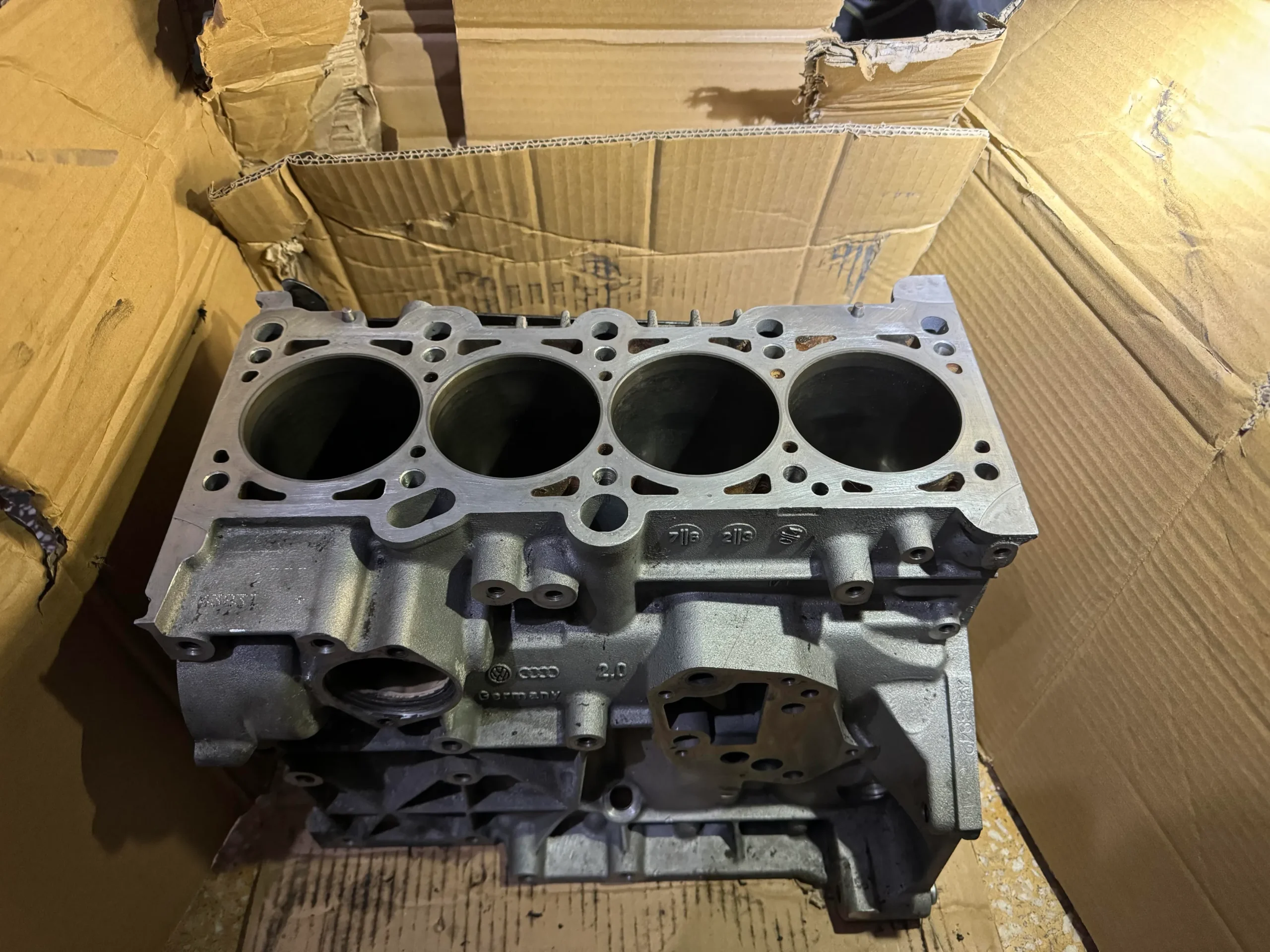
Engine Blocks & Cylinder Heads
MaterialGray Iron HT250 / EN-GJL-250
ProcessCNC Milling · Boring · Honing
IndustryAutomotive · Power Equipment
 Ductile Iron
Hydraulic Valve Bodies & Manifolds
MaterialDuctile Iron QT500 / EN-GJS-500-7
ProcessCNC Milling · Boring · Threading
IndustryHydraulics · Fluid Power · Mobile
 Gray Iron
Machine Tool Bases & Beds
MaterialGray Iron HT300 / EN-GJL-300
ProcessFace Milling · Grinding · Scraping
IndustryMachine Tools · Industrial Equipment
Industries Served
Cast Iron Across Every Heavy Industry
Automotive
Gray & Ductile
Machine Tools
Gray Iron
Pumps & Valves
Gray & Ductile
Mining
Alloy Iron
Heavy Machinery
Ductile Iron
High Temp
Ni-Resist
From Raw Casting to Finished Part
How We Produce Cast Iron Parts
STEP 01
Casting Review & Datum Check
Incoming casting inspected for surface condition, casting standard cert, and stock allowance on all machined faces. Stress-relief and hardness verified before release to machining.
STEP 02
Rough Machining — Skin Removal
First pass programmed deep enough to fully clear hard as-cast skin on all faces. Grade-specific tooling: uncoated carbide (gray), coated carbide (ductile), CBN (alloy iron).
STEP 03
Finish Machining
Final bores, mating faces, thread holes, and precision features. Boring and honing for critical bearing and seating surfaces. Dry or MQL as required by grade.
STEP 04
Surface Treatment
Rust preventive oil, phosphate coating, zinc plating, or paint as specified. Machined faces and bores masked where protective coating must not be applied.
STEP 05
Inspection & Delivery
CMM dimensional report, casting cert, hardness records (alloy iron), and pressure test records where applicable — all shipped with the order.
Post-Processing
Surface Treatments for Cast Iron Parts
Cast iron has limited inherent corrosion resistance — the graphite-iron matrix corrodes in humid environments. Surface treatment requirements range from simple rust-preventive oil for internal components to full paint or plating systems for external parts in wet service.
Rust Preventive Oil / VCI
The simplest and most common finish for cast iron internal machine components. A rust-preventive oil film or VCI (vapor corrosion inhibitor) paper provides protection during shipping and storage. Machined faces are oiled, unmachined surfaces left as-cast. Standard for machine tool bases, gearbox housings, and industrial equipment castings.
Phosphate & Black Oxide
Zinc phosphate (Parkerizing) creates a porous layer that retains oil for corrosion protection and improved paint adhesion. Black oxide provides a uniform dark appearance with minimal dimensional change. Both are used on automotive cast iron components, valve bodies, and hydraulic parts where appearance and mild corrosion protection are needed.
Epoxy Paint & Powder Coating
Two-component epoxy paint or polyester powder coating for cast iron pump housings, valve bodies, and outdoor equipment in wet or corrosive environments. Machined bores and seating faces are masked before painting. Provides excellent corrosion protection for cast iron in water, chemicals, and outdoor service. Full RAL/Pantone color matching available.
Zinc Plating & Electroless Nickel
Zinc electroplating for corrosion protection on ductile iron fasteners, brackets, and small hydraulic components. Electroless nickel for dimensional uniformity and corrosion resistance on precision ductile iron valve bodies and instrument parts. Note: gray iron requires special pre-treatment before acid plating processes due to graphite flake porosity — confirm with plating house before specifying.
3
Cast Iron Grades
900 MPa
Ductile Iron Tensile
HRC 65
Alloy Iron Max Hardness
24hr
Quote Turnaround
Why Work With Us
Why Choose Us for Cast Iron Machining
SKN
Skin-Clearing First Pass — No Tooling Disasters on Your Casting
We program every cast iron job with a first-pass depth that fully clears the hard as-cast skin. This single discipline prevents the most common and costly cast iron machining failure: destroying a ≥½ shift setup because the first pass cut too shallow.
CBN
CBN Capability for Alloy Cast Iron — No Outsourcing
High-chromium white iron and Ni-Hard require CBN tooling that most CNC shops decline to stock. We machine alloy cast iron wear parts in-house with CBN and PCBN — hardness spot-checked and dimensional CMM-verified on every piece.
STR
Stress-Relief Confirmation Before Precision Gray Iron Work
For precision machine bases, bearing housings, and flatness-critical gray iron components, we verify that the casting has been stress-relieved before machining — preventing the gradual post-machine distortion that ruins precision gray iron work.
DOC
Full Casting Documentation — ASTM, CMM, Hardness
Every cast iron order ships with casting material certificate (ASTM A48, A536, or A532), CMM dimensional report, and hardness records for alloy iron. Pressure test records where applicable. No document chasing after delivery.
FAQ
Frequently Asked Questions
Common questions about gray cast iron, ductile iron, and alloy cast iron — grade selection, machining challenges, tolerances, tooling, surface treatment, and welding.
Cast iron is a family of iron-carbon alloys with carbon content greater than 2% (typically 2.5–4.5%), which causes the excess carbon to precipitate as graphite or iron carbide during solidification. This microstructure gives cast iron its defining characteristics: excellent compressive strength, outstanding vibration damping, inherent lubricity from graphite, and very good machinability despite its hardness. Cast iron is widely used for machine tool bases, engine blocks, pump housings, brake components, and heavy-duty structural parts where rigidity, wear resistance, and dimensional stability are required.
Gray cast iron is the most widely used cast iron grade, characterized by graphite precipitating as flake graphite within a pearlitic or ferritic iron matrix. Common grades include ASTM A48 Class 20–40, ISO EN-GJL-150 to EN-GJL-300, and GB HT150–HT350. Gray cast iron offers outstanding machinability, excellent vibration damping, good compressive strength, and low cost. It is used for engine blocks, cylinder heads, machine tool bases, brake drums, pump bodies, and gearbox housings. Its tensile strength is moderate (150–350 MPa) but compressive strength is 3–5 times higher.
Ductile cast iron is produced by adding magnesium to the melt, which causes graphite to solidify as spherical nodules rather than flakes. This dramatically improves tensile strength (400–900 MPa), elongation (up to 18%), and impact resistance compared to gray cast iron — giving properties approaching those of steel while retaining excellent machinability. Common grades include ASTM A536 Grade 65-45-12, 80-55-06, and EN-GJS-400-18 to EN-GJS-700-2. Ductile iron is used for crankshafts, gears, differential housings, hydraulic valve bodies, and structural components requiring both the machinability of cast iron and higher mechanical strength.
Alloy cast iron incorporates additions of chromium, nickel, molybdenum, or copper to produce properties beyond those of standard gray or ductile iron. High-chromium white iron (15–30% Cr) achieves HRC 55–65 for extreme abrasion resistance. Ni-Hard provides excellent wear resistance with improved toughness. Austenitic Ni-Resist iron offers corrosion resistance and dimensional stability at elevated temperatures up to 800°C. Alloy cast irons are specified when standard cast irons fail due to abrasive wear, elevated temperature, or corrosive service — they are significantly harder to machine and require CBN tooling.
Cast iron machining presents several specific challenges: (1) Hard skin — the as-cast surface contains scale, sand inclusions, and a hard chilled layer that rapidly destroys tooling if the first pass does not cut below it. (2) Abrasive graphite — graphite flakes accelerate flank wear on carbide tools. (3) Dry or near-dry machining — cast iron is often machined dry or with MQL as flood coolant can cause thermal shock. (4) Porosity — internal voids can cause dimensional surprises when machining thin walls. (5) Alloy iron hardness variation — high-chromium white iron can vary significantly in hardness across a single casting.
Standard CNC machining tolerance for gray and ductile cast iron is ±0.02 mm for turned features and ±0.05 mm for milled features. For precision bearing bores and sealing faces, we hold ±0.010–0.015 mm on gray and ductile iron. Alloy cast iron typically achieves ±0.02–0.03 mm on machined features due to hardness variability. Note that castings themselves have inherent dimensional variation — datum selection and fixturing strategy must account for casting variability before machining begins. CMM reports are provided for all precision cast iron components.
Cast iron has limited inherent corrosion resistance and the graphite-iron matrix corrodes in humid or wet environments. Surface treatment depends on application: machine tool bases and internal components are often supplied with rust-preventive oil only. Parts in moderate environments receive black oxide, phosphate coating, or zinc plating. Pump bodies and valve housings in wet service receive epoxy paint or powder coating. Note that gray cast iron should not be electroplated with acid processes without proper pre-treatment, as the graphite flake network can trap hydrogen and cause blistering.
Cast iron welding is possible but requires specialized procedures. Gray cast iron must be preheated to 300–600°C before welding to prevent heat-affected zone cracking. Nickel-based or cast iron welding rods are used. Ductile iron is more weldable than gray iron but still requires preheat. High-chromium alloy irons are generally considered unweldable. For heat treatment: gray cast iron can be stress-relieved (550–600°C) to reduce residual casting stresses before precision machining. Ductile iron can be annealed to soften, or normalized and quenched and tempered to increase hardness.