
Copper CNC Machining
Copper CNC
Machining
C110 / T2 ETP Copper
C101 Oxygen-Free (OFHC)
100% IACS Conductivity
Heat Sinks · Bus Bars · Vacuum Parts
Semiconductor · RF · Cryogenic
Precision CNC machining of C110 (T2) electrolytic copper and C101 oxygen-free high-conductivity copper — the highest conductivity engineering metals available. Electrical bus bars, heat sinks, RF components, vacuum parts, and semiconductor equipment components with full material certification.

Conductivity
100–101% IACS
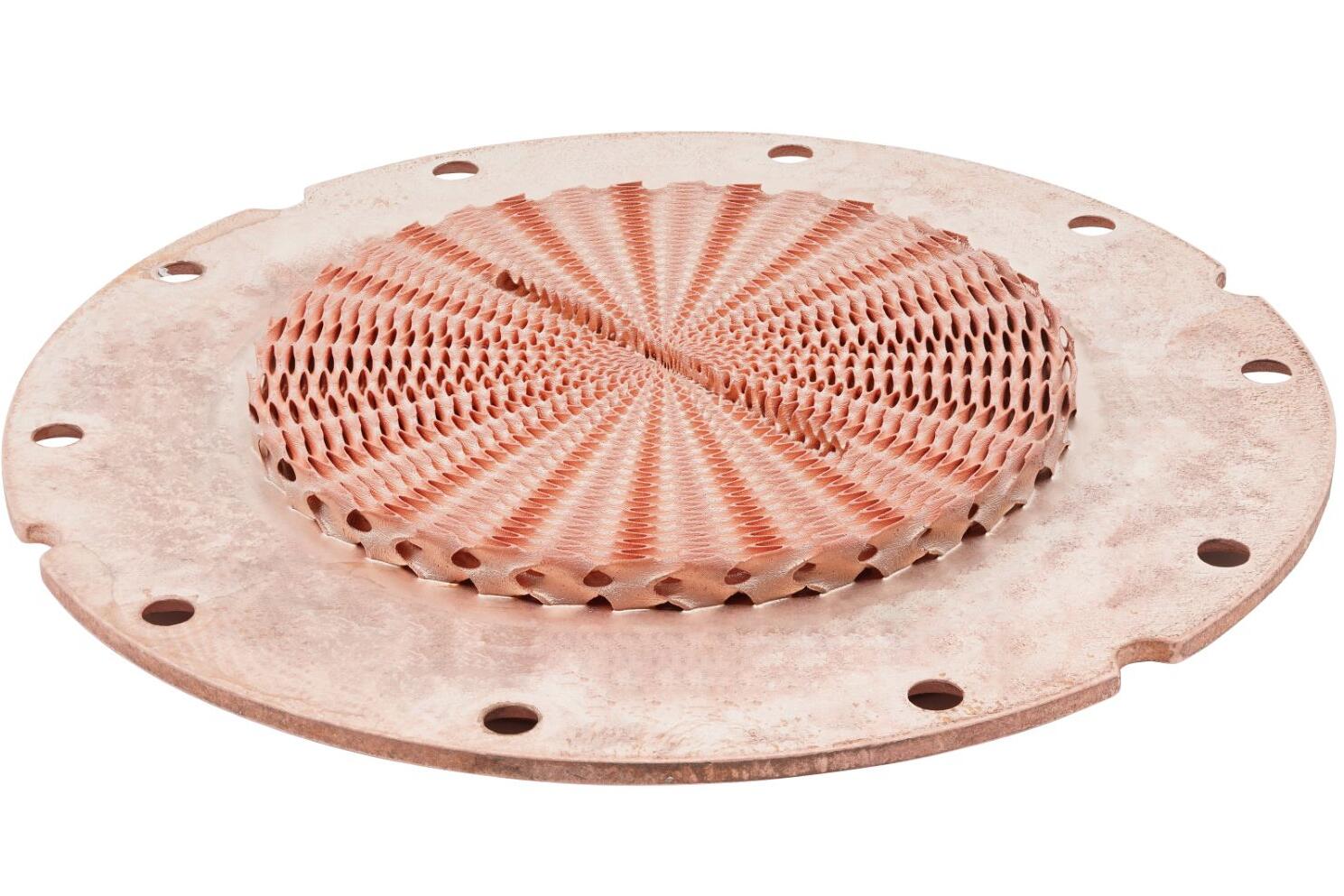
C110 / T2 Electrolytic Copper ✦
C101 Oxygen-Free OFHC ✦
100% IACS Reference Conductor ✦
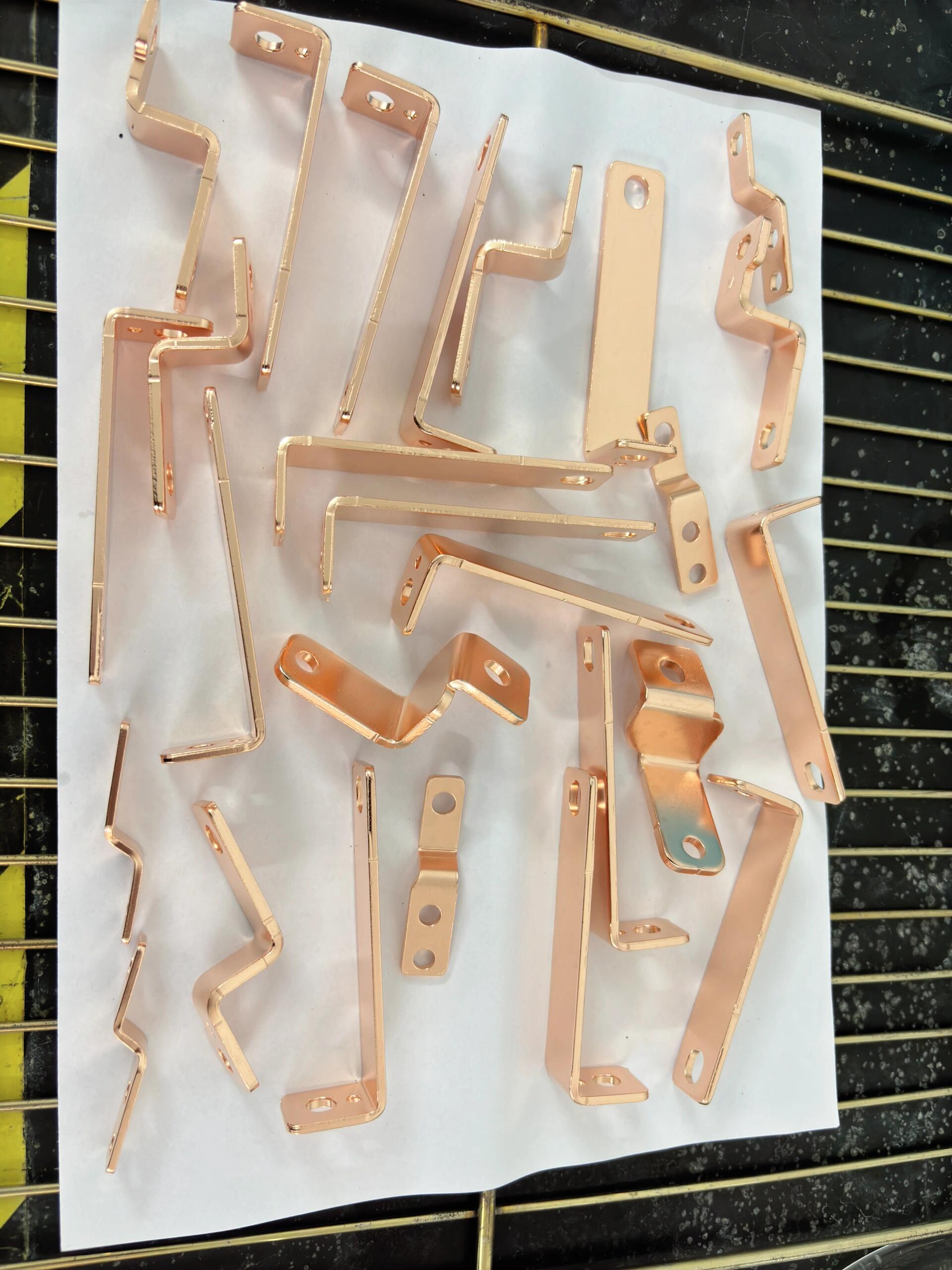
Electrical Bus Bars ✦
Heat Sinks & Thermal Spreaders ✦
RF Shielding & Waveguides ✦
Vacuum & Semiconductor Components ✦
Cryogenic Applications ✦
C110 / T2 Electrolytic Copper ✦
C101 Oxygen-Free OFHC ✦
100% IACS Reference Conductor ✦
Electrical Bus Bars ✦
Heat Sinks & Thermal Spreaders ✦
RF Shielding & Waveguides ✦
Vacuum & Semiconductor Components ✦
Cryogenic Applications ✦
Material Grades
Copper Grades We Machine
C110 / T2
ASTM C11000 · GB T2 · Electrolytic Tough Pitch (ETP) Copper · 99.90% Cu min.
Electrolytic Tough Pitch Copper — General Industrial Grade
100% IACS · Most Widely Stocked
The standard commercial copper grade for electrical and thermal applications. Minimum 99.90% copper purity, with trace oxygen (0.02–0.04%) present as cuprous oxide inclusions from the electrolytic refining process. C110 and T2 are the same material — ASTM designation and Chinese GB designation respectively. Excellent electrical conductivity (100% IACS), outstanding thermal conductivity (391 W/m·K), and good corrosion resistance make this the default copper for bus bars, grounding hardware, heat sinks, induction coils, and electrical contact components not requiring hydrogen atmosphere brazing.
Electrical conductivity: 100% IACS (reference standard)
Thermal conductivity: 391 W/m·K
Not suitable for hydrogen atmosphere brazing — use C101
Bus BarsHeat SinksGroundingInduction CoilsRF Shielding
View C110 / T2 Details
C101
ASTM C10100 · OFHC · Oxygen-Free High Conductivity Copper · 99.99% Cu min.
Oxygen-Free High Conductivity Copper — Premium Grade
99.99% Purity · Hydrogen-Safe · Vacuum Grade
Premium copper grade produced by melting and casting in a controlled oxygen-free atmosphere — oxygen content below 0.001%. The near-zero oxygen eliminates hydrogen embrittlement susceptibility, making C101 safe for hydrogen atmosphere brazing and annealing. Higher purity gives 101% IACS conductivity and superior cleanliness — essential for vacuum systems, semiconductor equipment, synchrotrons, cryogenic applications, and any part where trace contamination or outgassing must be minimized. The standard copper grade for high-technology and scientific applications.
Electrical conductivity: 101% IACS — slightly higher than C110
Oxygen: <0.001% — immune to hydrogen embrittlement
Low outgassing — suitable for ultra-high vacuum (UHV) use
Vacuum ChambersSemiconductorCryogenicsH₂ BrazingScientific
View C101 Details
C110/T2 or C101?
✓
Choose C110 / T2 when…General electrical and thermal applications · Bus bars, grounding hardware, heat sinks, induction coils · No hydrogen atmosphere involved · No vacuum or ultra-clean environment requirement · Standard industrial and commercial applications · More economical than C101
★
Choose C101 when…Hydrogen atmosphere brazing or annealing required · Vacuum system components (rough, medium, high, or UHV) · Semiconductor equipment parts · Cryogenic applications · Maximum electrical conductivity needed · Scientific instruments with contamination / outgassing restrictions
?
Not sure? Ask usUpload your drawing and describe the end application — we will confirm the right copper grade and any additional material requirements before quoting.
Why Copper
Copper — The Conductivity Reference Standard
100%
IACS Reference
C110 defines the conductivity baseline — all other metals are measured against it. No common engineering metal surpasses copper's conductivity.
391
W/m·K Thermal
Thermal conductivity 1.5× that of aluminium and 25× that of stainless steel — the first choice for heat sinks, spreaders, and thermal management parts.
10×
More Conductive than SS
304 stainless conducts electricity at just ~2% IACS. For electrical components in stainless housings, copper is the only practical conductor material.
C101
UHV Compatible
C101's oxygen-free composition gives ultra-low outgassing rates — essential for ultra-high vacuum chambers, particle accelerators, and semiconductor process equipment.
Electrical conductivity (%IACS) — higher is better for electrical and thermal applications. Copper is the universal reference at 100%. For context, silver is the only common metal that surpasses copper in conductivity, but at 80× the cost.
Grade Comparison
C110 / T2 vs C101 — Detailed Comparison
| Property | C110 / T2 (ETP) | C101 (OFHC) | C360 Brass (ref) | 6061 Al (ref) |
|---|---|---|---|---|
| Cu Purity | 99.90% min | 99.99% min | ~61.5% Cu | <0.5% Cu |
| Oxygen Content | 0.02–0.04% (Cu₂O) | <0.001% | N/A | N/A |
| Conductivity (Electrical) | 100% IACS | 101% IACS | ~26% IACS | ~43% IACS |
| Conductivity (Thermal) | 391 W/m·K | 391 W/m·K | ~120 W/m·K | ~167 W/m·K |
| H₂ Atmosphere Brazing | ✗ Risk of embrittlement | ✓ Safe | N/A | N/A |
| Vacuum / UHV Use | Low-medium vacuum only | ✓ UHV compatible | Limited | Limited |
| Machinability | ★★★ Moderate (gummy) | ★★★ Moderate (gummy) | ★★★★★ 100% (C360) | ★★★★ ~90% |
| Tensile Strength | ~220–250 MPa (annealed) | ~220–250 MPa | ~340–470 MPa | ~270–310 MPa |
| Primary Applications | Bus bars, heat sinks, grounding, RF shielding, induction coils | Vacuum parts, semiconductor equip., cryogenic, H₂ brazing | Fittings, connectors, valves | Structural, aerospace, heatsinks |
| Standard Equiv. | T2 (GB), CW004A (EN) | TU1 (GB), CW009A (EN) | H59 (GB) | 6061 (ISO) |
Machining Notes
Machining Pure Copper — Key Considerations
⚠
Challenges with Pure Copper!
Gummy, stringy chips — the biggest challengeUnlike brass which has lead as a built-in chip breaker, pure copper is highly ductile and produces long, stringy chips that wrap around tools, clog flutes, and re-cut the workpiece surface. Active chip management is mandatory.
!
Built-up edge on cutting toolsCopper's softness and stickiness cause material to weld onto cutting edges — leading to a built-up edge that degrades surface finish and dimensional consistency. Requires sharp, polished tool faces.
!
Workpiece deformation under clampingCopper's low yield strength means thin-walled or delicate parts can deform under conventional clamping force. Soft jaws, precision mandrels, and reduced clamping pressure are required for precision copper parts.
!
C101 surface contamination sensitivityFor vacuum and semiconductor applications, machining coolant residue, tool material transfer, and handling contamination on C101 parts must be strictly controlled — post-machining cleaning protocols are as important as the machining itself.
✓
How We Address These Challenges✓
Sharp, polished positive-rake toolingPCD (polycrystalline diamond) or sharp uncoated carbide inserts with high positive rake angles and polished chip faces minimize adhesion and produce cleaner chip breaks in pure copper.
✓
High cutting speed + short chip cycleRunning at higher cutting speeds in copper reduces the contact time per pass — promoting natural chip segmentation and reducing the gummy adhesion tendency on tool faces.
✓
Controlled clamping and soft jaw fixturingCustom soft jaws, expanding mandrels, and reduced clamping torque protocols protect thin-walled copper bus bars and hollow sections from deformation during machining.
✓
C101 cleaning protocol included in orderC101 vacuum and semiconductor parts are cleaned using appropriate solvents after machining — contamination control is treated as a standard part of the C101 machining process, not an afterthought.
Manufacturing Capability
How We Machine Copper Parts
PROCESS / 01
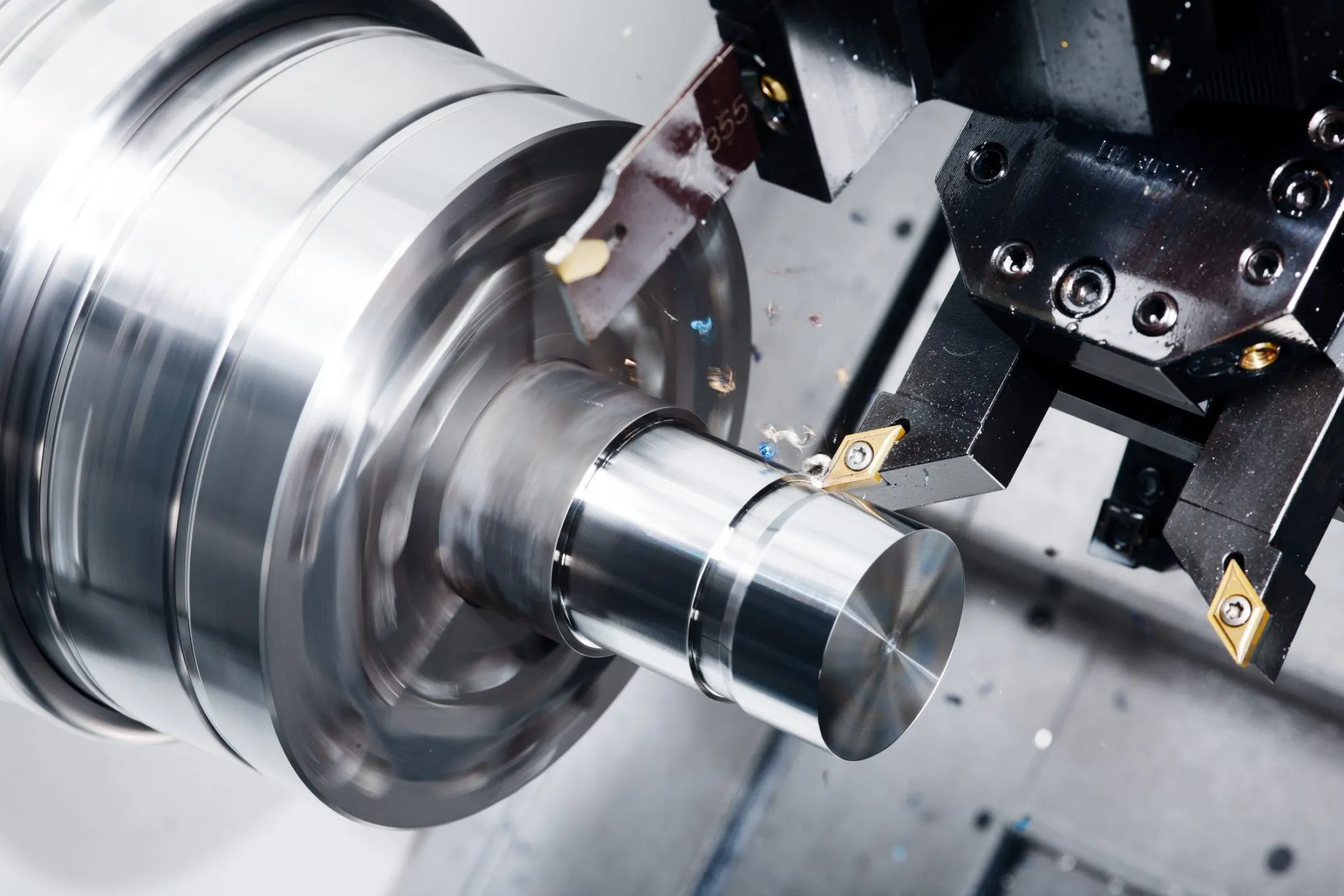
CNC Turning
Precision OD/ID turning of C110 and C101 copper for cylindrical bus bar connectors, induction coil blanks, thermal interface components, and electrical contact bodies. PCD tooling and active chip management produce consistent results on copper's challenging machinability.

PROCESS / 02
CNC Milling — Heat Sinks & Thermal Parts
3-axis and 4-axis milling of copper heat sinks, thermal spreaders, cold plates, and RF enclosures in C110 and C101. Fin arrays, flow channels, pocket features, and complex internal geometries machined with high-pressure coolant to manage chip evacuation.

PROCESS / 04
5-Axis Machining
Complex copper waveguides, RF cavity bodies, antenna components, and multi-face cooling manifolds machined in single 5-axis setups — eliminating re-fixturing errors on precision copper parts with tight positional tolerances across multiple faces.
Application Gallery
Typical Copper Parts We Produce
C110 / T2Electrical Bus Bars & Distribution
MaterialC110 / T2 — 100% IACS, 391 W/m·K
ProcessCNC Milling · Drilling · Tapping · Silver Plate
IndustryPower Distribution · Switchgear · Data Centers
C110 / C101Heat Sinks & Cold Plates
MaterialC110 (standard) / C101 (semiconductor)
ProcessCNC Milling · Deep Drilling · Nickel Plate
IndustryPower Electronics · Laser · Semiconductor
 C101 OFHC
Vacuum Feedthroughs & Flanges
MaterialC101 — UHV compatible, low outgassing
ProcessCNC Turning · 5-Axis · Clean Room Pack
IndustryVacuum Systems · Synchrotrons · Research
Industries Served
Copper for Conductivity-Critical Applications
Power / Electrical
C110 / T2
Semiconductor
C101
RF / Microwave
C110
Vacuum Systems
C101
Cryogenics
C101
Scientific
C101
From Bar / Plate to Finished Part
How We Produce Copper Parts
STEP 01
Raw Material
C110/T2 bar or plate per ASTM B187, or C101 OFHC per ASTM C10100 with purity certificate. Grade and conductivity verified on receipt.
STEP 02
CNC Machining
CNC turning, milling, or 5-axis machining with PCD or sharp carbide tooling. Chip management and controlled feeds manage copper's ductility. Dry finish passes for C101 vacuum parts.
STEP 03
Secondary Operations
Deep drilling of cooling channels, cross-port drilling, deburring, edge-breaking. Pressure testing for any fluid-carrying copper parts before plating.
STEP 04
Surface Treatment / Cleaning
Silver, nickel, or tin plating coordinated as part of the order. C101 vacuum parts: ultrasonic solvent cleaning protocol. Plating certificates provided.
STEP 05
Inspection & Delivery
CMM dimensional report, conductivity cert, material cert. C101 parts individually vacuum-packed. All documentation shipped with the parts.
100%
IACS Conductivity (C110)
391W/m·K
Thermal Conductivity
±0.01mm
Standard Tolerance
24hr
Quote Turnaround
Why Work With Us
Why Choose Us for Copper Machining
C1
Both C110/T2 and C101 OFHC — Specialist Experience
We machine both grades with grade-appropriate tooling, processes, and documentation. C101 vacuum parts receive the cleaning, packaging, and purity certification protocols that high-tech applications demand.
CH
Chip Management — Copper's Core Machining Challenge Solved
Copper's gummy, stringy chips are the number one cause of quality problems on pure copper parts. Our PCD tooling, chip evacuation protocols, and feed rate management produce consistent results across production runs.
PL
Silver, Nickel, and Tin Plating — Coordinated In-House
Electroless nickel, electrolytic silver, and tin plating managed as part of the order — including internal channel plating for cold plates and pressure-tested assemblies. No separate plating supplier required.
QC
Material Certs + Conductivity Verification + C101 Purity Reports
ASTM B187 / C10100 mill certs, conductivity test certificates, OES purity reports for C101, and CMM dimensional reports — all delivered with the parts, not sourced after delivery.
FAQ
Frequently Asked Questions
Common questions about C110/T2 and C101 oxygen-free copper — grade selection, machinability, conductivity, and surface finishing.
C110 (also known as Electrolytic Tough Pitch copper, or ETP copper) is the most widely used commercial copper grade, with a minimum purity of 99.90% copper. In CNC machining, C110 is used wherever high electrical conductivity, high thermal conductivity, and corrosion resistance are required simultaneously. Typical applications include electrical bus bars, grounding components, heat sinks, thermal spreaders, electrical contact components, induction coil bodies, RF shielding enclosures, and plumbing fittings. C110 is the standard copper for most industrial and electrical applications that do not require welding or hydrogen-atmosphere brazing.
C101 (Oxygen-Free High Conductivity copper, OFHC) is a premium copper grade with copper purity of 99.99% or higher and oxygen content below 0.001%. The key difference from C110 is the near-zero oxygen content. C110 contains 0.02–0.04% oxygen as cuprous oxide inclusions — these cause hydrogen embrittlement when C110 is heated in hydrogen-containing atmospheres. C101 eliminates this problem entirely. Additionally, C101's higher purity gives it slightly better electrical conductivity (101% IACS vs 100% IACS) and is preferred for high-vacuum, semiconductor, scientific, and cryogenic applications where contamination or outgassing must be minimized.
T2 is the Chinese GB/T standard designation for electrolytic tough pitch copper equivalent to ASTM C110. T2 has a minimum copper content of 99.90% — functionally equivalent to C110 for all CNC machining applications. When sourcing from Chinese manufacturers or supplying to Chinese customers, T2 is the standard specification; ASTM C110 is the international equivalent. We stock and machine both designations and can provide mill certs to either standard.
Pure copper (C110, C101, T2) is more challenging to machine than brass due to its high ductility and tendency to produce long, stringy, gummy chips that cling to cutting tools. Unlike brass which has lead as a built-in chip breaker, pure copper requires careful tool selection (sharp, positive-rake geometry), controlled cutting parameters, adequate coolant, and chip management. However, copper machines significantly faster and easier than stainless steel. With proper tooling and parameters, tight tolerances and excellent surface finish are routinely achievable on C110 and C101.
C110 (ETP copper) has an electrical conductivity of 100% IACS — it is the reference material against which all other metals are measured for conductivity. C101 (oxygen-free copper) achieves 101% IACS due to its higher purity. For comparison: brass C360 is approximately 26% IACS, 6061 aluminium is approximately 43% IACS, and 304 stainless is approximately 2% IACS. Copper's unmatched conductivity makes it the first choice for any application where electrical or thermal conductivity is the primary engineering requirement.
Standard CNC machining tolerance for C110 and C101 copper is ±0.01 mm. Tighter tolerances of ±0.005 mm are achievable on precision features. Copper's high ductility means it can deform under clamping pressure if not properly supported — fixturing design is important for thin-walled or delicate copper parts. For C101 vacuum components and semiconductor parts, surface cleanliness and contamination control during machining are as important as dimensional tolerance.
Specify C101 instead of C110 when: (1) the part will be brazed or annealed in a hydrogen-containing atmosphere — C110 is susceptible to hydrogen embrittlement, C101 is not; (2) the application is in vacuum environments where low outgassing is required, such as semiconductor equipment or vacuum furnace components; (3) maximum electrical conductivity is required (101% IACS vs 100%); (4) the application is cryogenic; (5) the part will be used in high-purity environments where trace oxygen must be minimized. For all other applications, C110/T2 is adequate and less expensive.
Common surface treatments for machined copper parts include: silver plating (highest electrical conductivity at contact surfaces, standard for bus bars and connectors), electroless nickel (corrosion protection, wear resistance, uniform coverage on internal geometry), tin plating (solderable, RoHS-safe alternative to silver for electrical parts), and chemical cleaning with BTA passivation for C101 vacuum parts. Copper cannot be anodized — anodizing is specific to aluminium alloys.