info@hxcnc.com Shenzhen, China Reply within 24 hours
ISO 9001 : 2015 Get Instant Quote
CNC Machining Services

CNC Turning
Service

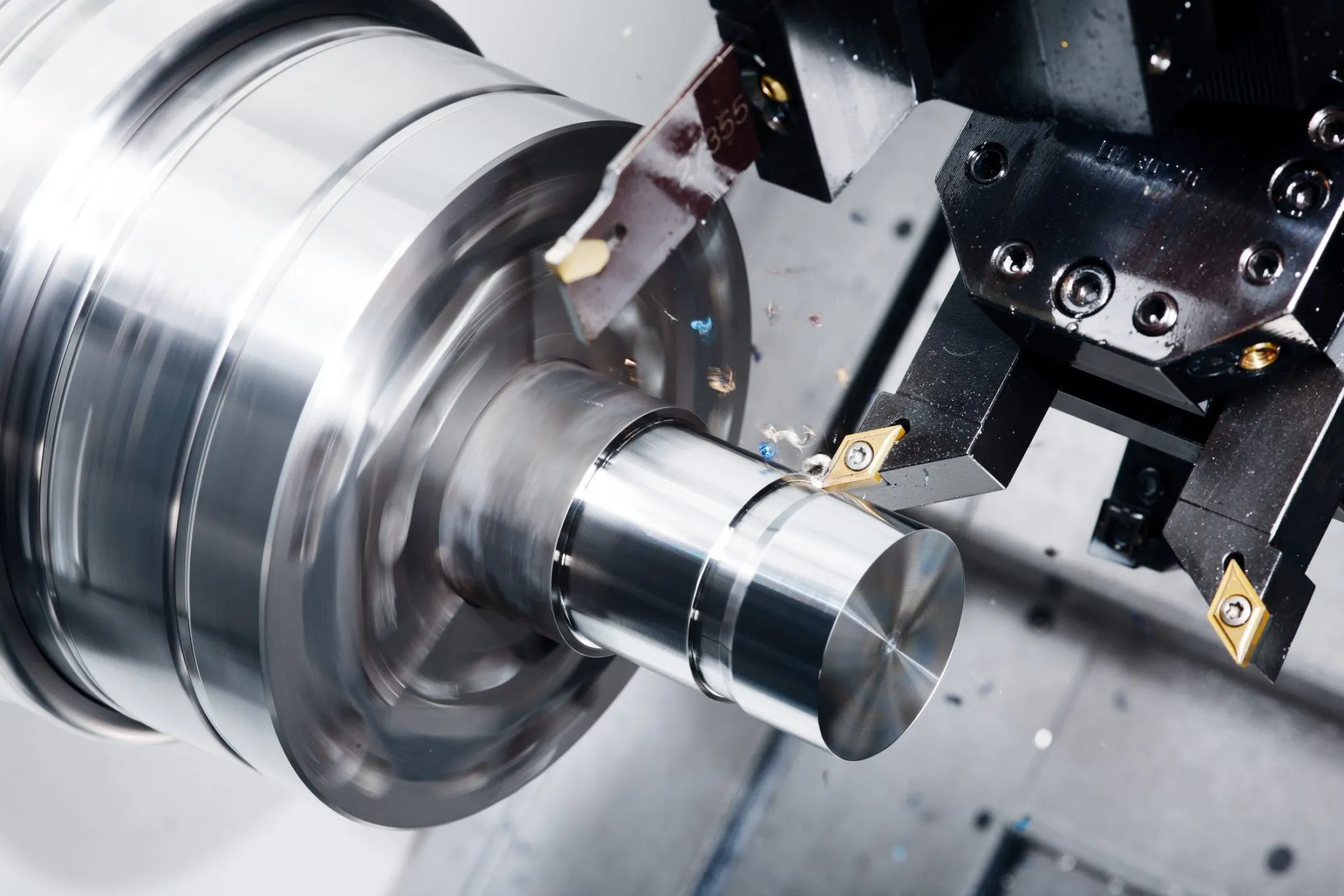
Precision CNC turning with live tooling for shafts, bushings, threaded parts, flanges, and custom rotational components — from prototype to production.
Max OD Ø600 mm Max Length 3000 mm Tolerance ±0.01 mm Live Tooling C/Y Axis Prototype to Production
CNC Turned Precision Shafts
Max Diameter
Ø 600 mm
Flanges
Threaded Parts
Ø600mm
Max Outer Diameter
3000mm
Max Turning Length
±0.01mm
Standard Tolerance
C/Y
Live Tooling Axis
24hr
Quote Turnaround
CNC Turning Machine
Service Overview

Custom CNC Turning for Precision Rotational Parts

CNC turning rotates the workpiece while a stationary cutting tool removes material to produce cylindrical, conical, and profiled parts. It is the most efficient process for any component whose geometry is primarily defined around a central rotational axis.

In a single turning setup we produce external and internal diameters, stepped profiles, tapers, grooves, bores, threads, and facing operations — all precisely concentric.

Cylindrical OD / ID
Stepped diameters
Grooves & undercuts
External & internal threads
Bores & deep holes
Tapers & profiled contours
Facing & end features
Precision bore fits (H7/h6)
⚡ Live Tooling (C/Y Axis) — More in One Setup
Our turning centers with live tooling can also perform cross-holes, flats, slots, keyways, and simple milled features in the same clamping as the turning operations — eliminating secondary setups and the re-fixturing errors they introduce.
Core Value

Why CNC Turning for Rotational Components

Turning is the right process when your part is defined by rotational geometry. Here is why it outperforms milling for these applications.

Optimized for Rotational Geometry
Turning produces concentricity, roundness, and cylindricity naturally — the workpiece rotates around a fixed axis, so all features are inherently coaxial. Trying to produce a shaft on a milling machine would take multiple setups with inferior result.
All Features in One Clamping
OD, ID, threads, grooves, tapers, and face features are all produced in a single setup on a CNC lathe. Concentricity and coaxiality between features is inherently better when nothing is re-clamped.
RT
Efficient for Medium-to-Large Diameters
CNC turning handles diameters from a few millimeters up to Ø600 mm efficiently. For mid-range parts — the majority of shafts, flanges, and connectors — turning is faster and more cost-effective than milling.
LT
Live Tooling Reduces Transfer Operations
When a part also needs cross-holes, flats, or slots, live tooling on the turning center handles these in the same setup. Eliminates the transfer to a milling machine — saving time, reducing error, and lowering cost.
Capabilities

CNC Turning Capabilities

CAP / 01
OD
OD & ID Turning
External and internal diameter turning for cylindrical, stepped, and profiled rotational geometry. Precision bore fits (H7, H6, g6) and concentricity control for precision shaft and bearing seat applications.
Stepped OD/IDH7/h6 FitsConcentricity
CAP / 02
M
Thread Turning
External and internal thread cutting — metric (M4 to M150+), imperial (UNF, UNC), ACME, pipe threads, and custom pitch threads. Multi-start threads and high-lead screws also achievable.
Metric & ImperialACME / PipeCustom Pitch
CAP / 03
GV
Grooving & Parting
Precision grooving for O-ring seats, snap ring grooves, sealing grooves, undercuts, and relief grooves. Parting operations for cut-to-length production of bar-fed parts.
O-Ring GroovesSnap RingSealing Grooves
CAP / 04
TP
Taper & Profile Turning
Conical and tapered surfaces, Morse tapers, profiled contours, and complex rotational profiles. Linear and circular interpolation produces smooth transitions between diameters and angles.
Morse TapersConicalProfiled Contours
CAP / 05
LT
Live Tooling — C/Y Axis
Cross-holes, flats, slots, keyways, and simple milled features — machined in the same setup as turning. Avoid the cost and error of transferring parts to a secondary milling operation.
Cross-HolesFlats & SlotsKeywaysOne Setup
CAP / 06
PT
Prototype to Production
Single-piece prototypes through to high-volume batch production from the same facility. Dedicated bar feeders, auto-loading, and in-process gauging for production volume consistency.
No MOQ1–100,000 pcsBar Feed
Product Gallery

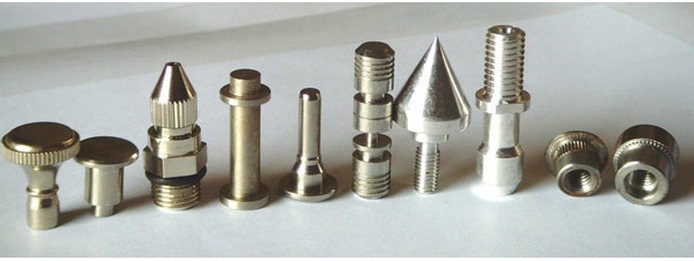
Typical CNC Turned Parts We Manufacture

Shafts & stepped shafts
Bushings & sleeves
Pins & precision pins
Studs & bolts
Spacers
Threaded connectors
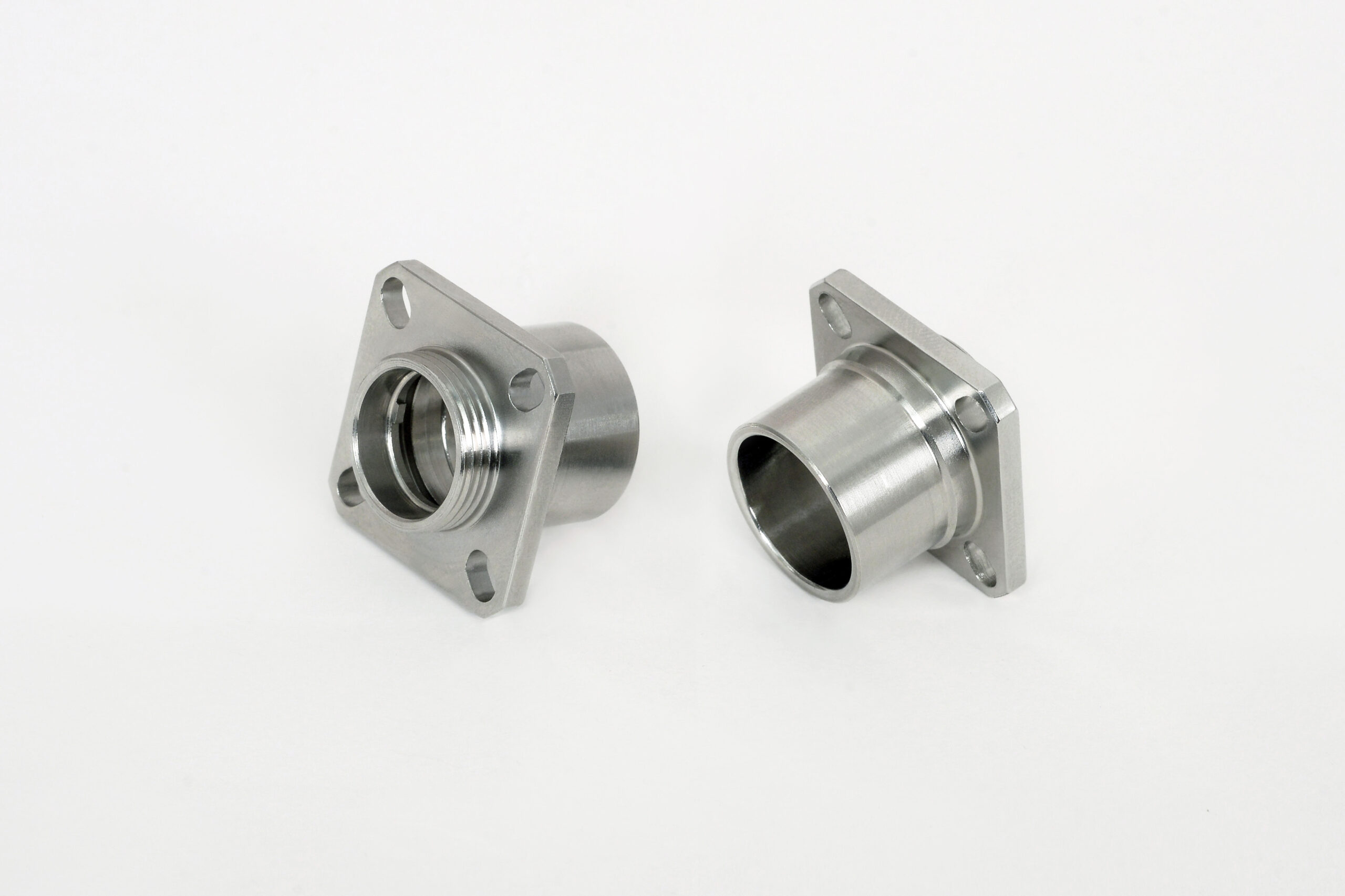
Flanges & flange hubs
Rollers & hubs
Valve stems
Nozzles
Bearing seats
Custom rotational housings
Technical Specifications

Technical Capability for CNC Turning

Max Outer Diameter
Ø 600 mm
Bar-fed production for smaller diameters
Max Turning Length
3000 mm
Long shaft and sleeve machining
Standard Tolerance
±0.01 mm
Precision bore fits H7, h6, g6 achievable
Live Tooling
C/Y Axis
Cross-holes, flats, slots in one setup
Surface Finish
Ra 0.8 μm
Finer Ra 0.4 μm achievable on request
Concentricity & runout inspection
Thread verification (pitch, profile)
Material certification on request
CMM reports for critical dimensions
Material Selection

Materials for CNC Turning

Full Material Library →
303
Stainless 303
Free-machining SS · High-volume turning
304
Stainless 304/316L
Corrosion resistant · Food & medical
17-4
17-4PH Stainless
High-strength · Aerospace shafts & fasteners
440
440C Stainless
High hardness · Bearings & valve stems
1018
Carbon Steel 1018
Low-carbon · General structural parts
1045
Carbon Steel 1045
Medium-carbon · Shafts & couplings
4140
Alloy Steel 4140
Heat-treatable · High-strength shafts
FC
Free-Cutting 1215 / 12L14
Optimal machinability · High-volume parts
6061
Al 6061-T6
General purpose · Lightweight shafts & hubs
7075
Al 7075-T6
High-strength · Aerospace turned parts
C360
Brass C360
Best machinability · Connectors & fittings
C110
Copper C110
High conductivity · Electrical contacts
POM
Delrin / POM
Low friction · Precision bushings & guides
PA
Nylon / PA6 / PA66
Wear-resistant · Lightweight housings
PEEK
PEEK
250°C+ · Medical & semiconductor
PTFE
PTFE / Teflon
Chemically inert · Seals & valve seats
Live Tooling CNC Turning Center
Live Tooling Advantage

More Features in One Setup

Most turned parts also need secondary features — cross-holes for pins, flats for wrenching, slots for keys, or tapped holes at angles. Without live tooling, these require a second operation on a milling machine — introducing re-fixturing errors and adding lead time.

Our turning centers with C/Y axis live tooling handle all of these in the same setup. No re-clamping. No secondary queue. One quote, one operation, one delivery.

Cross-drilling & radial holes
Holes drilled perpendicular or at angles to the turning axis — grease holes, pin holes, set-screw holes — machined while the part is still chucked.
Flats, slots & keyways
Wrench flats, keyway slots, and simple milled pockets produced on the turning center — eliminating transfer to a separate milling machine.
Off-center & angular features
Y-axis capability allows off-center milling at any rotational position — enabling features that would require complex fixturing on a standard lathe.
Fewer Setups Lower Cost Reduced Lead Time Better Accuracy
Post-Processing

Surface Finishes for CNC Turned Parts

All Finishes →
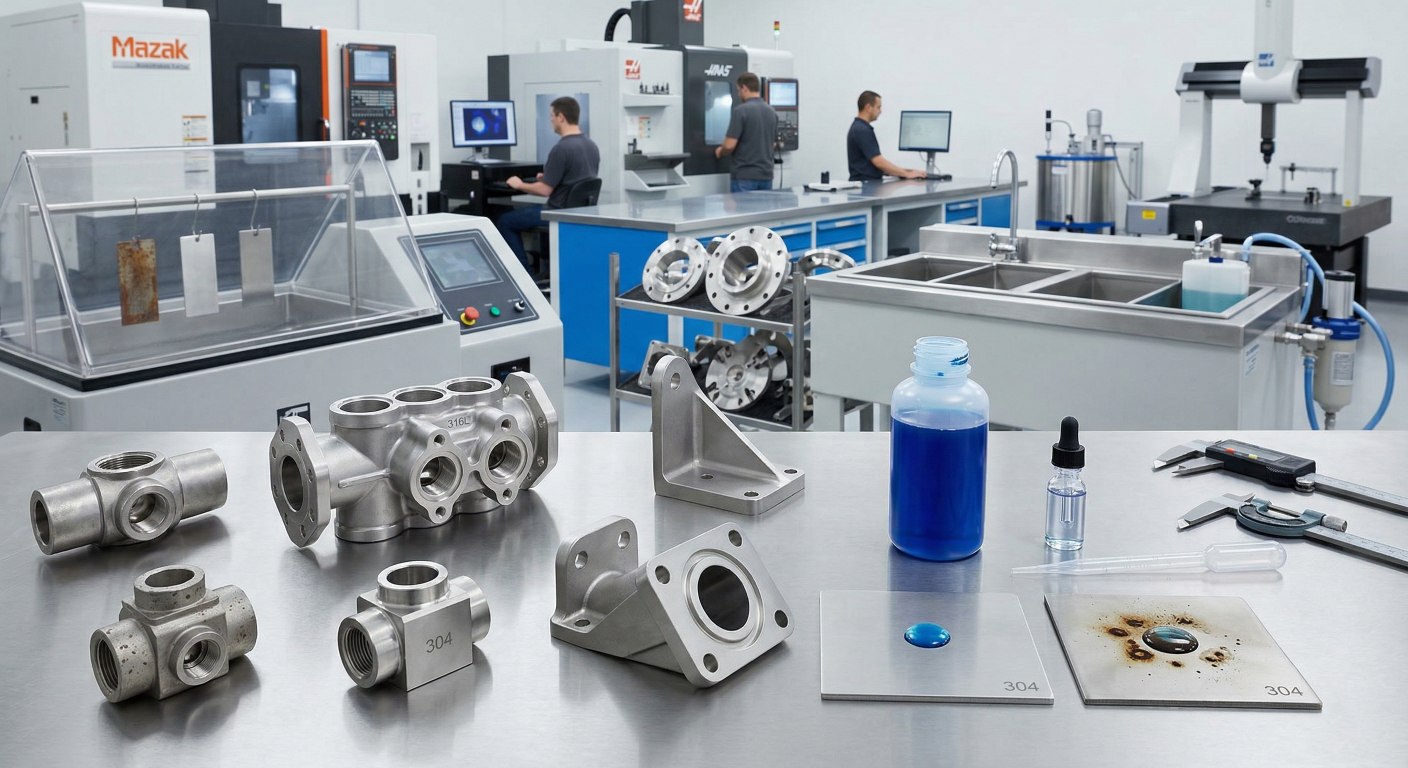
Passivation
Passivation
Chemical treatment that enhances the passive oxide layer on stainless steel turned parts, dramatically improving corrosion resistance with zero dimensional change.
FOR: Stainless Steel · 303 · 304 · 316L · 17-4PH
Electroplating
Electroplating
Zinc, nickel, hard chrome, and copper plating for corrosion protection, wear resistance, and conductivity. Electroless nickel for uniform coverage on threaded and profiled surfaces.
FOR: Carbon Steel · Alloy Steel · Brass Turned Parts
Polishing
Mechanical & Electropolishing
Mirror finish or Ra <0.2 μm electropolish for medical, food-contact, and cosmetic turned parts. Electropolish also removes microscopic burrs from threads and grooves.
FOR: Medical · Food Grade · Precision Stainless Parts
Bead Blasting
Bead Blasting
Uniform matte or satin texture that removes turning marks and creates consistent cosmetic surface. Standard pre-anodize or pre-plate preparation for aluminum parts.
FOR: All Metals · Pre-coat Preparation
Anodizing
Anodizing
Type II and Type III hard anodize for aluminum turned parts. Color options available. Type III (hard anodize) provides Hv 500+ wear resistance for aluminum shafts and bushings.
FOR: Aluminum Turned Parts · All 6061 / 7075
Black Oxide
Black Oxide / Blackening
Hot caustic blackening for steel turned parts — provides a matte black appearance and light corrosion protection with essentially zero dimensional change. Common on shafts, pins, and hardware.
FOR: Carbon Steel · Alloy Steel Shafts & Hardware
Quality Assurance

Quality Control for Precision Turned Parts

RO
Concentricity & Runout
Critical coaxiality dimensions verified with CMM and runout gauges. Concentricity and total runout reported for shafts, bearing seats, and precision rotational components.
TH
Thread Verification
Threads verified with thread gauges (Go/No-Go) for pitch, profile, and fit class. Available for all metric, imperial, and custom thread forms machined in our facility.
CMM
CMM Dimensional Inspection
Critical dimensions, bore fits, and positional relationships measured on Coordinate Measuring Machines. Full dimensional reports provided on request or for qualifying orders.
MC
Material Certification
Mill certificates with heat number and chemical composition available for all orders. Third-party material testing for aerospace and medical requirements.
IP
In-Process Inspection
Key dimensions checked during machining — not only at completion. Critical diameters gauged in-process to catch drift before full production is completed.
ISO
ISO 9001 : 2015 Certified
Full quality management system certification. AS9100 for aerospace and ISO 13485 for medical device supply chain documentation available on qualifying orders.
Applications

CNC Turning for Critical Industries

Aerospace
Shafts, fittings, structural rotational parts
Medical
Instrument sleeves, precision connectors
Automotive & EV
Hubs, studs, motor-related components
Electronics
Connectors, spacers, hardware parts
Robotics
Actuator shafts, rollers, bushings
Industrial
Flanges, bushings, precision hardware
Ø600mm
Max Outer Diameter
3000mm
Max Turning Length
±0.01mm
Standard Tolerance
24hr
Quote Turnaround
Workflow

How Our CNC Turning Service Works

1
Upload CAD File
Send STEP, DXF, or PDF. 2D drawings with diameter, length, and thread callouts all accepted.
2
Turning Feasibility Review
We check diameter ranges, L/D ratios, thread specs, and whether live tooling applies to your part.
3
Quote & Process Confirmation
Detailed quote within 24 hours — material, tolerance, finish, live tooling scope, and lead time.
4
CNC Turning Production
Parts turned on our CNC lathes with live tooling. Bar feed automation for high-volume runs.
5
Inspection & Delivery
CMM inspection, thread gauging, surface check. Shipped worldwide with full tracking and certs.
FAQ

Frequently Asked Questions

Everything about our CNC turning service — capabilities, tolerances, materials, and how it differs from Swiss turning.

CNC turning is a subtractive manufacturing process where a workpiece rotates while a stationary cutting tool removes material to produce cylindrical, conical, threaded, and profiled rotational parts. It is the most efficient process for shafts, bushings, flanges, sleeves, threaded connectors, and any component with a primary rotational geometry. With live tooling, CNC turning centers can also perform cross-drilling, flat milling, and slotting in the same setup.
CNC turning is best suited for parts with a primary rotational geometry: shafts, stepped shafts, bushings, sleeves, spacers, pins, studs, flanges, threaded connectors, hubs, rollers, valve stems, nozzles, and bearing seats. Parts requiring external and internal diameters, threads, grooves, tapers, and bores are ideal candidates. Live tooling extends this to include cross-holes, flats, and keyways.
Our CNC turning centers accommodate parts up to Ø600 mm in outer diameter and up to 3000 mm in length. For parts outside these ranges, contact us directly to discuss your requirements.
Yes. Our turning centers are equipped with live tooling (C/Y axis capability), allowing us to machine cross-holes, flats, slots, keyways, and simple milled features in the same setup as the turning operations. This eliminates secondary operations, reduces re-fixturing error, and shortens lead time significantly.
Yes. In a single CNC turning setup we can produce: external and internal threads (metric, imperial, and custom pitch), undercut grooves, O-ring grooves, sealing grooves, tapers, bores, and — with live tooling — cross-holes, flats, and keyways. Concentrating these features in one setup avoids re-fixturing errors and improves dimensional relationships between features.
We turn all major engineering materials including stainless steel (303, 304, 316L, 17-4PH), carbon and alloy steel (1018, 1045, 4140, 4340), aluminum (6061, 7075), brass (C360, C260), copper (C110), titanium (Grade 2, Grade 5/TC4), and engineering plastics (Delrin/POM, Nylon, PEEK, PTFE). Free-cutting grades like 1215 and 12L14 are stocked for high-volume precision turning.
Our standard CNC turning tolerance is ±0.01 mm. For precision bore fits and shaft diameters, we routinely hold h6, g6, H7, and similar ISO fits. Concentricity and runout are verified on critical rotational components. Tighter tolerances are achievable depending on material, feature type, and part geometry.
Yes. We support CNC turning from single-piece prototypes to high-volume production runs — all from the same facility with the same quality system. Prototypes typically ship in 3–5 business days. There is no minimum order quantity.
Standard CNC turning handles the main range of rotational parts from small to large diameters (up to Ø600 mm). Swiss CNC turning is specifically designed for long, slender, small-diameter parts (Ø0.5–32 mm) where the sliding headstock provides continuous workpiece support to achieve L/D ratios up to 100:1 without deflection. If your part is a small-diameter precision component like a medical pin or miniature connector, Swiss turning is the appropriate process. For standard shafts, flanges, bushings, and connectors, CNC turning is the right choice.
Need Swiss Turning for Small-Diameter Parts?
For long, slender parts under Ø32 mm — medical pins, miniature connectors, precision cannulas — our Swiss CNC turning service handles L/D ratios up to 100:1 without deflection.
Swiss Turning →
Get a Quote

Send Your Drawing.
Get a Quote.

Every enquiry includes a DFM review — tolerance feasibility, material confirmation, and process approach confirmed before production starts. MOQ 1 piece.

24hr
Quote Response
MOQ 1
Prototypes OK
ISO
9001:2015
📐
DFM Review on Every Enquiry
Tolerance feasibility, fixturing strategy, and material confirmation. Specific, actionable feedback — not generic pushback.
🎯
First Article Inspection — Standard
FAI report on every new run. Material certs and surface treatment certs included with every shipment.
🔄
Same Process: Prototype to Production
Process plan from your prototype applies to production batches. No re-qualification when you scale.
3 / 4 / 5-Axis CNC + Turning
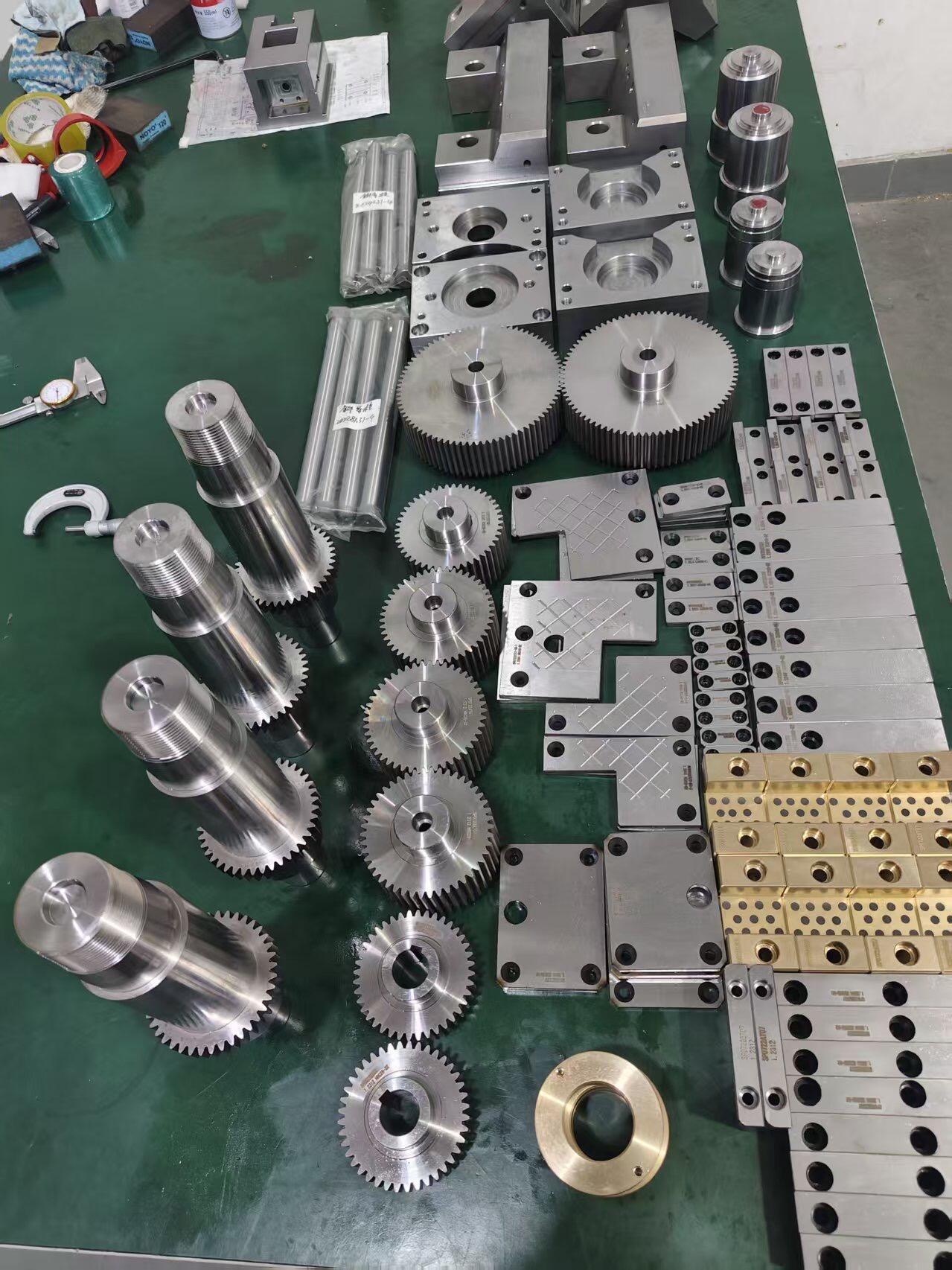
Complex structural parts, shafts, housings, and transmission components. Metals and engineering plastics.
ISO 9001:2015 3/4/5-Axis Milling CNC Turning CMM Inspection Global Delivery