
Free-Machining Steel CNC
Free-Machining
Steel Machining
1215 — Lead-Free
12L14 — Highest Machinability
SUM24L — JIS Equivalent
High-Volume Bar-Fed Turning
Fittings · Fasteners · Connectors
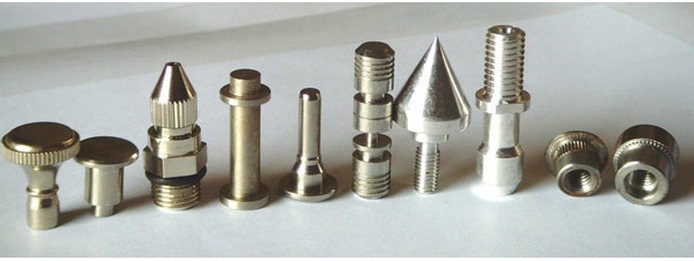
Precision CNC turning of 1215, 12L14, and SUM24L free-machining steels for high-volume production of fittings, fasteners, connectors, shafts, and precision turned components where fast cycle times, excellent surface finish, and consistent tolerances are critical.
Machinability
170%
AISI 1215 Lead-Free ✦
12L14 Leaded — 170% Machinability ✦
SUM24L JIS G4804 ✦
Bar-Fed CNC Turning ✦
Hydraulic Fittings & Connectors ✦
High-Volume Precision Fasteners ✦
Threaded Shafts & Studs ✦
Short Chip · Low Tool Wear · Fast Cycle ✦
AISI 1215 Lead-Free ✦
12L14 Leaded — 170% Machinability ✦
SUM24L JIS G4804 ✦
Bar-Fed CNC Turning ✦
Hydraulic Fittings & Connectors ✦
High-Volume Precision Fasteners ✦
Threaded Shafts & Studs ✦
Short Chip · Low Tool Wear · Fast Cycle ✦
Material Grades
Three Free-Machining Grades, One Priority: Speed & Finish
1215
AISI 1215 · UNS G12150 · EN 11SMnPb30 (similar)
Resulfurized & Rephosphorized Free-Machining Steel
The most widely used non-leaded free-machining steel. Elevated sulfur and phosphorus additions promote short, broken chips and reduce cutting forces — giving a machinability rating of approximately 136% relative to AISI B1112. Produces excellent surface finishes at high cutting speeds. The lead-free choice for applications where RoHS or environmental regulations prohibit leaded steel, without significantly sacrificing machinability versus 12L14.
136%
Machinability
~380 MPa
Tensile Strength
Ra 0.4μm
Surface Finish
HRB 72
Hardness
Chemical Composition
| Carbon (C) | 0.09% max |
| Manganese (Mn) | 0.75–1.05% |
| Phosphorus (P) | 0.04–0.09% |
| Sulfur (S) | 0.26–0.35% |
| Lead (Pb) | None — Lead-Free |
RoHS compliant — no lead content
Excellent surface finish in as-turned condition
Not weldable — sulfur causes hot cracking
Not heat-treatable to useful strength levels
Hydraulic FittingsCouplingsThreaded StudsConnectors
View 1215 Details
12L14
AISI 12L14 · UNS G12144 · EN 11SMnPb37 (similar)
Leaded Resulfurized Free-Machining Steel — 170% Rating
The most machinable steel grade commercially available. Lead additions (0.15–0.35%) to the 1215 base composition act as internal lubricants at the cutting interface — reducing friction, tool wear, and cutting temperatures. 12L14 achieves a machinability rating of 170% relative to AISI B1112, enabling significantly higher cutting speeds and longer tool life than any other steel. The preferred choice for high-volume bar-fed CNC turning where cycle time reduction directly impacts per-part cost.
170%
Machinability
~395 MPa
Tensile Strength
Ra 0.4μm
Surface Finish
HRB 80
Hardness
⚠
12L14 contains lead (0.15–0.35%) — generally not RoHS compliant for EEE applications. Specify 1215 for lead-free / RoHS-required applications.
Chemical Composition
| Carbon (C) | 0.15% max |
| Manganese (Mn) | 0.85–1.15% |
| Phosphorus (P) | 0.04–0.09% |
| Sulfur (S) | 0.26–0.35% |
| Lead (Pb) | 0.15–0.35% |
Highest machinability of any commercially available steel
Outstanding surface finish — ideal for plated or polished parts
Lead content: verify RoHS / REACH compliance for your application
Not suitable for welding or heat treatment
Precision FastenersInstrument PartsValve StemsBushings
View 12L14 Details
SUM24L
JIS G 4804 SUM24L · Equivalent to AISI 12L14
JIS Leaded Free-Machining Steel — Japanese Standard
SUM24L is the Japanese Industrial Standard (JIS G 4804) designation for a leaded resulfurized free-machining steel essentially equivalent to AISI 12L14. The "L" suffix in both designations denotes lead content. SUM24L is the dominant free-machining steel grade in Japanese and East Asian manufacturing — specified on Japanese OEM drawings, automotive sub-assembly drawings, and precision machinery components produced by Japanese companies globally. Machinability and performance are functionally equivalent to 12L14; material certifications reference JIS G 4804.
≈170%
Machinability
~390 MPa
Tensile Strength
Ra 0.4μm
Surface Finish
HRB 78
Hardness
⚠
SUM24L contains lead — same RoHS considerations as 12L14 apply. Verify compliance before specifying in EU EEE applications.
Chemical Composition (JIS G 4804)
| Carbon (C) | 0.15% max |
| Manganese (Mn) | 0.85–1.15% |
| Phosphorus (P) | 0.04–0.09% |
| Sulfur (S) | 0.26–0.35% |
| Lead (Pb) | 0.10–0.35% |
JIS G 4804 certified — accepted on Japanese OEM drawings
Functionally equivalent to 12L14 — interchangeable in most applications
Preferred for Japanese automotive and precision machinery supply chains
Lead content: same RoHS considerations as 12L14
Auto ComponentsPrecision PartsShaftsConnectors
View SUM24L Details
Grade Selection Guide
Choosing the Right Free-Machining Grade
⚙
Choose 1215 when…✓RoHS / REACH compliance is required (lead-free)
✓Hydraulic fittings, couplings, and fluid connectors
✓Food, pharmaceutical, or drinking water contact parts
✓EU / EEE applications where leaded steel is prohibited
✓General high-volume turning where RoHS is a concern
★
Choose 12L14 when…✓Maximum machinability and shortest cycle time required
✓High-volume bar-fed production — cost per piece is critical
✓Very fine surface finish required as-turned (Ra ≤ 0.4 μm)
✓Fasteners, valve stems, instrument bodies, precision shafts
✓RoHS does not apply to your application
◎
Choose SUM24L when…✓Drawing specifies JIS G 4804 SUM24L standard
✓Japanese OEM or automotive supply chain requirement
✓Customer requires JIS-certified material test reports
✓East Asian manufacturing specification — JIS over AISI
✓Performance requirement is the same as 12L14
Material Comparison
Full Property Comparison — 1215 vs 12L14 vs SUM24L
| Property | 1215 | 12L14 | SUM24L | 1018 Steel (ref) |
|---|---|---|---|---|
| Standard | AISI / UNS G12150 | AISI / UNS G12144 | JIS G 4804 | AISI 1018 |
| Machinability Rating | 136% — Excellent | 170% — Best in class | ≈170% — Equivalent to 12L14 | 78% (reference) |
| Tensile Strength | ~380 MPa | ~395 MPa | ~390 MPa | ~440 MPa |
| Lead Content | None — Lead-Free | 0.15–0.35% Pb | 0.10–0.35% Pb | None |
| RoHS (EEE) | Compliant | Not compliant | Not compliant | Compliant |
| Surface Finish (as-turned) | ★★★★ Ra 0.4–0.8 μm | ★★★★★ Ra 0.4 μm | ★★★★★ Ra 0.4 μm | ★★★ Ra 0.8–1.6 μm |
| Weldability | Not recommended | Not recommended | Not recommended | Good |
| Heat Treatment | Case harden only | Case harden only | Case harden only | Full range |
| Chip Control | Short, broken chips | Best — short powder chips | Best — equivalent to 12L14 | Long stringy chips |
| Primary Application | RoHS fittings, couplings, fluid connectors | Max-speed turned parts, fasteners, instrument bodies | Japanese OEM parts, JIS-spec components | Structural, weldable, general machining |
Machining Notes
Machining Free-Machining Steel — Key Considerations
⚠
Points to Watch!
Lead content in 12L14 and SUM24L — occupational healthBoth 12L14 and SUM24L produce fine lead-containing chips and mist during machining. Machining operations must be conducted with adequate ventilation and coolant flood — and chip disposal must comply with local regulations for lead-containing metallic waste. This is standard practice for any facility regularly machining leaded steel.
!
Not for welding — sulfur causes hot crackingAll three grades contain elevated sulfur (0.26–0.35%). Sulfur forms low-melting iron sulfide phases at grain boundaries, causing hot cracking in the weld heat-affected zone. Any design that requires welding at any stage must switch to 1018 or 1045 standard carbon steel.
!
Limited surface hardness via heat treatmentThe low carbon content of 1215, 12L14, and SUM24L (≤0.15% C) means through-hardening by quench and temper is not achievable. Light case hardening (gas or pack carburizing) is possible but results in a shallow case depth (0.1–0.3 mm) — not suitable for heavy wear applications. Specify 1045 or 4140 if hardness after machining is required.
!
Dimensional growth during plating — account for coating thickness on boresWhen zinc plating or electroless nickel is specified, bore diameters decrease by the plating deposit thickness (typically 5–25 μm per side). Drawing bore dimensions must be specified as pre-plate to avoid tight fits after plating. We confirm pre-plate vs post-plate dimension intent with every order requiring surface treatment.
✓
Why These Grades Excel in Production✓
170% machinability = 40–70% faster cycle times vs standard carbon steel12L14 and SUM24L allow cutting speeds 40–70% higher than 1018 or 1045 — directly translating to shorter cycle times and lower per-part cost in high-volume bar-fed turning. For 10,000+ piece production runs, this difference significantly impacts cost competitiveness.
✓
Short chip control eliminates chip nesting in deep bores and threadingThe powder-like chips produced by 12L14 and SUM24L clear automatically from deep bores and threaded features — unlike the long stringy chips of standard carbon steels that must be broken by peck drilling cycles. This enables faster threading and cross-hole drilling without chip clearance issues.
✓
Excellent surface finish as-turned — no secondary finishing requiredRa 0.4 μm is routinely achieved on 12L14 and SUM24L in as-turned condition without superfinishing, grinding, or polishing operations. For plated parts, this eliminates the pre-plate polishing step often required on standard carbon steel turned components.
✓
Consistent dimensional accuracy across large production quantitiesThe predictable chip formation and low cutting forces in free-machining steels produce excellent dimensional consistency across production runs — reducing inspection burden and rework rate on high-volume orders. Tool life is longer and more predictable, minimising mid-run adjustments.
Manufacturing Capability
How We Machine Free-Machining Steel Parts
PROCESS / 01
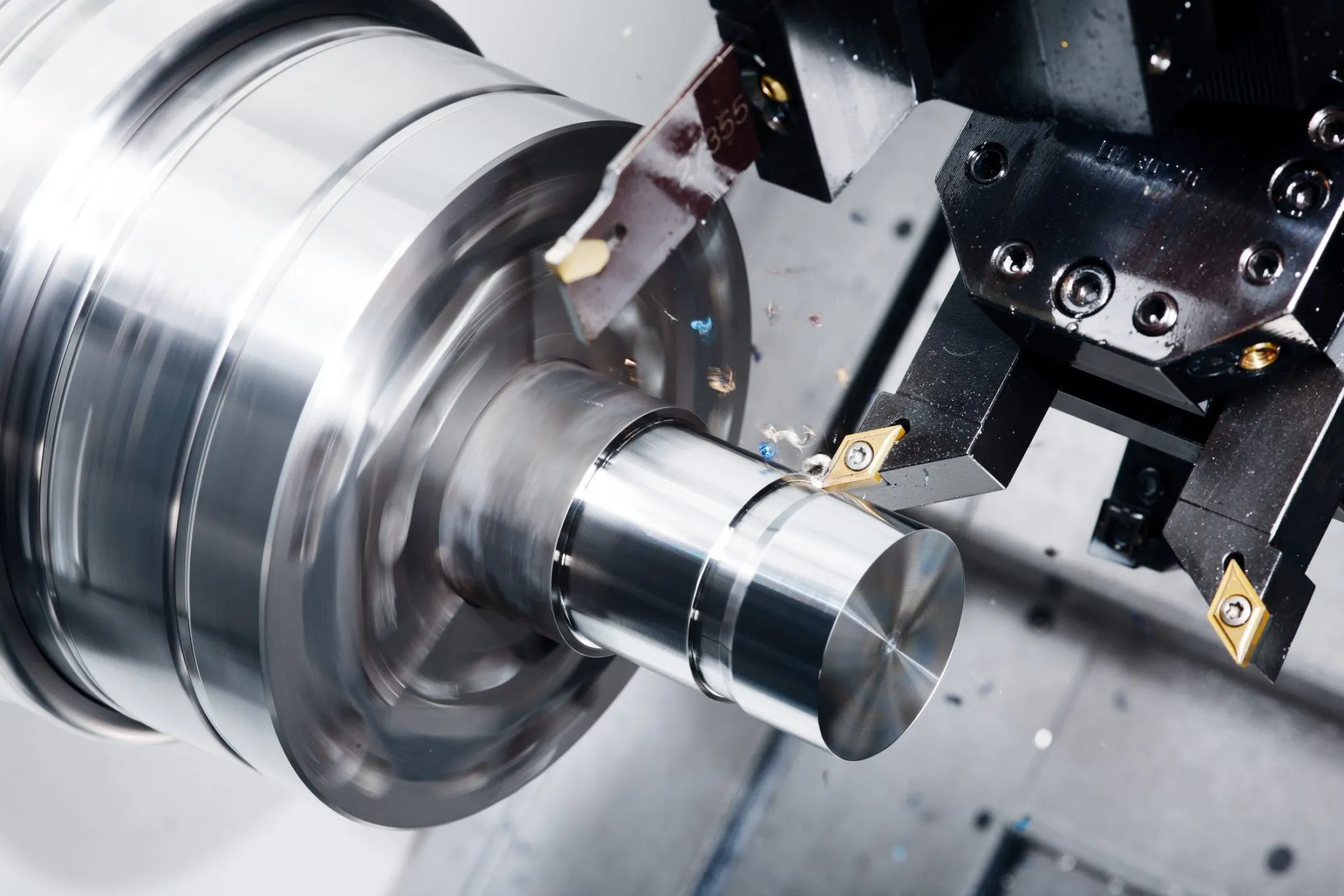
Bar-Fed CNC Turning — High-Volume
High-volume CNC turning of 1215, 12L14, and SUM24L from bar stock. Continuous bar-fed production with automatic part ejection enables rapid cycle times and consistent dimensional tolerances across thousands of pieces per shift. Ideal for fittings, connectors, shafts, and fastener bodies.

PROCESS / 02
Milling, Cross-Holes & Flats
Secondary milling operations for flats, hex features, cross-holes, slots, and keyways on turned parts — all in one setup where possible. Short-chip behavior of free-machining steels clears cross-holes automatically, enabling fast cycle times even on multi-feature components.

PROCESS / 03
Prototype to Volume — No Minimum Order
Single-piece prototypes for design validation through to 50,000+ piece production orders. Free-machining steels are particularly economical at volume — fast cycle times, low tool consumption, and consistent quality from piece 1 to piece 50,000. Same quality system from prototype through production.
Application Gallery
Typical Parts We Produce
 1215
1215
Hydraulic Fittings & Couplings
Material1215 — lead-free, RoHS compliant
ProcessBar-Fed Turning · BSP/NPT Threads
IndustryHydraulics · Pneumatics · Fluid Power
 12L14
12L14
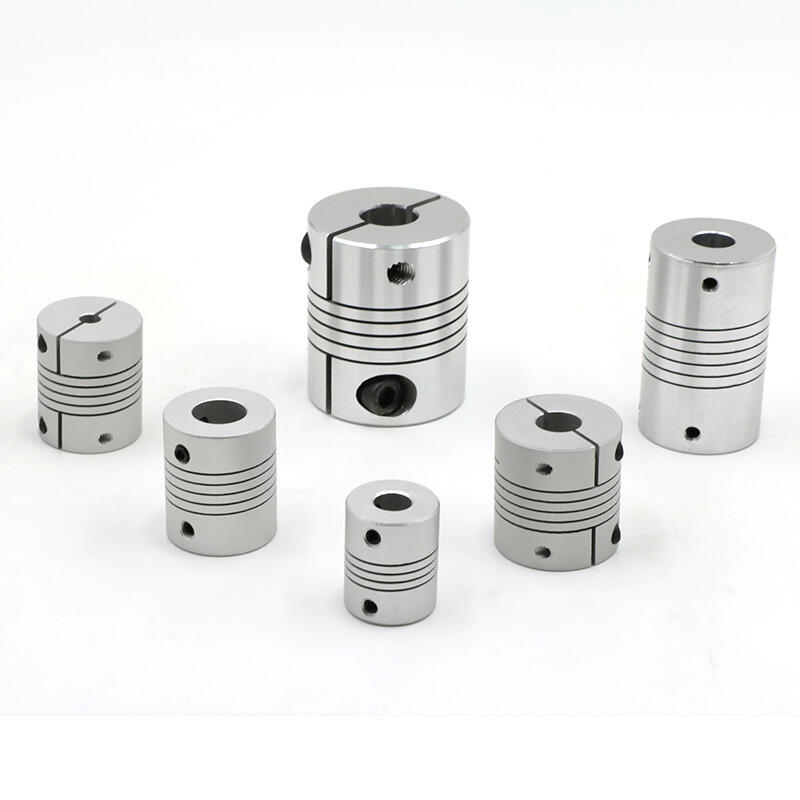
Precision Fasteners & Threaded Studs
Material12L14 — highest machinability
ProcessCNC Turning · Thread Rolling / Cutting
IndustryAutomotive · Machinery · Electronics
 SUM24L
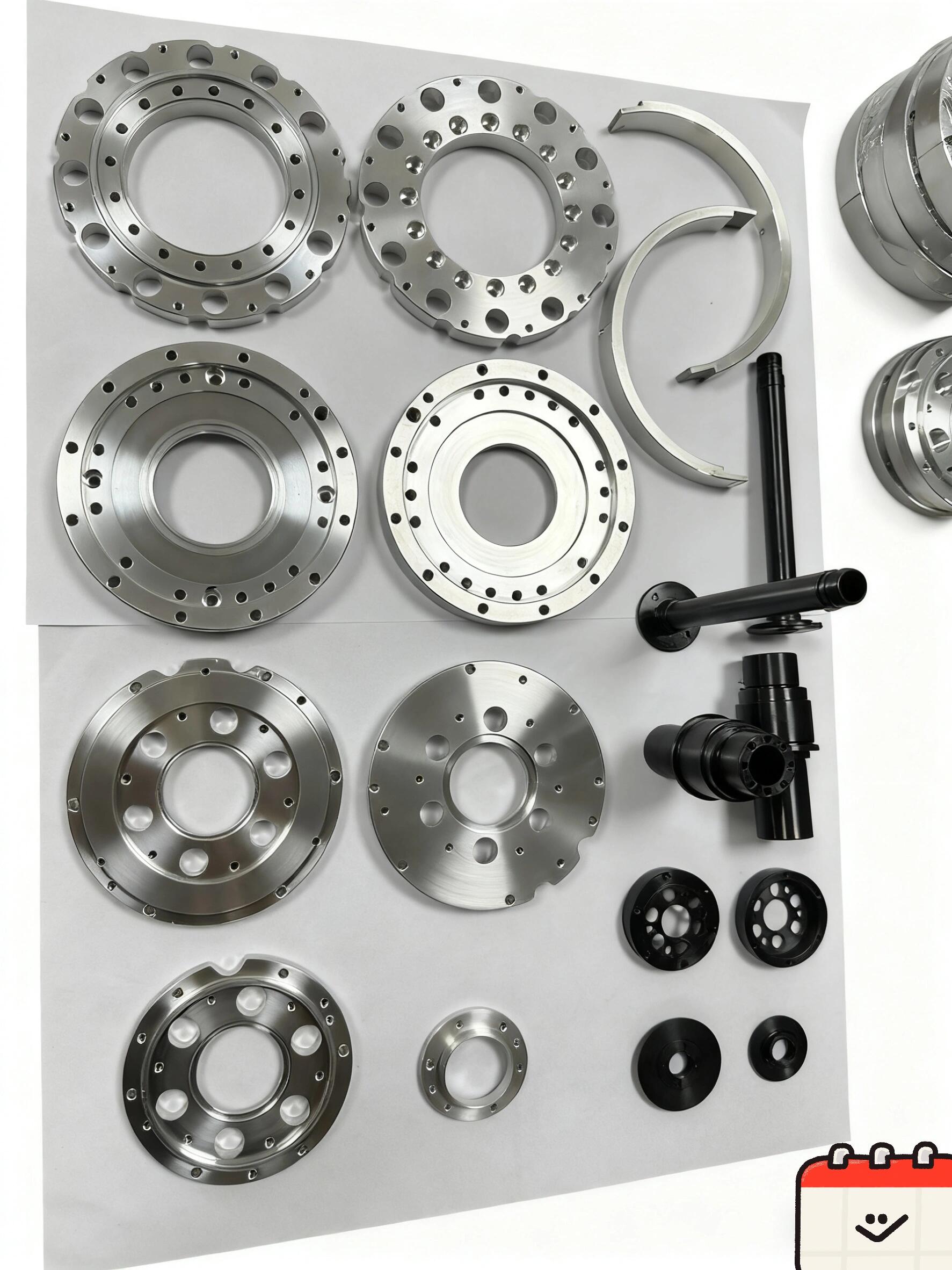
Precision Instrument Components
MaterialSUM24L — JIS spec, fine finish
ProcessCNC Turning · Fine Finish · Zinc Plate
IndustryInstruments · Sensors · Automation
Industries Served
Where Free-Machining Steel Dominates Production
Hydraulics
1215 fittings
Automotive
12L14 / SUM24L
Electronics
1215 (RoHS)
Fasteners
12L14
Machinery
All 3 grades
Instruments
SUM24L / 12L14
From Bar Stock to Finished Part
How We Produce Free-Machining Steel Parts
STEP 01
Bar Stock Selection
1215, 12L14, or SUM24L bar loaded to bar feeder. Material certificate verified. Grade, OD, and straightness confirmed before production release.
STEP 02
CNC Turning
Bar-fed CNC turning at optimised speeds. Short powder chips self-clear — no peck cycles needed. Threading, grooving, and knurling completed in one clamping.
STEP 03
Secondary Operations
Cross-holes, flats, keyways, and hex features milled or drilled as required. Deburring and edge break completed before inspection.
STEP 04
Surface Treatment
Zinc plating, electroless nickel, black oxide, or phosphate as specified. Pre-plate vs post-plate dimension intent confirmed before treatment. Plating thickness verified.
STEP 05
Inspection & Delivery
Dimensional gauge, thread gauge (go/no-go), surface finish check. CMM report, material certificate, and PPAP (if required) shipped with order.
Post-Processing
Surface Treatments for Free-Machining Steel Parts
Free-machining steels have no inherent corrosion resistance — surface treatment is required for any part exposed to moisture or corrosive environments. The excellent as-turned surface finish of these materials ensures uniform coating adhesion and appearance.
Zinc Electroplating
The most common finish for free-machining steel turned parts. Bright zinc (5–15 μm) provides good corrosion protection, a uniform silver appearance, and low cost. Blue, yellow, or black chromate passivation available for additional protection. Pre-plate bore dimensions calculated to ensure post-plate fit.
Electroless Nickel
Uniform nickel-phosphorus deposit (10–50 μm) for corrosion resistance, wear resistance, and a bright appearance. Dimensional increase is consistent and predictable — critical for precision bore and shaft diameters. Used on valve stems, precision shafts, and instrument parts requiring uniform coating on complex geometries.
Black Oxide & Phosphate
Black oxide conversion coating provides a uniform black appearance with minimal dimensional change (<1 μm). Zinc phosphate (Parkerizing) produces a porous coating ideal as a base for paint or oil retention. Both are used on internal machine components, hydraulic parts, and fasteners where a low-gloss black appearance is required.
Tin Plating & Nickel-Tin
Bright tin (5–15 μm) for solderable finish and light corrosion protection on connector bodies and electrical contact components. RoHS-compliant. Nickel-tin duplex coating (nickel undercoat + tin topcoat) for improved solderability and corrosion barrier on precision instrument and connector parts.
170%
12L14 Machinability Rating
±0.005mm
Precision Tolerance
Ra 0.4μm
As-Turned Surface Finish
24hr
Quote Turnaround
Why Work With Us
Why Choose Us for Free-Machining Steel Turning
VOL
High-Volume Bar-Fed Turning Expertise
1215, 12L14, and SUM24L are our highest-volume turning materials. Dedicated bar feeders, optimised cycle programs, and tooling change schedules keep cost-per-piece competitive from 1,000 to 500,000 pieces per month.
PLT
Pre-Plate Dimension Calculation — No Post-Plate Surprises
We calculate pre-plate dimensions for every plated bore and shaft feature — accounting for zinc, electroless nickel, or tin deposit thickness. Confirmed on first article before production release. Eliminates the most common high-volume rejection cause.
JIS
SUM24L with JIS G 4804 Certification — Japanese OEM Ready
We stock SUM24L with JIS G 4804 material certificates. Japanese OEM drawings that specify SUM24L are quoted and supplied with the correct JIS documentation — no material substitution without drawing approval.
RoHS
Grade Advisory — 1215 vs 12L14 vs SUM24L
We advise on grade selection before quoting. If your application requires RoHS compliance, we will flag 12L14/SUM24L lead content and recommend 1215. We never substitute grades without explicit customer approval.
FAQ
Frequently Asked Questions
Common questions about 1215, 12L14, and SUM24L free-machining steels — grade selection, machinability, RoHS compliance, surface treatment, and tolerances.
Free-machining steels (also called free-cutting steels) are carbon steels with deliberate additions of sulfur, lead, phosphorus, or bismuth that improve machinability by promoting short, broken chips and reducing cutting forces. They are used in CNC machining when high production volume, fast cycle times, and excellent surface finish are more important than maximum mechanical strength or weldability. Common grades include 1215 (sulfur + phosphorus), 12L14 (leaded, the most machinable), and SUM24L (Japanese JIS standard equivalent to 12L14). Free-machining steels machine at speeds 100–150% faster than standard carbon steels, significantly reducing per-part cost in high-volume production.
1215 (AISI 1215, UNS G12150) is the highest-machinability non-leaded free-machining steel, containing elevated sulfur (0.26–0.35%) and phosphorus (0.04–0.09%) to produce short chips and reduce tool wear. It achieves a machinability rating of approximately 136% relative to AISI B1112. 1215 is used for high-volume turned components, hydraulic fittings, couplings, threaded rod, studs, and precision shafts where fast cycle times and excellent surface finish are required. It is not suitable for welding, heat treatment, or applications requiring significant ductility.
12L14 (AISI 12L14, UNS G12144) is a leaded free-machining steel — the addition of lead (0.15–0.35%) to the 1215 base composition gives it a machinability rating of approximately 170% relative to AISI B1112, making it the most machinable steel grade commercially available. Lead inclusions act as internal lubricants during cutting, reducing friction, tool wear, and cutting temperatures. 12L14 produces excellent surface finishes on high-speed CNC lathes and is used for precision components, instrument parts, fasteners, fittings, and bushings. Note: 12L14 contains lead and is subject to RoHS and REACH regulations — verify compliance before specifying in consumer or food-contact applications.
SUM24L is the Japanese JIS G 4804 standard designation for a free-machining steel equivalent to AISI 12L14. It is a leaded resulfurized carbon steel with composition and machinability very close to 12L14 — the 'L' suffix in both designations denotes lead content. SUM24L is the predominant free-machining steel grade in Japanese and East Asian manufacturing specifications, while 12L14 is the North American designation for the same alloy family. Both are interchangeable for most CNC turning and precision component applications.
Free-machining steels (1215, 12L14, SUM24L) have very limited heat treatment and welding capability. They cannot be effectively case-hardened or through-hardened to useful strength levels due to their low carbon content and sulfur/lead additions. Welding is not recommended — sulfur and lead inclusions cause hot cracking and porosity in the weld zone, and lead vaporizes during welding producing toxic fumes. If heat treatment or welding is required, specify a standard carbon steel (1018, 1045) or alloy steel instead. Free-machining steels are optimized purely for machining speed and surface finish.
Free-machining steels (1215, 12L14, SUM24L) accept most standard surface treatments including zinc electroplating (most common), electroless nickel, black oxide, phosphate coating, and tin plating. Note that 12L14 and SUM24L contain lead — some plating facilities require special handling, and certain plating processes may not be compatible. Pre-plate bore and shaft dimensions must be calculated to account for coating thickness so that post-plate fits are correct. Always confirm with your surface treatment supplier regarding lead-containing base metals.
Free-machining steels are among the easiest materials to hold tight tolerances on because of their excellent chip control and consistent cutting behavior. Standard CNC turning tolerance is ±0.01 mm. For precision shaft and bore dimensions, we routinely hold ±0.005–0.008 mm. Surface finish of Ra 0.4–0.8 μm is achievable as-turned without additional finishing operations. These steels are particularly well-suited to high-volume bar-fed CNC turning where consistent tolerances across large quantities are required.
12L14 and SUM24L contain lead (0.15–0.35%) and are generally not RoHS compliant for use in electrical and electronic equipment (EEE) sold in the EU. RoHS Directive 2011/65/EU restricts lead content to 0.1% by weight in homogeneous materials for EEE. If your application requires RoHS compliance, specify 1215 (lead-free) instead. 1215 offers similar machinability (136% vs 170%) without lead. Always verify the specific exemption or application scope with your compliance team before specifying leaded steel.