
The Science of Electroplating: Core Components & Working Principle
Ever wonder how a raw, CNC-machined steel part suddenly gets a flawless, mirror-like chrome finish or a rust-proof gold layer? It all comes down to the electrodeposition process, a specialized surface finishing technique we use to bond a thin layer of metal onto a raw substrate material.
At its core, electroplating uses a direct electric current (DC) to trigger a chemical reaction inside a liquid solution. By controlling this electrical charge, we can alter the physical and mechanical properties of a part, boosting its corrosion resistance, electrical conductivity, and overall durability.
The Key Components Explained
To get a perfect, uniform finish, the setup requires four critical elements working together inside an electrolytic bath:
- The Cathode (The Part): This is the negative electrode. It is the metal substrate or part that you want to plate.
- The Anode (The Plating Metal): This is the positive electrode. It consists of the source metal you want to deposit onto your part (like nickel, copper, or zinc).
- The Electrolytic Bath: A specialized chemical solution containing dissolved metal ions of the plating material. It acts as the highway for ions to travel.
- The Power Source: A power supply that delivers a steady direct current (DC) to drive the entire process.
Step-by-Step Electrochemical Mechanism
The actual magic happens at the molecular level through precise redox reactions (reduction and oxidation). Here is exactly how we make it happen step-by-step:
- Activating the Current: We submerge both the anode and cathode into the chemical bath and turn on the DC power supply.
- Oxidation at the Anode: The electrical current causes the metal atoms at the positive anode to lose electrons. This oxidation reaction dissolves the solid metal into the bath as positively charged metal ions.
- Migration: These newly freed metal ions are naturally drawn toward the negatively charged cathode (your part) through the solution.
- Reduction at the Cathode: Once the metal ions reach your part, they gain electrons through a reduction reaction.
- Solid Deposition: As the ions gain electrons, they transform back into solid metal atoms, tightly bonding to the surface to create a highly durable sacrificial coating with superior adhesion properties.
By managing the current density and the time spent in the bath, we achieve an exact, uniform plating thickness tailored to your specific engineering requirements.
Step-by-Step Industrial Electroplating Process Workflow
Achieving a flawless finish during the electrodeposition process requires a meticulous, multi-stage workflow. At HXCNC, we treat electroplating as an exact science. If the surface isn’t prepped perfectly, the plating thickness will be uneven, and the coating will eventually peel.
Here is exactly how a raw, precision-machined component moves through our industrial electroplating line.
Phase 1: Pre-Treatment & Surface Preparation (Crucial for Adherence)
You cannot get excellent adhesion properties if you plate over oil, oxides, or microscopic debris. Pre-treatment is arguably the most critical phase of the entire surface finishing technique.
- Mechanical Cleaning: Parts undergo polishing, buffing, or blasting to eliminate physical surface defects, scale, and burrs.
- Chemical Degreasing: Alkaline baths remove cutting fluids, oils, and grease left behind during CNC machining. This is especially vital for complex geometries like a high-tolerance valve spool, where even a microscopic layer of oil can ruin the coating.
- Acid Pickling: A brief dip in an acid solution removes surface oxides and rust, leaving behind a chemically clean, raw substrate material ready for bonding.
- Rinsing: Thorough deionized water rinses between each step prevent cross-contamination of the chemical baths.
Phase 2: Plating Execution
Once the substrate is chemically pristine, it enters the primary electrolytic bath for the actual plating execution.
- Submersion: The engineered parts are mounted on specialized racks or placed inside barrels, then submerged into the chemical solution.
- Current Activation: We introduce a precise direct electric current (DC) into the system. The parts act as the cathode (negative electrode), while the plating metal acts as the anode (positive electrode).
- Redox Reactions: The electric current drives reduction and oxidation. Metal ions migrate through the electrolyte solution and deposit onto the component surface, creating a uniform sacrificial coating or functional layer.
- Monitoring Current Density: We tightly regulate the current density and immersion time to control the exact plating thickness down to the micron.
Phase 3: Post-Treatment & Quality Control
The process doesn’t end when the part comes out of the tank. Post-treatment ensures the longevity, appearance, and performance of the finished product.
- Rinsing and Neutralization: Parts are thoroughly rinsed to remove any residual plating solution or acids.
- Baking (Hydrogen Embrittlement Relief): High-strength steel parts are baked in specialized ovens to prevent hydrogen embrittlement, ensuring the metal doesn’t become brittle under stress.
- Passivation or Sealants: For specific metals, a chemical conversion coating is applied to further boost corrosion resistance.
- Quality Control Inspection: Every batch undergoes strict quality checks. We test for coating thickness, adhesion strength, and visual uniformity to guarantee the components meet strict US industrial standards.
Major Industrial Electroplating Methods

Choosing the right surface finishing technique depends entirely on your part’s geometry, size, and production volume. Different applications require specific electrodeposition process setups to ensure uniform plating thickness and optimal adhesion properties.
Here is a breakdown of the four primary industrial electroplating methods we use to deliver high-quality finishes.
Barrel Plating
Barrel plating is the go-to method for high-volume, economical processing of smaller parts.
- How it works: Parts are placed inside a rotating non-conductive barrel submerged in the electrolytic bath. The tumbling action establishes electrical contact, cascading the parts to ensure even coverage.
- Best used for: Fasteners, screws, nuts, small stampings, and high-volume hardware.
- Pros: Highly cost-effective; handles high volumes simultaneously; eliminates individual part rigging.
- Cons: Not suitable for delicate, large, or highly intricate components that could bend or scratch during tumbling.
Rack Plating
When dealing with large, complex, or fragile components, rack plating is the preferred engineering solution.
- How it works: Parts are securely mounted to heavy-duty metal racks using fixtures, clips, or wires. These racks hold the parts stationary while submerged in the plating bath, directing the direct electric current (DC) precisely to each component.
- Best used for: Large structural components, intricate medical devices, and high-precision CNC machined parts. For instance, we utilize specialized rack setups when applying protective finishes to complex thermal management components like a heavy-duty water-cooling plate to ensure critical tolerances are maintained.
- Pros: Prevents part damage; delivers superior control over current density; ideal for complex shapes.
- Cons: Higher labor costs due to manual racking; lower production throughput compared to barrel methods.
Rack Plating vs Barrel Plating Quick Comparison
| Feature | Barrel Plating | Rack Plating |
|---|---|---|
| Part Size | Small, durable items | Large, complex, or delicate items |
| Production Volume | High volume, bulk processing | Low to medium volume |
| Cost Per Part | Low | High |
| Risk of Damage | Moderate (due to tumbling) | Low (parts remain stationary) |
Pulse Plating
Pulse plating shifts away from traditional direct current, utilizing rapid pulses of electricity to refine the electrodeposition process.
- How it works: The current alternates swiftly between a specific direct current level and zero (or a reverse current). This periodic interruption alters the redox reactions (reduction and oxidation) at the chemical level.
- Best used for: High-precision electronics, semiconductors, and specialized aerospace components.
- Pros: Significantly improves plating thickness uniformity; reduces internal stress in the coating; allows for faster deposition rates.
- Cons: Requires advanced, expensive power supplies and precise calibration.
Reel-to-Reel (Continuous) Plating
For high-speed, continuous manufacturing lines, reel-to-reel plating offers unmatched efficiency for long, flexible materials.
- How it works: A continuous strip of substrate material is wound through a series of pre-treatment, electrolytic bath, and post-treatment stations at a controlled speed.
- Best used for: Stamped metal strips, wire reels, connectors, and lead frames.
- Pros: Exceptionally high throughput; extremely consistent quality; allows for selective spot plating to save on precious metals.
- Cons: Limited to flexible materials that can be coiled on reels; high initial tooling and automation setup costs.
Common Plating Metals and Their Engineering Benefits
Choosing the right metal for the electrodeposition process is about more than just looks; it’s about matching the physical properties of the coating to the specific demands of the application. In our shop, we focus on how these metals interact with substrate materials to provide long-term durability and performance.
| Plating Metal | Primary Engineering Benefit | Typical Applications |
|---|---|---|
| Zinc | Superior sacrificial coating for rust prevention. | Fasteners, automotive brackets, and hardware. |
| Nickel | Exceptional wear resistance and brightness. | Decorative trim, gears, and internal spline sleeves. |
| Chrome | High hardness and low friction coefficient. | Hydraulic cylinders, tools, and engine parts. |
| Copper | Excellent electrical conductivity and heat transfer. | PCB manufacturing and underplating for adhesion. |
| Gold/Silver | Maximum conductivity and oxidation resistance. | High-end electronics and telecommunication connectors. |
| Tin | High solderability and non-toxic properties. | Food processing equipment and electronic components. |
Why Metal Selection Matters
The choice of metal directly impacts the surface finishing technique and the overall plating thickness required for the job.
- Corrosion Resistance: Zinc and Nickel are the industry standards for preventing oxidation in harsh environments.
- Hardness: Hard chrome plating is the go-to for industrial components that face constant friction and abrasive wear.
- Conductivity: For electrical components, copper and silver ensure minimal signal loss and heat buildup.
- Adhesion: Some metals serve as a “strike” layer to improve the adhesion properties of subsequent coatings on difficult substrates.
When we handle CNC housing enclosure machining, selecting the right plating metal is the final step in ensuring the part survives its operating environment while maintaining tight tolerances.
Material Compatibility: What Substrates Can Be Electroplated?
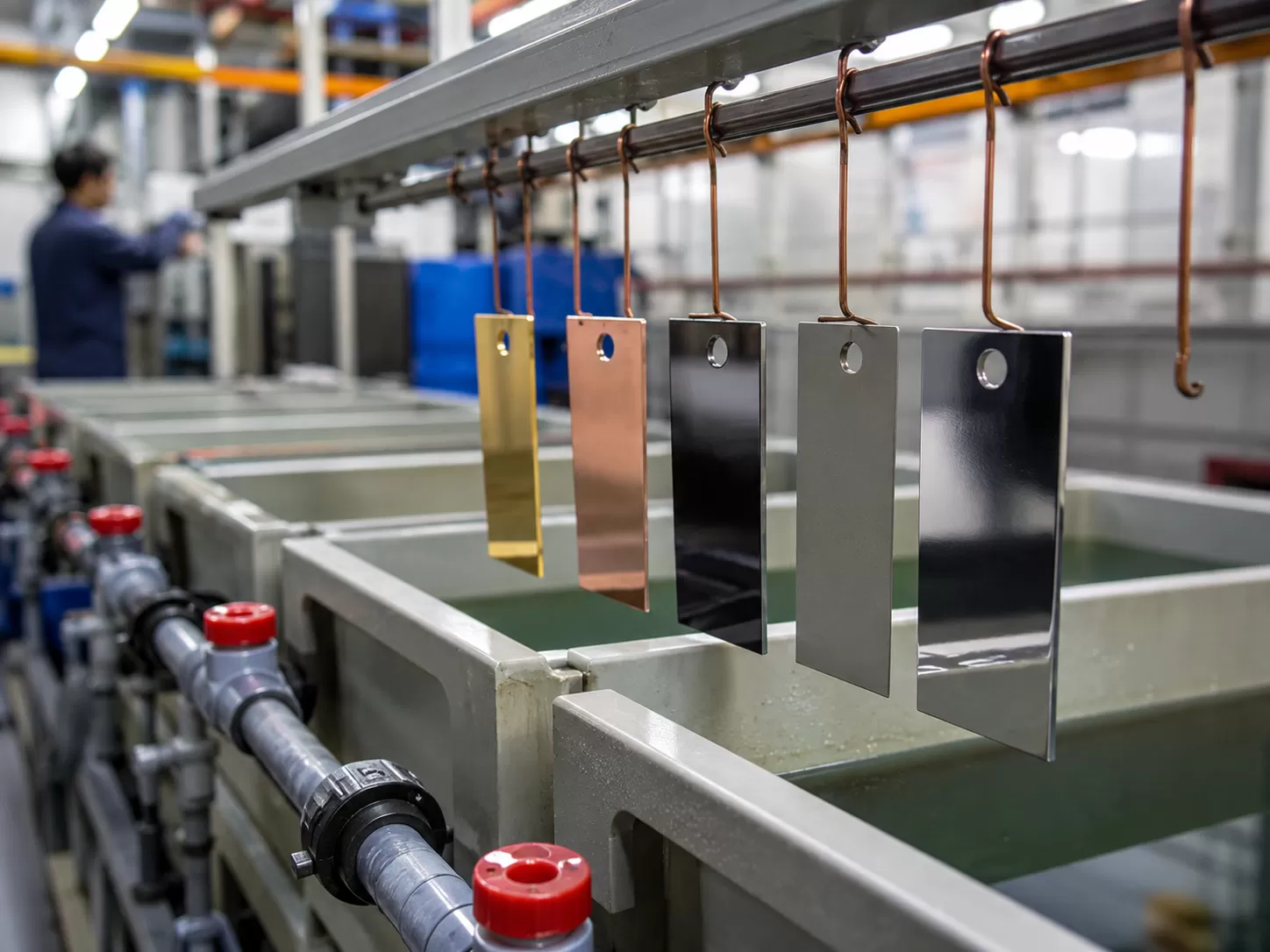
Choosing the right substrate material determines the success of the electrodeposition process. While metals are the traditional choice for coating, advances in surface finishing techniques allow us to plate an incredibly diverse range of materials to improve corrosion resistance, wear, and appearance.
Conductive Metals
Standard metals are the easiest to plate because they naturally act as a cathode in the electrolytic bath. The most common conductive substrates include:
- Steel and Iron: Frequently plated with zinc or chrome for superior rust protection.
- Copper and Brass: Highly conductive metals that accept plating layers easily, often used as underlayers.
- Aluminum: Lightweight but requires specialized zincate pre-treatment to ensure strong adhesion properties.
- Superalloys: Specialized materials like nickel-based alloy CNC parts require precise chemical activation to achieve a flawless, high-durability finish.
Special Challenges in Machining
Machined parts present unique hurdles during the plating stage. Sharp corners, deep blind holes, and complex geometries alter the current density during the electroplating process.
- Sharp Edges: High current density causes plating buildup on corners, leading to brittle edges.
- Recesses and Holes: Low current density areas receive a thinner sacrificial coating or might miss coverage entirely without custom tooling.
- Surface Roughness: Heavy machining marks can trap oils or plating chemistry, ruining the finish. Precision surface preparation is mandatory to secure proper bonding.
Plating on Non-Conductive Substrates
Plating isn’t limited to metals. Non-conductive materials like plastics (ABS, polycarbonate) and ceramics can be electroplated by applying a specialized chemical workaround to make the surface conductive.
- Etching: The substrate is chemically roughened to create microscopic pores for mechanical interlocking.
- Sensitization & Activation: The part is dipped in a noble metal solution (like palladium) to deposit a microscopic conductive layer.
- Electroless Plating: A thin auto-catalytic nickel or copper layer is deposited without using a direct electric current (DC).
- Standard Electroplating: Once the part is conductive, it enters the standard electrolytic bath to receive its final hard chrome plating or decorative finish.
Top Benefits and Core Applications of Electroplating
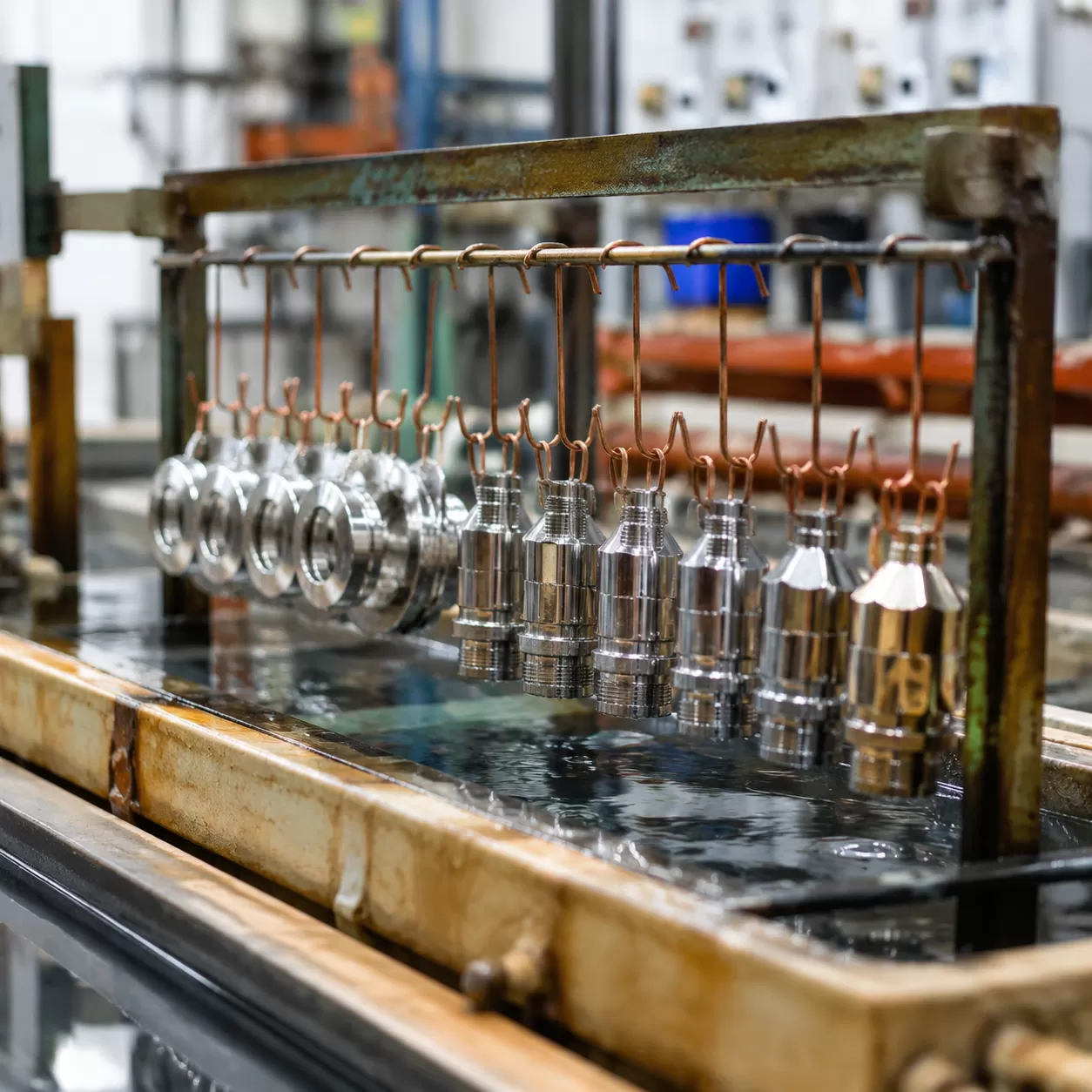
Electroplating is a game-changing surface finishing technique that does far more than just alter the look of a component. By using a direct electric current (DC) to deposit a thin layer of metal onto a substrate material, we can fundamentally change its physical and chemical properties.
Whether you need to boost electrical conductivity, stop rust in its tracks, or give a consumer product a premium look, the electrodeposition process delivers predictable, high-performance results.
Functional Properties: Beyond the Surface
In demanding engineering applications, the functional benefits of electroplating are critical. We use specific metal coatings to target exact mechanical performance needs.
- Corrosion Resistance: Applying a sacrificial coating like zinc or cadmium protects the underlying base metal from harsh environments and moisture.
- Wear and Hardness: Hard chrome plating dramatically increases surface hardness, reducing friction and extending the lifespan of moving mechanical parts.
- Electrical and Thermal Conductivity: Coating non-conductive or poorly conductive parts with gold or silver ensures excellent signal transmission with minimal resistance.
- Enhanced Adhesion Properties: Electroplating can serve as an undercoat layer that improves the bond for subsequent painting or specialized coatings.
| Plating Metal | Primary Functional Benefit | Common Industrial Use Cases |
|---|---|---|
| Gold | Exceptional electrical conductivity & oxidation resistance | Aerospace electronics, high-end connectors |
| Nickel | Superb wear resistance & corrosion protection | Automotive valves, chamber internal components |
| Zinc | Cost-effective sacrificial coating rust prevention | Fasteners, brackets, construction hardware |
| Chrome | High hardness, low friction, and scratch resistance | Hydraulic rods, industrial machining dies |
Aesthetic and Decorative Upgrades
While functionality keeps parts working, appearance sells products. Electroplating transforms raw, dull, or machined components into visually striking pieces with high cosmetic value.
Through precise control of the electrolytic bath and current density, we achieve consistent finishes ranging from mirror-like high-gloss chrome to sleek, modern brushed satin nickel. These decorative upgrades don’t just look premium—they provide a durable layer that resists tarnish, fingerprints, and daily wear, ensuring consumer products maintain their upscale appeal over years of heavy use.
Key Industry Applications
Electroplating is a foundational process across nearly every major manufacturing sector in the United States.
- Aerospace & Defense: Precision plating provides vital thermal protection and reliable electrical conductivity for critical flight systems and rugged uav drone components operating under extreme environmental stress.
- Automotive Industry: From decorative chrome trim to functional zinc-nickel coatings on brake calipers and under-hood fasteners, plating extends vehicle life cycles.
- Electronics & Semiconductors: Microprocessors, circuit boards, and connectors rely on ultra-thin gold and copper electrodeposition to maintain flawless data transmission.
- Medical Devices: Surgical instruments and implants utilize biocompatible gold or titanium plating to ensure sterility, corrosion resistance, and safe human tissue interaction.
Designing Parts for Optimal Electroplating Results: An HXCNC Engineering Perspective
Getting a flawless finish on your machined parts doesn’t start in the plating tank—it starts on the design board. At HXCNC, we know that successful electroplating relies heavily on smart part geometry. If a part is designed without the surface finishing process in mind, you risk uneven coating thickness, trapped chemicals, and premature part failure.
The “Current Density” Effect
During the electrodeposition process, direct electric current (DC) distributes the metal ions across the part. However, electrical current doesn’t naturally spread out evenly. It concentrates heavily on sharp corners, external edges, and projections, causing a high current density that leads to thick, brittle deposits.
Conversely, deep recesses, internal threads, and blind holes suffer from low current density, resulting in a thin or completely nonexistent sacrificial coating. Managing this current distribution is the secret to achieving a uniform plating thickness across the entire substrate material.
DFM (Design for Manufacturing) Plating Rules
To ensure optimal adhesion properties and a uniform finish, engineers should implement specific Design for Manufacturing (DFM) rules during the initial CAD stage:
- Rethink the Edges: Replace sharp 90-degree corners with generous radiuses and blends. A minimum radius of 0.030 inches helps smooth out the current density.
- Drainage and Vent Holes: Deep recesses and blind holes trap liquid from the electrolytic bath. Include dedicated drain holes to prevent chemical carryover and ensure the solution flows freely.
- Thread Relief: Plating buildup can ruin tight tolerances on threaded features. Design internal threads with appropriate allowance or utilize a custom guide shaft setup where precision masking protects critical dimensions.
- Racking Points: Always design a discrete, non-functional area where a rack or wire can maintain a solid electrical connection without ruining the cosmetic look of the part.
Seamlessly Integrating CNC Machining with Surface Finishing
At HXCNC, we bridge the gap between precision machining and advanced surface finishing technique choices. We don’t just cut metal and hand it off; our engineering team reviews your part blueprints to align the machining toolpaths with the requirements of the final plating bath.
By analyzing how the geometry impacts the redox reactions during plating, we optimize every step from the raw stock to the final coating. Whether you need hard chrome plating for wear resistance or an aesthetic finish for consumer goods, our integrated workflow guarantees parts that fit perfectly and perform reliably under pressure.