
How Does the Anodizing Process Work?
Ever wonder how we turn raw aluminum into a rugged, corrosion-resistant powerhouse? It is not just a coat of paint that chips off over time. Anodizing is a controlled electrochemical process that converts the metal surface into a durable, integrated anodic oxide layer.
At HXCNC, we break this down into a highly precise 3-stage flow to ensure your CNC machined parts come out with flawless surface finish aesthetics and exact dimensional tolerances.
Phase 1: Pre-Treatment & Surface Preparation
We cannot create a perfect anodic oxide layer on a dirty surface. Before any chemical processing happens, the raw metal goes through a strict cleaning regimen.
- Degreasing: We strip away manufacturing oils, grease, and cutting fluids left over from the CNC milling lathe.
- Chemical Etching: A light acid or alkaline wash removes a microscopic layer of aluminum. This eliminates natural oxides and minimizes minor scratches to achieve a uniform surface roughness (Ra).
- Desmutting: A quick rinse clears away any residual alloying elements (like copper or silicon) left on the surface after etching, leaving behind pristine, bare metal.
Phase 2: The Electrochemical Cell (Tank Processing)
This is where the actual electrochemical conversion happens. We submerge the prepared aluminum components into an acid electrolyte bath and pass an electrical current through the system.
| Component | Role in the Electrochemical Cell |
|---|---|
| The Anode (Positive Electrode) | Your aluminum parts. This is where the oxidation happens. |
| The Cathode (Negative Electrode) | Plates or rods made of lead or stainless steel inside the tank. |
| The Electrolyte Bath | A chemical solution, most commonly used in sulfuric acid anodizing. |
As electricity flows, water molecules in the bath split. Oxygen ions rush to the aluminum anode, bonding with the metal at a molecular level to build a highly porous, uniform aluminum oxide structure.
Phase 3: Post-Treatment (Coloring & Sealing)
The freshly formed oxide layer is highly porous, resembling a microscopic honeycomb. This open structure gives us the perfect window to add color and lock in maximum protection.
- Optional Coloring: Because the layer is filled with microscopic pores, it absorbs dyes beautifully. We can inject vibrant organic or inorganic pigments directly into the pores for vibrant cosmetic finishes.
- The Sealing Process: To finalize the part, we submerge it in a hot water or chemical bath (like nickel acetate). This hydrates the oxide layer, causing the microscopic pores to swell closed. Sealing locks in any added color and maximizes the component’s corrosion resistance and dielectric strength.
The Standard Types of Anodizing (Mil-A-8625 Classification)

When specifying an anodizing finish for CNC machined parts, we typically follow the military specification Mil-A-8625. This standard defines the specific electrochemical processes used to build the anodic oxide layer based on the acid bath chemistry and layer thickness. Selecting the right type depends entirely on your part’s environmental exposure and mechanical requirements.
Type I: Chromic Acid Anodizing (CAA)
Type I utilizes a chromic acid bath to create the thinnest anodic oxide layer of the three main types, usually ranging from 0.02 to 0.1 mils (0.5 to 2.5 microns).
- Key Characteristics: It provides excellent corrosion resistance with the absolute minimum impact on dimensional tolerances.
- Best Uses: Ideal for tight-tolerance aerospace components and fatigue-critical structural parts. Because chromic acid is non-corrosive to aluminum, it is exceptionally safe for complex assemblies with blind holes where trapped acid could otherwise cause issues.
Type II: Sulfuric Acid Anodizing (SAA)
Type II is the most common industry-standard method, utilizing a sulfuric acid anodizing bath to produce a coating thickness between 0.1 to 1.0 mils (2.5 to 25 microns).
- Key Characteristics: This process yields a highly porous structure that is perfect for absorbing organic dyes before the final sealing process. It offers an excellent balance of wear resistance, corrosion barriers, and vibrant surface finish aesthetics.
- Best Uses: Universal choice for consumer electronics, automotive trim, optical housings, and general CNC machined components. If you need a specific color like black, red, or blue, Type II is the go-to option.
Type III: Hardcoat Anodizing (Hard Anodize)
Type III, commonly known as hardcoat anodizing, also uses a sulfuric acid bath but operates at much lower temperatures and higher electrical currents. This forces a rapid, dense conversion coating that reaches thicknesses from 1.0 to 3.0 mils (25 to 76 microns) or more.
- Key Characteristics: It builds an extremely dense ceramic-like barrier with exceptional surface roughness control, heavy wear resistance, and high dielectric strength.
- Best Uses: Engineering applications requiring extreme durability, such as pistons, sliding mechanisms, military gear, and high-wear industrial jigs and fixtures.
Specialty Processes
Beyond the standard Mil-Spec classifications, specialized surface treatments cater to distinct engineering problems:
| Process Type | Primary Chemical / Method | Main Benefit | Common Application |
|---|---|---|---|
| Phosphoric Acid Anodizing (PAA) | Phosphoric Acid | Exceptional structural bonding properties | Aerospace structural adhesives and primers |
| Titanium Anodizing | Alkaline / Acid Electrolytes | Biocompatibility and color coding without dyes | Medical implants and orthopedic screws |
| Bright Dip Anodizing | Phosphoric / Nitric Acid Pre-treatment | High-gloss, mirror-like specular reflectivity | Cosmetic automotive trim and architectural accents |
If your design requires alternative protective layers, looking into alternative options like high-performance spray coating services can provide the exact chemical or environmental defenses your specific aluminum alloys require.
Key Benefits of Anodizing for CNC Machined Components
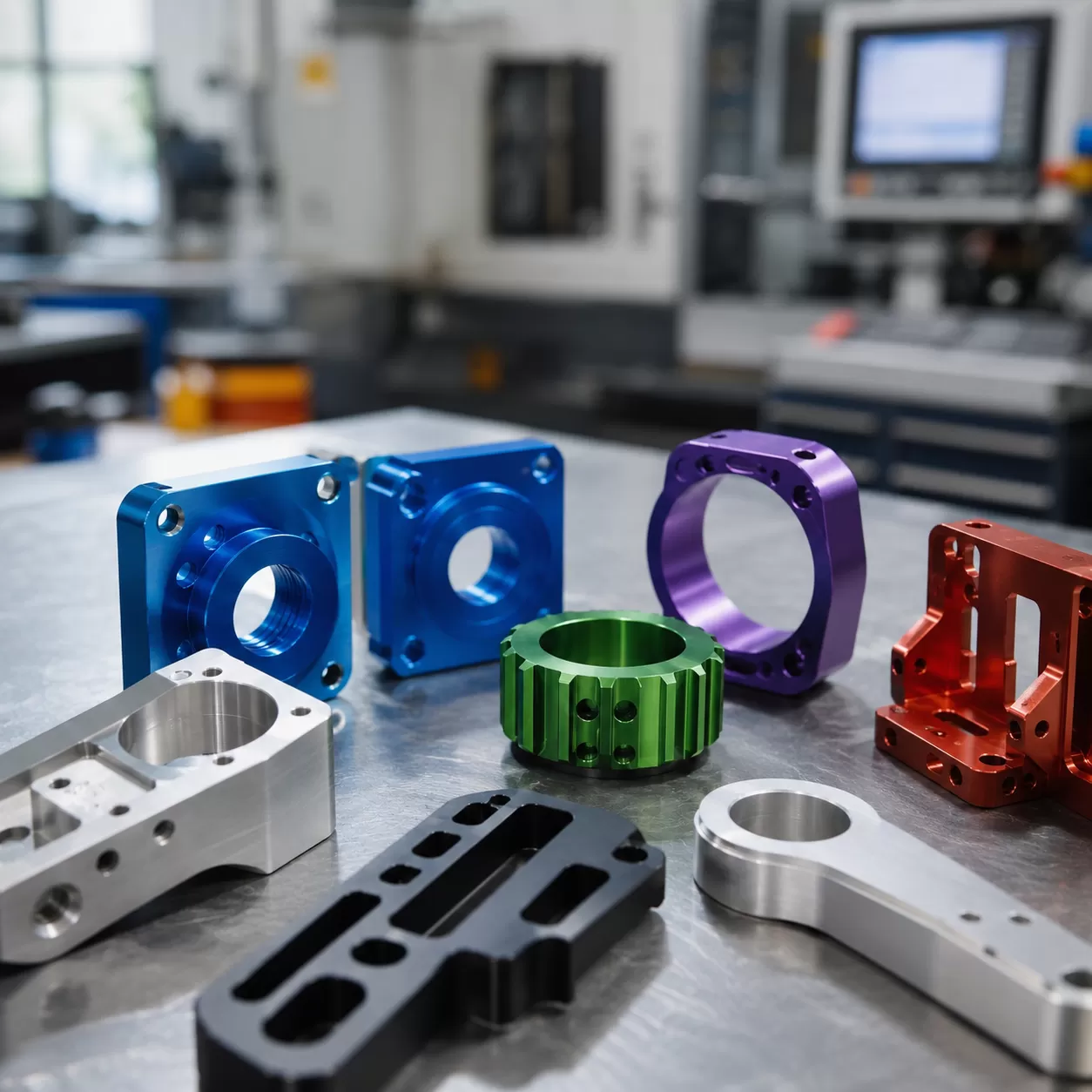
Anodizing transforms the surface of raw aluminum into a high-performance asset. Unlike paint or powder coating that sits on top of the material, this electrochemical process grows the anodic oxide layer directly out of the substrate. The result is an inseparable shield that maximizes the lifespan and utility of custom parts.
| Benefit | Core Advantage | Primary Application |
|---|---|---|
| Permanent Structural Bonding | Will not chip, flake, peel, or delaminate. | High-stress mechanical assemblies |
| Enhanced Wear & Scratch Resistance | Diamond-like surface hardness (especially Type III). | Sliding components and high-friction tracks |
| Superior Corrosion Barriers | Halts atmospheric and chemical degradation. | Marine, medical, and outdoor environments |
| Functional Dielectric Insulation | High dielectric strength isolates electrical currents. | Electronic enclosures and PCB chassis |
| Thermal Emissivity Management | Dissipates heat efficiently across the surface. | High-output heatsinks and aerospace parts |
Permanent Structural Bonding
Because the anodic oxide layer is chemically integrated into the aluminum alloy, it forms a permanent bond. Traditional coatings fail under extreme stress, but an anodized surface cannot peel or flake off. This makes it a critical choice for complex chamber internal components and heavy-wear assemblies that demand absolute surface integrity.
Enhanced Wear & Scratch Resistance
Anodizing drastically increases surface hardness. Hardcoat anodizing (Type III) creates a rugged ceramic-like barrier that keeps CNC machined parts safe from abrasive wear and everyday scratching. This protects tight tolerances and ensures that moving aluminum components don’t degrade under friction.
Superior Corrosion Barriers
Anodized finishes provide an exceptional conversion coating that seals raw aluminum away from oxygen, moisture, and chemicals. This defense system blocks salt spray, oxidation, and harsh cleaners, keeping the underlying metal structurally sound for decades.
Functional Dielectric Insulation
For electrical and electronic applications, an anodized surface acts as an effective insulator. The coating exhibits high dielectric strength, preventing electrical arcing and isolating currents without the need for additional bulky insulating materials.
Thermal Emissivity Management
Anodizing improves heat dissipation. By altering the surface properties, it allows aluminum parts to radiate heat much more effectively than raw, shiny metal. This is highly beneficial for high-performance heatsinks, power supplies, and engine components that operate under intense thermal loads.
Industrial Applications & Real-World Uses of Anodizing
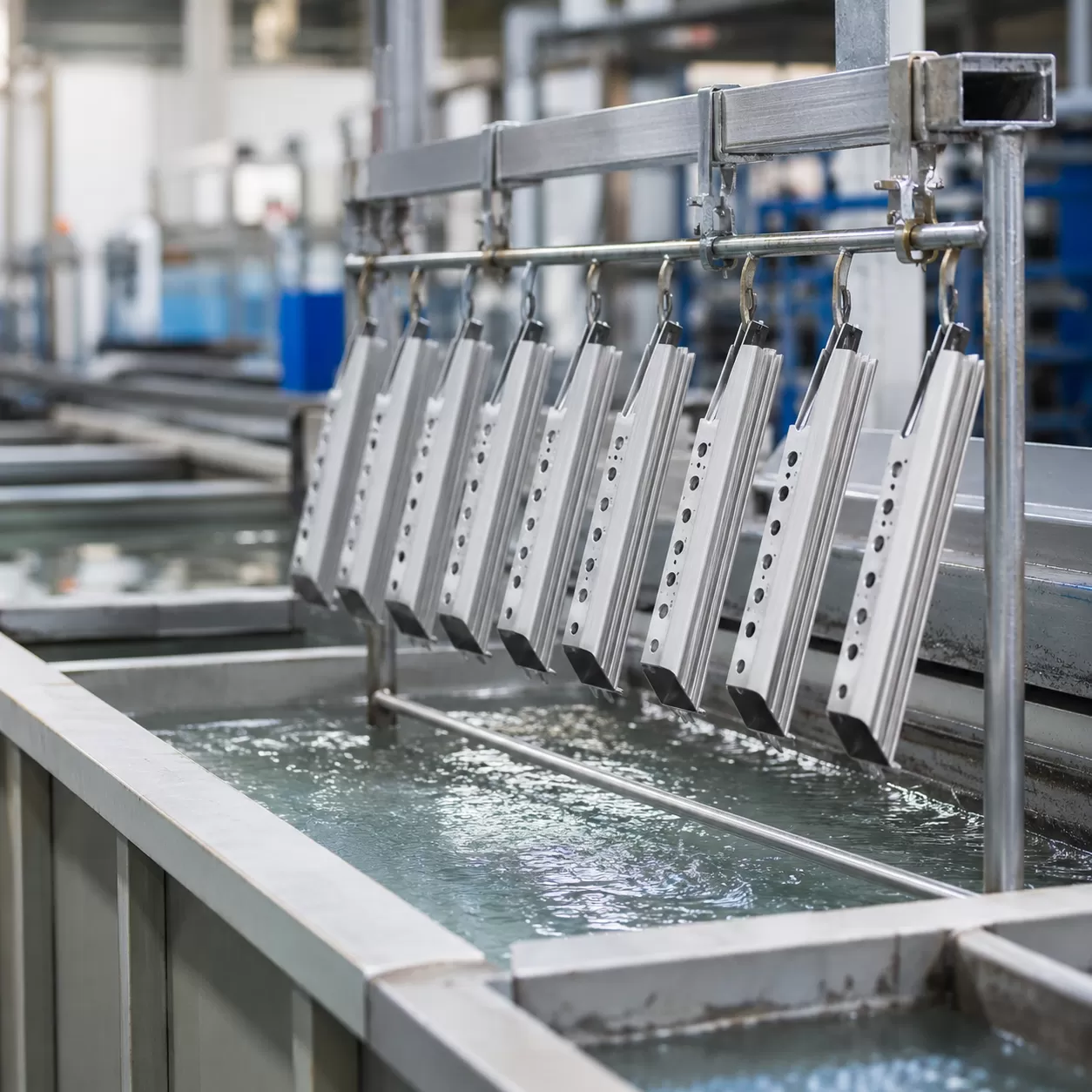
Anodizing isn’t just about making parts look good; it is a critical requirement across major United States manufacturing sectors. By transforming the raw aluminum surface into a durable anodic oxide layer, this finishing process ensures that components can withstand harsh daily operations.
Here is how different industries leverage anodizing for their specific applications:
- Consumer Electronics: Modern devices demand a premium handfeel and scratch resistance. We rely heavily on sulfuric acid anodizing to deliver sleek, vibrant finishes on smartphones, laptops, and premium electronics communication components. This process provides the perfect blend of surface finish aesthetics and functional scratch protection.
- Aerospace & Automotive: Weight reduction is everything in aerospace and automotive engineering. Substituting heavy steel with lightweight aluminum alloys (6061, 7075) is standard practice, but these parts need serious protection. Chromic acid anodizing (Type I) and hardcoat anodizing (Type III) provide the vital corrosion resistance and wear barriers needed for engine brackets, hydraulic valve bodies, and structural flight components.
- Medical Equipment: Cleanliness and durability are non-negotiable in healthcare. Anodized aluminum is widely used for surgical trays, orthopedic instruments, and diagnostic equipment enclosures. The non-flaking, sealed conversion coating can withstand repeated chemical sterilization and rugged clinical handling without degrading.
- Industrial Jigs, Fixtures & Molds: On the factory floor, automated machinery parts face constant friction. We use Type III hardcoat anodizing to give industrial manufacturing jigs, custom automation fixtures, and molds a high level of hardness and dielectric strength. This treatment keeps tooling dimensionally stable and running smoothly through millions of cycles.
HXCNC Pro-Tips: Designing Parts with Anodizing in Mind
When we machine CNC machined parts at HXCNC, we don’t just think about the cutting tools—we look ahead to the finishing tank. Anodizing is a conversion coating that alters the surface of your metal, meaning your raw CAD design needs to account for the chemical changes to follow. If you are developing rugged mechanical setups or components for optical instrumentation precision parts, keeping these practical manufacturing tips in mind will save you time and scrap.
Alloy Selection Matters
Your choice of aluminum alloys dictates the final look and strength of the anodic oxide layer. Not all aluminum responds the same way to the electrochemical process.
- 6061 Aluminum: The absolute best all-rounder. It anodizes beautifully, offering excellent protection and clean color consistency for both sulfuric acid anodizing and hardcoat anodizing (Type III).
- 7075 Aluminum: Great for high-stress structural parts, but its higher zinc content can leave the finish looking slightly darker, yellowish, or less vibrant if you are opting for decorative colors.
- 2026 Aluminum: Heavy on copper, which compromises corrosion resistance and makes it difficult to achieve a thick, protective layer.
Accounting for Dimensional Growth
Anodizing builds up and penetrates the material surface. Unlike paint, which sits entirely on top, an anodized layer is roughly 50% penetration and 50% growth.
- Type II (SAA): Typically adds about 0.0002″ to 0.001″ of thickness per side.
- Type III (Hardcoat): Adds around 0.001″ to 0.002″ or more per side.
- The Golden Rule: You must adjust your dimensional tolerances on critical mating features, bearing journals, and threads prior to machining to compensate for this growth.
Blind Holes & Racking Marks
The chemistry requires physical and electrical contact to work. This introduces two major design challenges:
- Racking Marks: Every part needs to be clamped to a rigid rack to pass current through the cell. This leaves small, un-anodized contact points. Always specify a non-critical surface on your print where our team can place these racking marks.
- Blind Holes: Deep blind holes can trap chemicals, leading to poor coverage or acid bleed-out that ruins the surface finish aesthetics. Designers should include through-holes or vent holes wherever possible to allow proper drainage during the sealing process.
Hiding Tool Marks
Anodizing is a transparent oxide layer, meaning it acts like a magnifying glass for surface flaws. It will not hide scratches, burrs, or heavy machining lines.
- Surface Roughness (Ra): To achieve a flawless matte or glossy look, parts should undergo pre-treatment bead blasting or chemical etching to uniform the surface.
- Mil-Spec Anodizing Requirements: If your parts require strict Mil-Spec anodizing, the raw machine finish must be clean and free of deep tool gouges, as the anodizing process will actually highlight variation in the grain of the metal.