
Riveting vs Welding: Choosing the Right Method to Join Sheet Metal Parts
When we design and build custom components, one critical question always comes up: should we rivet or weld? Choosing the wrong joining method can lead to warped parts, premature joint failure, or blown production budgets.
Let’s dive into the mechanics, variations, and trade-offs of sheet metal riveting to help you make the right call for your project.
Understanding Sheet Metal Riveting: Mechanics & Variations
How Mechanical Fastening Works
Sheet metal riveting relies on permanent mechanical fastening to hold two or more panels together. Unlike thermal bonding, this process uses a pre-drilled or punched hole where a metal fastener is inserted.
The installation tool deforms the tail of the rivet, creating a mechanical interlock that clamps the sheets tightly together. Because this process happens at room temperature, it avoids the risks of warping and material distortion that often come with heat-based methods.
Common Types of Rivets Used in Manufacturing
Different applications require specific fastener geometries. We utilize several standard variations depending on your design priorities:
- Pop (Blind) Rivets: Ideal for tubular or enclosed structures where you can only access one side of the assembly.
- Solid Rivets: The gold standard for high-stress applications, requiring access to both sides for installation.
- Countersunk Rivets: Perfect for aerodynamic surfaces or tight clearances where a flush finish is mandatory.
- Self-Piercing Rivets (SPR): High-speed options that punch their own holes, saving significant prep time during high-volume production.
Key Benefits of Riveting
Riveting remains a dominant choice in precision CNC metalworking for several distinct reasons:
| Feature | Production Advantage |
|---|---|
| Dissimilar Metal Joining | Easily bonds aluminum to steel without brittle metallurgical reactions. |
| No Heat-Affected Zone (HAZ) | Eliminates thermal stress, preserving pre-treated or coated finishes. |
| Consistent Tensile Strength | Delivers highly predictable shear and tensile performance across batches. |
| High Joint Fatigue Life | Offers excellent resistance to continuous vibration and dynamic loads. |
Limitations of Riveted Joints
While highly reliable, riveting has specific limitations that you must consider during the design phase:
- Stress Concentrations: The required rivet holes create localized stress points, which can lower overall structural integrity if not spaced correctly.
- Increased Weight: Adding thousands of individual fasteners introduces extra weight compared to a seamless thermal bond.
- Sealing Challenges: Riveted seams are not inherently airtight or watertight, requiring secondary gaskets or liquid sealants to achieve high corrosion resistance.
Understanding Sheet Metal Welding: Core Thermal Fusion Methods
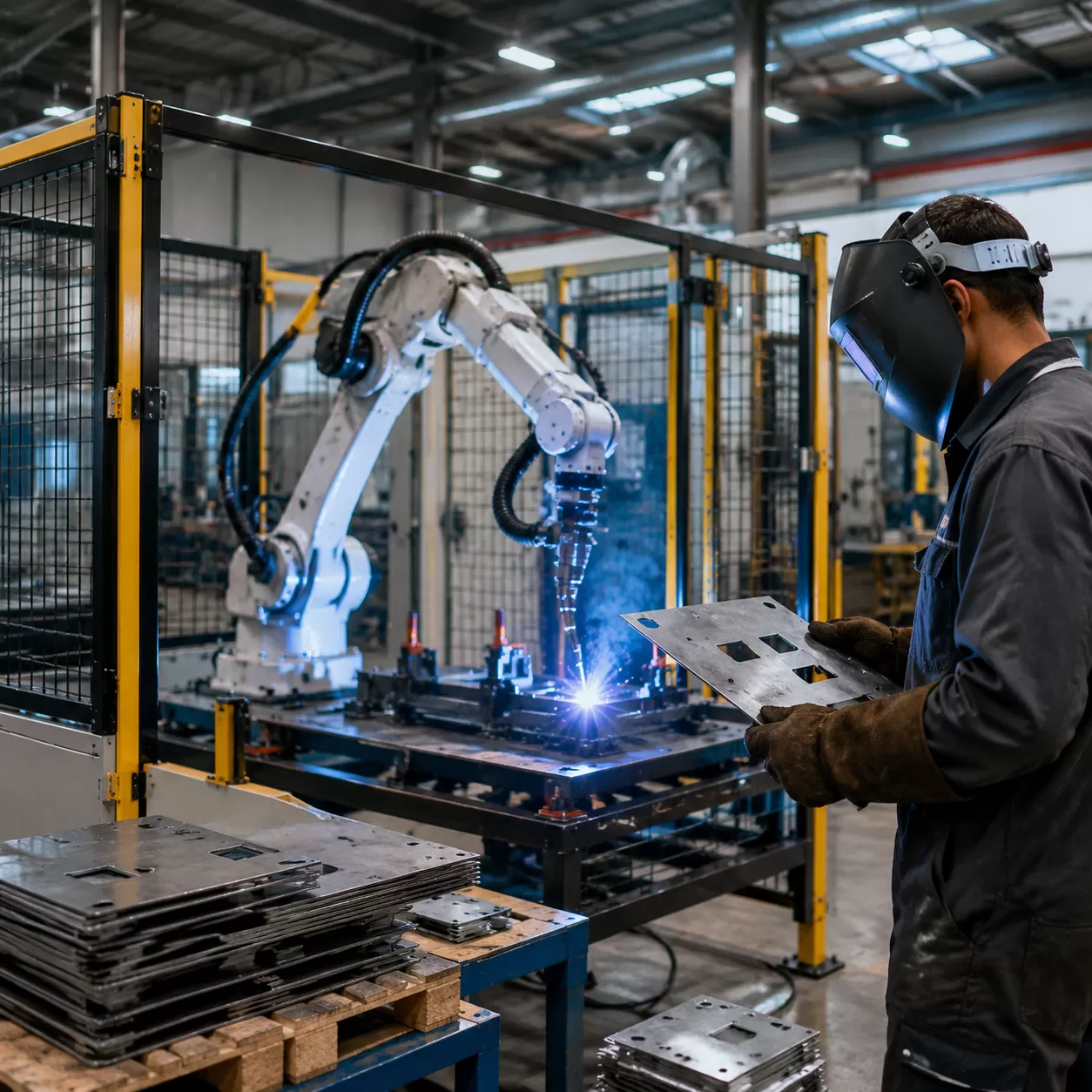
Welding relies on thermal fusion to melt and merge base metals into a single, cohesive unit. Unlike mechanical fastening, welding creates a molecular bond that provides exceptional structural integrity and permanent sealing for heavy-duty applications.
The Science of Thermal Fusion
Thermal fusion applies intense heat to the joint area, melting the sheet metal edges alongside a filler material. As the molten pool cools and solidifies, it forms a joint that is often as strong as, or stronger than, the parent metal. This process alters the crystalline structure of the metal, creating a specialized region known as the heat-affected zone (HAZ). Managing the HAZ is critical to preventing material distortion and preserving the tensile strength of the assembly.
Primary Welding Techniques for Sheet Metal
Choosing the right method depends on production cycle efficiency, material thickness, and aesthetic requirements.
- TIG Welding (GTAW): Delivers ultimate precision and clean aesthetics. It uses a non-consumable tungsten electrode and is ideal for thin gauges and copper CNC machining where flawless presentation matters.
- MIG Welding (GMAW): Offers high speed and ease of use, making it the go-to choice for high-volume production cycles on thicker steel components.
- Spot Welding: A resistance welding method utilizing a dedicated spot welding machine. It welds overlapping sheet metal parts quickly without filler material, standardizing efficiency in automotive-style assemblies.
| Welding Technique | Best For | Production Speed | Heat-Affected Zone (HAZ) |
|---|---|---|---|
| TIG Welding | Thin metals, precise aesthetics | Slow to Medium | Narrow and controlled |
| MIG Welding | Thicker gauges, structural frames | Fast | Wider, risk of distortion |
| Spot Welding | Overlapping sheets, high-volume production | Extremely Fast | Highly localized |
Key Benefits of Welding
- Permanent Structural Integrity: Yields maximum tensile strength and joint fatigue life, making it perfect for high-stress load-bearing components.
- Leak-Proof Sealing: Forms a continuous, airtight, and watertight barrier essential for tanks, enclosures, and fluid routing systems.
- Seamless Aesthetics: Welded joints can be ground down, polished, and finished to create a completely seamless surface.
Limitations of Welding
- Thermal Material Distortion: High heat can warp or buckle thin sheet metal, requiring specialized fixtures and skilled technicians to manage.
- Difficulty with Dissimilar Metal Joining: Welding incompatible metals (like aluminum to steel) is incredibly difficult and often requires specialized, costly processes.
- Labor-Intensive Post-Processing: Removing weld splatter, grinding down beads, and treating the HAZ adds extra time and labor cost to the production cycle.
Direct Comparison Matrix: Head-to-Head Evaluation
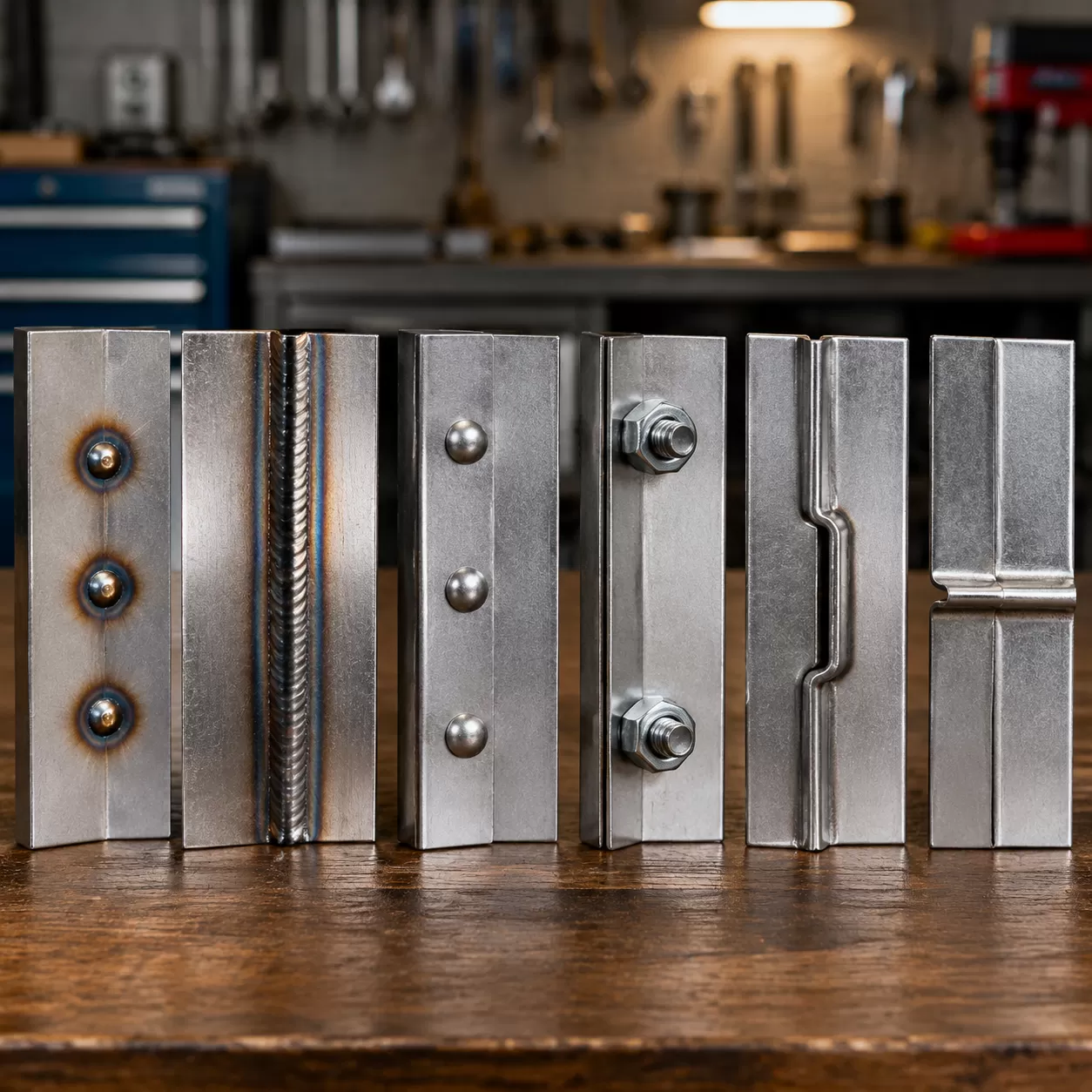
Choosing between riveting vs welding requires a clear understanding of how each method impacts your final assembly. While both are pillars of sheet metal fabrication, they serve completely different structural and economic needs.
The matrix below provides a direct, head-to-head comparison of their core performance metrics.
| Performance Metric | Sheet Metal Riveting | Sheet Metal Welding |
|---|---|---|
| Tensile Strength | Moderate to High (Dependent on fastener count) | Very High (Parent metal fusion) |
| Joint Fatigue Life | Excellent (Absorbs vibrations and flex) | Lower under high vibration (Prone to heat-cracking) |
| Heat-Affected Zone (HAZ) | None (Cold mechanical fastening process) | Present (Can cause material distortion) |
| Production Cycle Efficiency | High (Fast, repeatable, no cooling time) | Variable (Slower setup, requires skilled labor) |
| Dissimilar Metal Joining | Excellent (e.g., Aluminum to Steel) | Poor to Impossible (Requires specific metallurgy) |
Structural Strength & Joint Fatigue Life
When it comes to pure tensile strength, welding typically wins because it fuses the metals into a single piece. However, joint fatigue life tells a different story.
- Riveting: Excels in high-vibration environments (like aerospace or automotive chassis). Because it is a cold mechanical fastening method, it allows for microscopic flexing without cracking. It is also the go-to choice for dissimilar metal joining without compromising structural integrity.
- Welding: Creates an incredibly rigid bond. The downside? The intense heat creates a heat-affected zone (HAZ). This area can become brittle, making the joint more susceptible to fatigue failure under constant, heavy vibrations.
Cost Analysis: Tooling, Consumables, and Labor
The financial breakdown depends heavily on your production volume and engineering requirements.
- Riveting Costs: Upfront tooling for specialized systems—like a self-piercing riveting (SPR) setup—can be pricey. However, the consumables (countersunk rivets or standard pop rivets) are inexpensive, and the process requires minimal operator training, keeping labor costs low.
- Welding Costs: Standard MIG and TIG welding equipment is relatively affordable, but operating a high-end spot welding machine requires skilled labor. Labor rates for certified welders are significantly higher, and post-weld clean-up adds to the total cost. If you are working with rugged machinery that incorporates complex components like cast iron CNC parts, welding can also demand more intensive pre-heating and surface prep.
Production Cycle Efficiency and Speed
Maximizing production cycle efficiency keeps projects on schedule and within budget.
- Riveting: Exceptionally fast. Automated riveting tools cycle in seconds, requiring no surface prepping, gas shielding, or post-joining cooldown periods.
- Welding: Requires meticulous surface cleaning beforehand to prevent weld porosity. The thermal cycle introduces material distortion, which often means extra time spent clamping, fixture-correcting, or grinding down welds to achieve a clean finish.
Critical Factors When Choosing for Your Project
Selecting between riveting and welding isn’t just about joining two pieces of metal; it’s about how your final product performs, looks, and survives in the field. When engineering parts like high-precision precision enclosures and housings, making the right call upfront prevents costly material distortion and field failures down the road.
Material Thickness and Composition
Material composition dictates your fastening strategy. Welding relies on thermal fusion, making it ideal for joining thicker, similar metals. However, the intense heat creates a heat-affected zone (HAZ) that can weaken thinner gauges or warp delicate assemblies.
Riveting excels at dissimilar metal joining (like fastening aluminum to steel) without altering the metal’s grain structure. Techniques like self-piercing riveting (SPR) or using countersunk rivets allow you to join ultra-thin sheet metal fabrication parts without the risk of burn-through.
Surface Finish and Aesthetic Requirements
If your project demands a sleek, seamless exterior, aesthetics will drive your choice.
| Feature | Riveting | Welding |
|---|---|---|
| Surface Profile | Visible rivet heads (unless countersunk) | Flush finish after grinding weld seams |
| Material Distortion | Zero thermal warping; preserves pre-painted finishes | High risk of heat distortion on thin sheets |
| Post-Processing | Minimal to none | Requires grinding, sanding, and blending |
Environmental Exposure and Corrosion Resistance
The operating environment heavily influences joint fatigue life and structural integrity. Welding creates a continuous, sealed barrier that prevents moisture ingress, offering superior corrosion resistance in outdoor or wash-down environments.
Riveted joints leave microscopic gaps. If you are joining dissimilar metals, these gaps can trap moisture and trigger galvanic corrosion unless specific coatings or isolation washers are applied. However, riveting handles constant vibration and thermal expansion far better than welding, as the mechanical fastening layout distributes stress without cracking.
Real-World Industry Applications
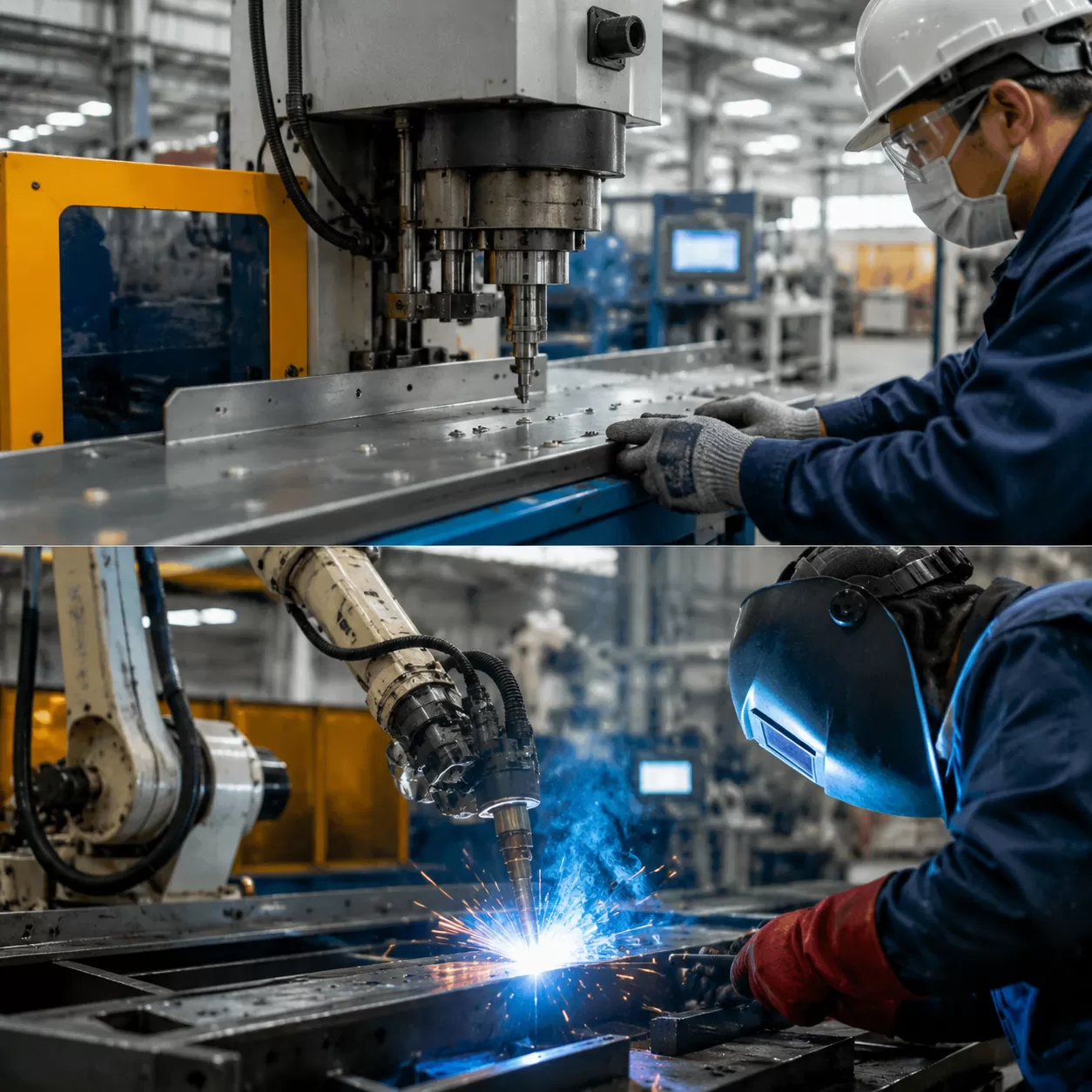
Choosing between sheet metal riveting and welding isn’t just about theory; it comes down to the specific demands of your industry. In our precision CNC metalworking facilities, we see firsthand how local United States manufacturers balance mechanical fastening against thermal fusion to optimize performance and production cycle efficiency.
When to Choose Riveting
Riveting is the go-to method when structural integrity must coexist with vibration resistance and material preservation. It is widely adopted across sectors that prioritize lightweight design and cannot risk the material distortion caused by heat.
- Aerospace and Aviation: Aircraft skins and frames rely heavily on countersunk rivets because they tolerate constant vibration and aerodynamic stress without suffering from joint fatigue life issues.
- Automotive Manufacturing: Modern U.S. automotive plants utilize self-piercing riveting (SPR) to combine aluminum panels with high-strength steel, bypassing the challenges of dissimilar metal joining.
- Electronics and Enclosures: Precision enclosures use rivets to prevent damage to internal sensitive components since the process introduces zero heat. For specialized structural framing, builders often integrate a multi-angle connector with mechanical fasteners to maintain tight geometric tolerances.
When to Choose Welding
Welding excels when projects demand airtight seals, maximum tensile strength, and a seamless, continuous aesthetic. It is the dominant choice for heavy-duty structural applications and fluid containment.
- HVAC and Ductwork: Standard spot welding machine setups create rapid, leak-proof joints in galvanized steel ducting.
- Pressure Vessels and Piping: For high-pressure environments, professional MIG and TIG welding deliver a unified molecular bond that prevents catastrophic failures under load.
- High-End Consumer Goods: Appliances and architectural elements utilize seamless welds to eliminate gaps, ensuring superior corrosion resistance and a clean surface finish free of visible fasteners.
Quick Selection Matrix
| Application Requirement | Best Choice | Primary Reason |
|---|---|---|
| Joining Dissimilar Metals | Riveting | Eliminates galvanic corrosion and thermal compatibility issues. |
| Airtight / Liquid-Tight Seals | Welding | Creates a continuous, leak-proof fusion zone. |
| Zero Heat Tolerance | Riveting | Avoids creating a heat-affected zone (HAZ) and material distortion. |
| Maximum Tensile Strength | Welding | Fuses the base metals together for a stronger, permanent bond. |
| High Vibration Environments | Riveting | Offers superior joint fatigue life under constant dynamic stress. |
Elevating Precision with HXCNC Custom Sheet Metal Fabrication
Choosing between riveting and welding is only half the battle; executing those joints with flawless accuracy is what ensures structural integrity. At HXCNC, we bring top-tier precision CNC metalworking to every project, ensuring your sheet metal fabrication meets the tightest tolerances. Whether your design demands advanced self-piercing riveting (SPR) to join dissimilar metals or high-strength MIG and TIG welding, our facility is equipped to handle complex assemblies with absolute repeatability.
We understand the unique demands of the United States manufacturing sector—from aerospace components to rugged industrial enclosures. Our production setup minimizes material distortion and optimizes production cycle efficiency, keeping your projects on time and within budget. For components requiring advanced machining before assembly, our 5-axis CNC machining service delivers the multi-axis precision needed for complex, high-tolerance parts.
Beyond joining and machining, we provide complete, end-to-end manufacturing solutions. To protect your assemblies from environmental wear and improve surface conductivity, we offer specialized finishing options, including professional silver plating services for superior corrosion resistance and aesthetic appeal. Partner with HXCNC to streamline your supply chain and elevate the quality of your custom sheet metal projects.