
Product Category
Profile Ground · ±0.005mm
CAM / 001 — 004
Precision
Cams & Conjugates
Precision CNC machined cams — disc cams, barrel cams, face cams, and conjugate cam sets. Profile ground to ±0.005 mm, hardened steel and tool steel. For cam-driven automation, packaging machines, textile machines, and precision indexing.
±0.005mm
Profile Tolerance
HRC 60
D2 Tool Steel
4 Types
Cam Range
PART DWG · CAM-000 DISC CAM PROFILE
ISO 9001 : 2015
D2 · HRC 60
Rise · Dwell · Fall
Profile Ground
Disc · Barrel · Face · Conjugate
Cam Types
D2 · H13 · 42CrMo4 · Al
Materials
48hr Quote · MOQ 1
Service
±0.005mm
Profile tolerance
Ra 0.4µm
Cam surface finish
All Types
Disc · Barrel · Face · Conj.
7 Days
Fastest lead time
Our Work
Request Similar Part →
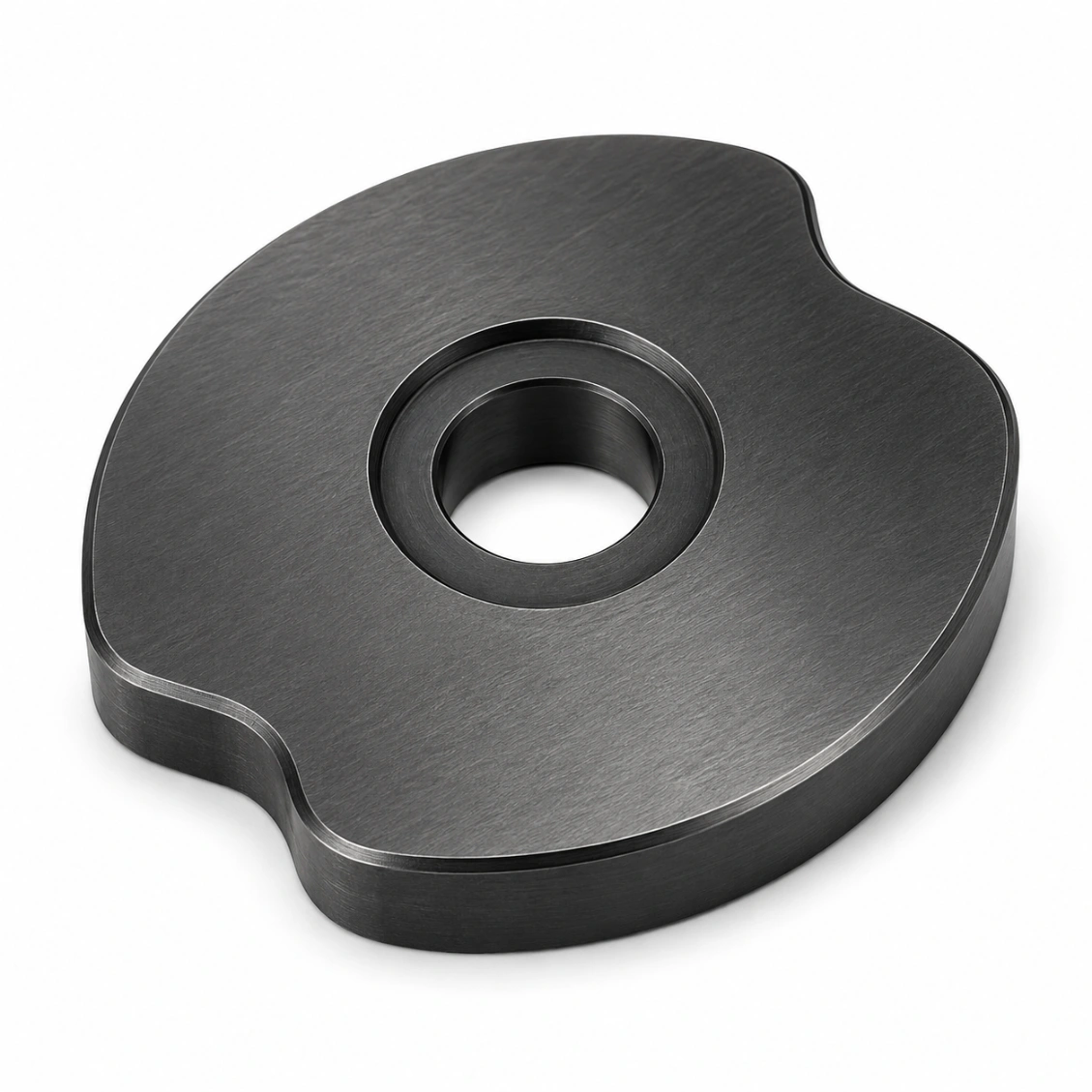
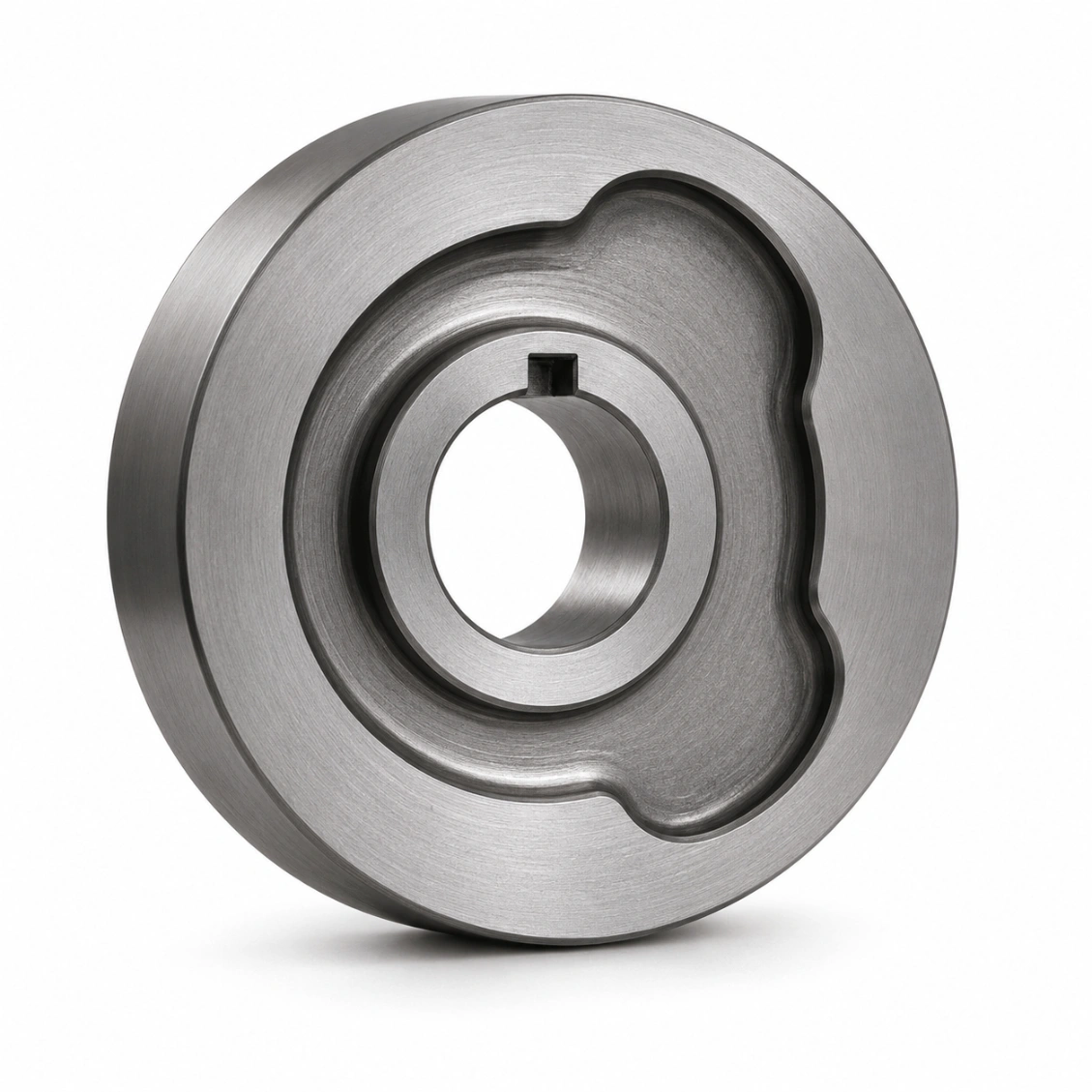
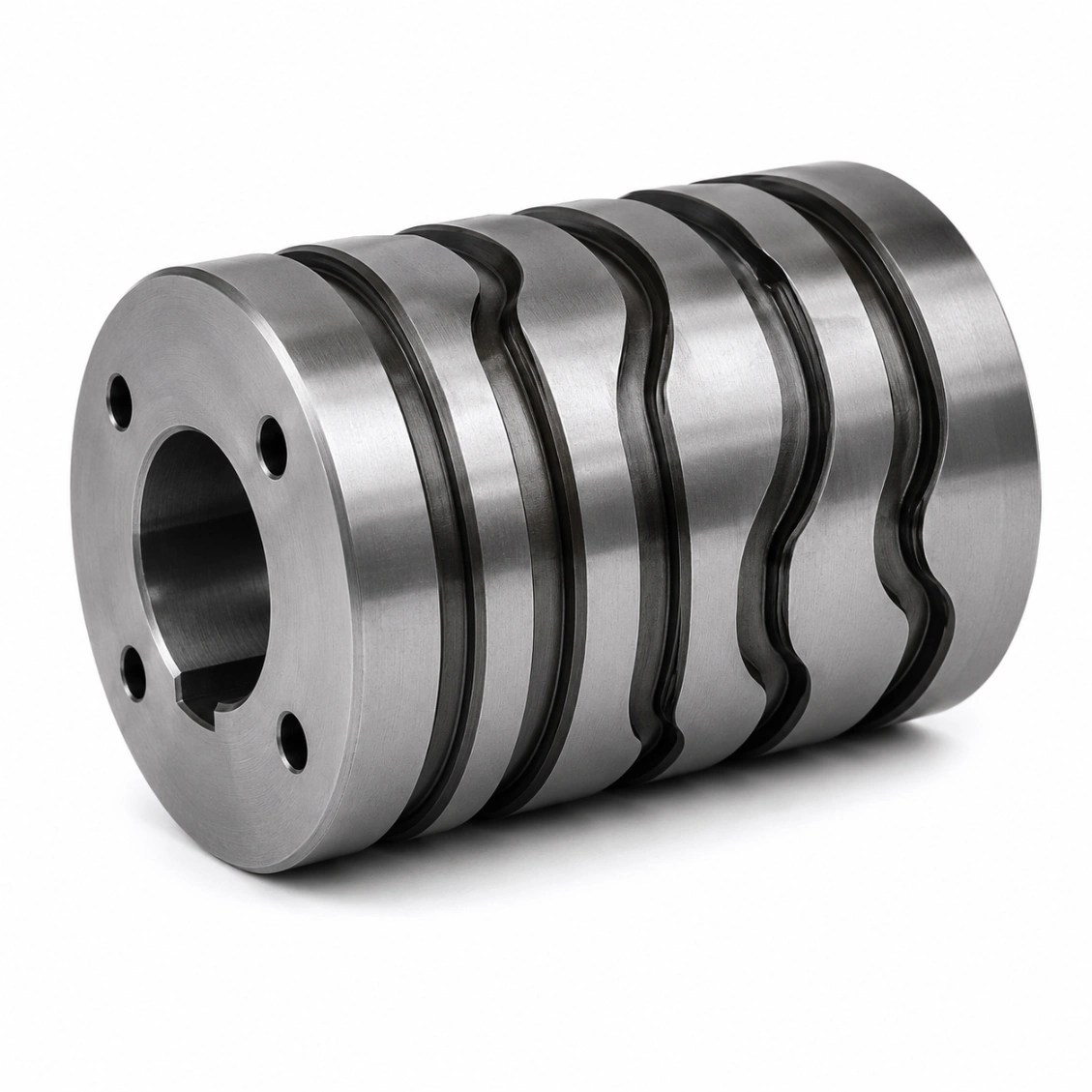
Precision Cams We've Made
CNC machined and profile-ground cams for packaging machines, textile looms, assembly automation, indexing tables, and precision instruments.



How It Works
From Drawing to Finished Precision Cams
Upload your precision cams drawing — dimensions, tolerances, material, and surface treatment.
01
Upload Drawing
STEP, DXF, PDF, or sketch with key dimensions.
02
Quote in 48h
Material, process, surface treatment, lead time.
03
CNC Machine & Inspect
Precision machining, heat treatment, surface treatment, CMM verification.
04
Ship Worldwide
Full dimensional report. DHL / FedEx / sea freight.
Reviews
Trusted Precision Cams Manufacturer
★★★★★
"Excellent quality precision cams from HXC. Dimensional report matched our CMM on every piece."
AK
Alex K.
Mechanical Engineer · Germany
★★★★★
"HXC's DFM review saved us two design iterations. Finished precision cams were perfect first time."
SL
Sophie L.
Design Engineer · France
★★★★★
"Three years sourcing precision cams from HXC. Consistent quality, reliable lead times."
JT
James T.
Senior Engineer · UK
FAQ
Precision Cam — FAQ
Common questions about precision cams, profiles, hardening, and sourcing.
A precision cam is a rotating or translating component with a non-circular profile
designed to convert rotary motion into a specific programmed output motion — linear, oscillating, or
complex. The cam profile is the exact shape that produces the required follower displacement, velocity,
and acceleration curve. In automation equipment, cams provide precise, repeatable, high-speed
motion sequencing without electronics — packaging machines, textile looms, and assembly
automation rely on cam-driven mechanisms for their core motion sequences.
HXC produces four main cam types: Disc cam (plate cam) — flat plate with profiled outer
edge, follower rides the edge. Most common type. Barrel (cylindrical) cam — cylindrical
body with a groove on the outer surface; follower runs in the groove, allowing positive (closed) drive
without spring return. Face cam — profiled groove on the flat face of a disc; follower
is pushed axially. Conjugate cam set — two matched cams driving one follower from both
sides, eliminating backlash and follower jump at high speed.
Cam profiles are specified by a displacement diagram (follower displacement vs. cam
angle, 0°–360°) combined with dwell periods, rise / fall motion laws (simple harmonic, modified
sinusoidal, cycloidal, polynomial), and the follower geometry (roller radius, knife edge, flat face).
HXC engineers convert displacement diagrams into CNC toolpaths and profile-ground cam geometry. Provide
your displacement diagram, motion law, follower type, and maximum cam speed — we calculate the cam
profile coordinates.
Production cams require high surface hardness to resist follower wear:
D2 tool steel (HRC 58–62): the standard for high-speed, high-load cams in packaging
and textile machines — excellent wear resistance. H13 hot-work tool steel (HRC 48–52):
for cams operating at elevated temperature (hot forging presses, injection moulding) where D2 would
soften. 42CrMo4 induction hardened (HRC 50–55): for medium-speed industrial cams.
For prototyping and instruments: Al 7075 (hard anodized) or unhardened tool steel.
CNC profile milling achieves ±0.02 mm. Profile grinding achieves ±0.005 mm — required
for high-speed production cams where follower motion accuracy is critical. Coordinate
measuring (CMM) verifies the actual profile against the theoretical at angular increments of
1° or less. HXC provides the full CMM profile deviation report with every precision cam order.
The pressure angle is the angle between the cam normal at the contact point and the
follower direction of motion. High pressure angle (>30°) causes large lateral forces on the follower
stem, leading to binding and wear. Low pressure angle (<30°) requires a larger base circle radius —
making the cam larger. The maximum allowable pressure angle is: 30° for translating roller followers;
45° for oscillating followers. The cam designer must balance base circle size (compact cam) against
pressure angle (smooth follower motion) — HXC engineers optimise this during DFM review.
A conjugate cam (also called a dual cam or positive cam) consists of two matched disc
cams on the same shaft, driving a two-roller follower simultaneously — one cam pushes the follower in
one direction, the other cam constrains it in the opposite direction. This eliminates the need for a
follower return spring and prevents follower jump at high speed. Standard for high-speed packaging
machines (above ~200 RPM) where a spring-return follower would bounce. HXC machines conjugate cam sets
as matched pairs, with both profiles ground and measured together.
Open-track barrel cam: the follower rides against the outer surface of the cam groove —
requires a return spring. Simpler to manufacture but follower can jump at high speed.
Closed-track (groove) barrel cam: the follower runs inside a machined groove, driven
positively in both directions. No spring needed, no follower jump, but the groove must be wider than the
roller plus clearance. HXC machines both types — closed-track barrel cams are significantly more complex
to machine and cost more but are preferred for high-speed applications.
HXC cams are designed for roller followers (most common — IKO, INA, SKF needle roller followers),
knife-edge followers (for sharp-profile instruments), and flat-face followers (for high-speed automotive
cam followers). Roller followers require the cam profile to be offset (inflated) by the roller radius
from the pitch curve — HXC calculates this offset automatically from your pitch curve data.
Prototype (1–3 pcs, 5-axis milled, no hardening): 5–8 days. Profile-ground disc cam, D2, hardened:
10–16 days. Barrel cam (complex groove machining): 14–20 days. Conjugate cam set: 14–18 days. Large cams
(>Ø200 mm): add 3–5 days. Rush production available — contact us with your deadline.
Yes — HXC accepts cam profiles as: DXF 2D cam outline; CSV / Excel
table of (angle, radius) or (angle, displacement) pairs; STEP / IGS 3D cam
model; or a displacement diagram image — we digitise and calculate the profile.
We also design cams from scratch from your motion requirements: rise / dwell / fall timing, motion law,
follower geometry, and maximum cam speed.