
The Critical Classification: Expendable Molds vs. Permanent Molds
In metal manufacturing, how we classify casting processes comes down to one fundamental question: what happens to the mold after the molten metal solidifies? Every project requires balancing production volume, tooling costs, and part complexity. To optimize this balance, we divide the industry into two primary systems: expendable molds and permanent molds.
Expendable Mold Systems
Expendable mold systems rely on temporary molds that must be destroyed to remove the solidified metal casting. Typically crafted from sand, plaster, or ceramics combined with specialized binders, these molds are strictly single-use.
Because we break the mold away after every pour, expendable mold processes offer unparalleled design flexibility. They are the go-to choice for complex geometries, intricate internal cavities, and large-scale components that would be impossible to extract from a rigid, reusable die.
- Best For: Low-to-medium production runs, massive structural components, and highly intricate geometries.
- Key Advantage: Low upfront tooling and setup costs, making prototyping and short runs economically viable.
- Common Materials: Sand, clay, plaster, and investment ceramics.
Permanent Mold Systems
Permanent mold systems utilize reusable molds—often referred to as dies—machined from high-strength, heat-resistant metals or alloys. These molds are designed to withstand thousands of repeated thermal cycles without losing their shape or structural integrity.
Unlike expendable methods, permanent mold gravity casting and high-pressure injection force molten metal into a fixed cavity. This rigidity ensures exceptional dimensional tolerance and a superior surface finish straight out of the mold. However, because the part must be mechanically ejected, this system restricts geometric freedom; parts cannot feature severe undercuts or internal shapes that trap the component inside the tooling.
- Best For: High-volume, mass-production runs where unit cost efficiency is paramount.
- Key Advantage: Rapid production cycle times, exceptional part-to-part repeatability, and minimal post-processing.
- Common Materials: Tool steel, gray cast iron, and graphite.
Major Types of Metal Casting Processes

Different projects demand different manufacturing approaches. Choosing the right metal casting process comes down to your production volume, material specs, and required precision. Here is a breakdown of the primary methods used in modern manufacturing.
Sand Casting (The Industry Workhorse)
Sand casting remains the most widely used method for producing heavy components. By packing a refractory sand mixture around a reusable pattern, we create a temporary mold capable of withstanding extreme melting temperatures.
- Best For: Large structural components, engine blocks, and heavy machinery housings.
- Compatible Alloys: Ferrous and non-ferrous metals, including cast iron, steel, and aluminum.
- Key Advantage: Incredibly low upfront tooling costs and unmatched geometric flexibility for massive parts.
Investment Casting / Lost-Wax (The Precision Choice)
When your design requires tight dimensional tolerances and intricate details, investment casting is the go-to solution. This process utilizes a sacrificial wax pattern coated in a ceramic slurry to create a seamless, highly detailed mold.
- Best For: Complex aerospace components, medical implants, and specialized hardware.
- Compatible Alloys: Stainless steel, superalloys, titanium, and aluminum.
- Key Advantage: Exceptional surface finish and net-shape component manufacturing that drastically reduces the need for secondary finishing. For assemblies requiring exact alignments, utilizing a precision spacer ensures structural integrity across complex interfaces.
Pressure Die Casting (The High-Volume Powerhouse)
For rapid, large-scale production, pressure die casting (HPDC) forces molten metal into reusable steel dies under immense pressure. This automated process delivers exceptional speed and consistency for high-volume runs.
- Best For: Automotive housings, structural brackets, and high-turnover consumer goods.
- Compatible Alloys: Non-ferrous alloys with lower melting points, primarily aluminum, zinc, and magnesium.
- Key Advantage: Fast cycle times, excellent dimensional repeatability, and ultra-thin wall capabilities.
Specialized Casting Methods
Beyond the core three, specialized techniques fill specific engineering niches:
- Centrifugal Casting: Uses a spinning mold to channel molten metal outward, creating dense, cylindrical parts like pipes and pressure vessels free from internal gas pockets.
- Continuous Casting: Standardized for raw material production, constantly pouring liquid metal into a cooling die to form long, unbroken sections of bars, sheets, and tubes.
- Gravity Die Casting: Relies on natural gravity rather than high pressure to fill permanent steel molds, offering a middle ground of improved strength and lower tooling costs compared to HPDC.
Comprehensive Evaluation: The General Pros and Cons of Casting
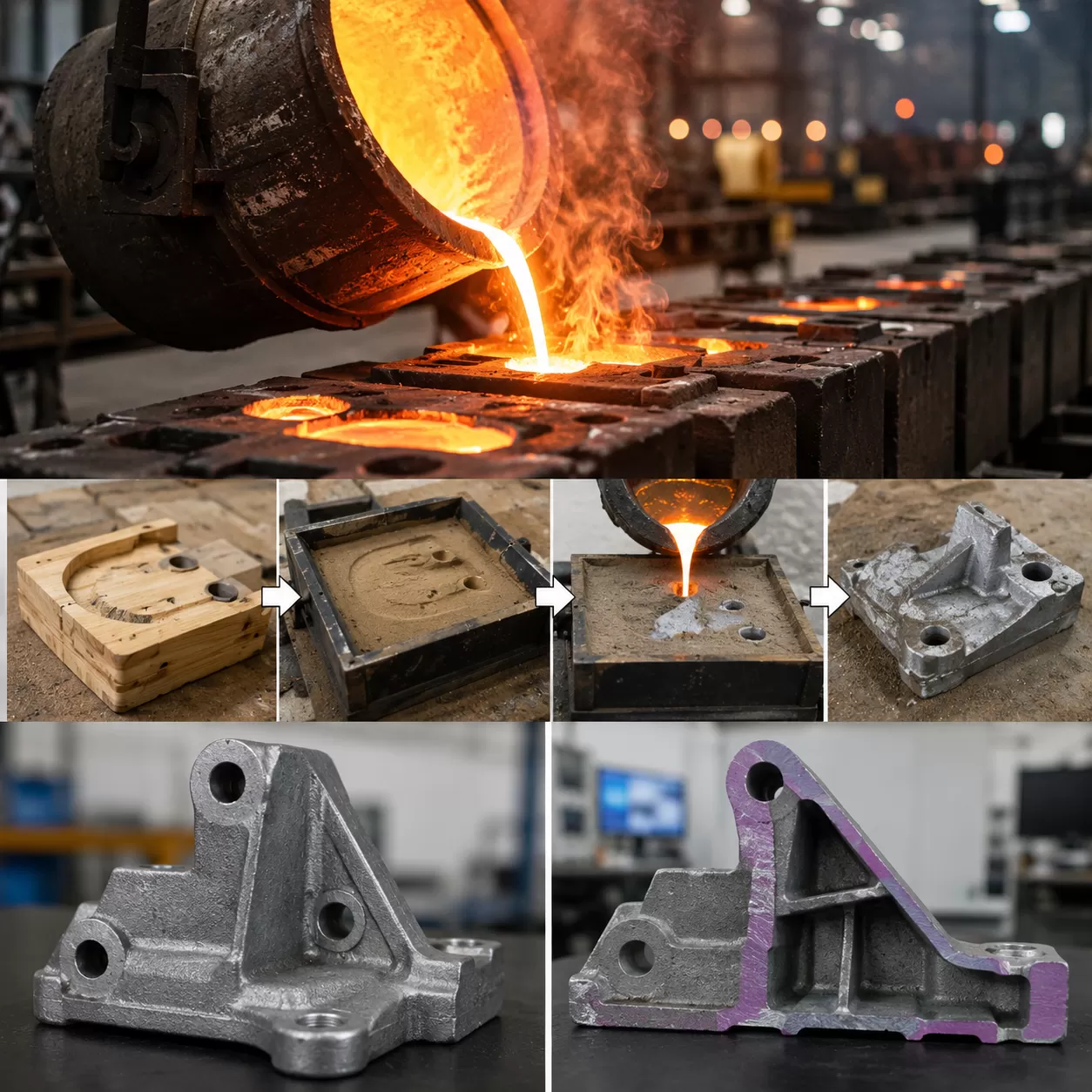
Metal casting is a staple of modern manufacturing, offering a unique mix of structural freedom and production efficiency. Like any fabrication method, balancing its core strengths against its inherent limitations is key to choosing the right approach for your project.
The Structural Advantages (Pros)
- Complex Geometries: Casting easily creates intricate, hollow shapes and internal cavities that would be impossible or too expensive to machine from solid stock.
- Massive Scale: It handles components of virtually any size, from tiny electronics enclosures to massive heavy industrial machine bases weighing several tons.
- Material Versatility: The process works with a massive range of ferrous and non-ferrous alloys, including steels, irons, aluminum, magnesium, and copper.
- Efficient Net-Shape Component Manufacturing: It forms parts very close to their final dimensions. This drastically reduces material waste and cuts down on the need for extensive post-processing.
The Engineering Limitations (Cons)
- Surface Finish and Dimensional Tolerance: As-cast surfaces are typically rougher than machined parts. Achieving tight tolerances usually requires secondary operations.
- Casting Porosity Defects: Internal gas pockets or shrinkage cavities can form during molten metal solidification, which can compromise the structural integrity of the part if not carefully managed.
- High Tooling and Setup Costs: Designing and manufacturing permanent molds or specialized patterns requires a significant upfront investment, making low-volume runs less cost-effective.
- Mechanical Property Limits: Cast parts generally exhibit lower tensile strength and fatigue resistance compared to forged components due to the grain structure formed during cooling.
Cross-Process Comparison Matrix
When selecting the right metal casting process, balancing production volume, surface finish, and upfront tooling costs is critical for your project’s bottom line. Here is how the primary metal casting methods stack up against each other for net-shape component manufacturing.
| Casting Process | Common Alloys | Tolerance | Surface Finish | Tooling Cost | Ideal Volume |
|---|---|---|---|---|---|
| Sand Casting | Ferrous & Non-ferrous (Cast Iron, Steel, Aluminum) | Moderate (±0.030″) | Rough / Coarse | Very Low | Low–Medium (1–1,000 pcs) |
| Investment Casting | Carbon Steel, Stainless Steel, Aluminum | High (±0.005″) | Smooth / Excellent | Medium–High | Medium–High (100–10,000+ pcs) |
| High-Pressure Die Casting (HPDC) | Non-ferrous Only (Aluminum, Zinc, Magnesium) | Very High (±0.002″) | Ultra-Smooth | High–Very High | Very High (10,000+ pcs) |
Every molten metal solidification method has inherent trade-offs. While high-pressure die casting offers exceptional surface finish and dimensional tolerance, the initial tooling investment makes it restrictive for short runs. Conversely, sand casting provides a fast, low-cost setup for heavy ferrous alloys but typically requires post-casting CNC machining to achieve precision mating surfaces.
Industrial Applications: Where Cast Components Dictate Design
Casting is the backbone of modern manufacturing, turning molten metal into the complex, heavy-duty parts that keep major industries moving. From lightweight aerospace components to dense industrial gears, the ability to pour liquid metal into exact shapes makes casting irreplaceable. Here is a look at where metal casting is absolutely essential across the United States market.
Automotive & Aerospace
The transportation sector relies heavily on casting to balance strength with weight reduction. In automotive manufacturing, high-pressure die casting dominates the production of aluminum engine blocks, cylinder heads, and transmission cases.
For the aerospace sector, investment casting provides the extreme precision needed for jet engine turbine blades and structural brackets. These components utilize high-performance stainless steel parts and superalloys to withstand immense thermal and mechanical stress.
Heavy Industrial Machinery
Heavy industry demands rugged components that can handle high torque, massive loads, and continuous wear. For massive construction, mining, and agricultural equipment, casting is the only cost-effective way to produce oversized, complex parts.
- Key Components: Pump housings, hydraulic valves, and heavy-duty brackets.
- Power Transmission: Massive gearboxes and precision transmission components are regularly cast to establish their core shape before undergoing final machining for perfect gear meshing.
Consumer Electronics
In consumer electronics, the focus shifts to aesthetics, heat dissipation, and thin-wall durability. Modern smartphones, laptops, and drones require sleek, lightweight enclosures that protect delicate internal circuitry while acting as a heat sink.
Manufacturers utilize precision die casting with magnesium and aluminum alloys to create ultra-thin, highly rigid frames. This delivers a premium tactile feel and robust structural integrity without adding unnecessary bulk to everyday tech products.
Bridging the Gap: The Intersection of Casting and Precision CNC Machining
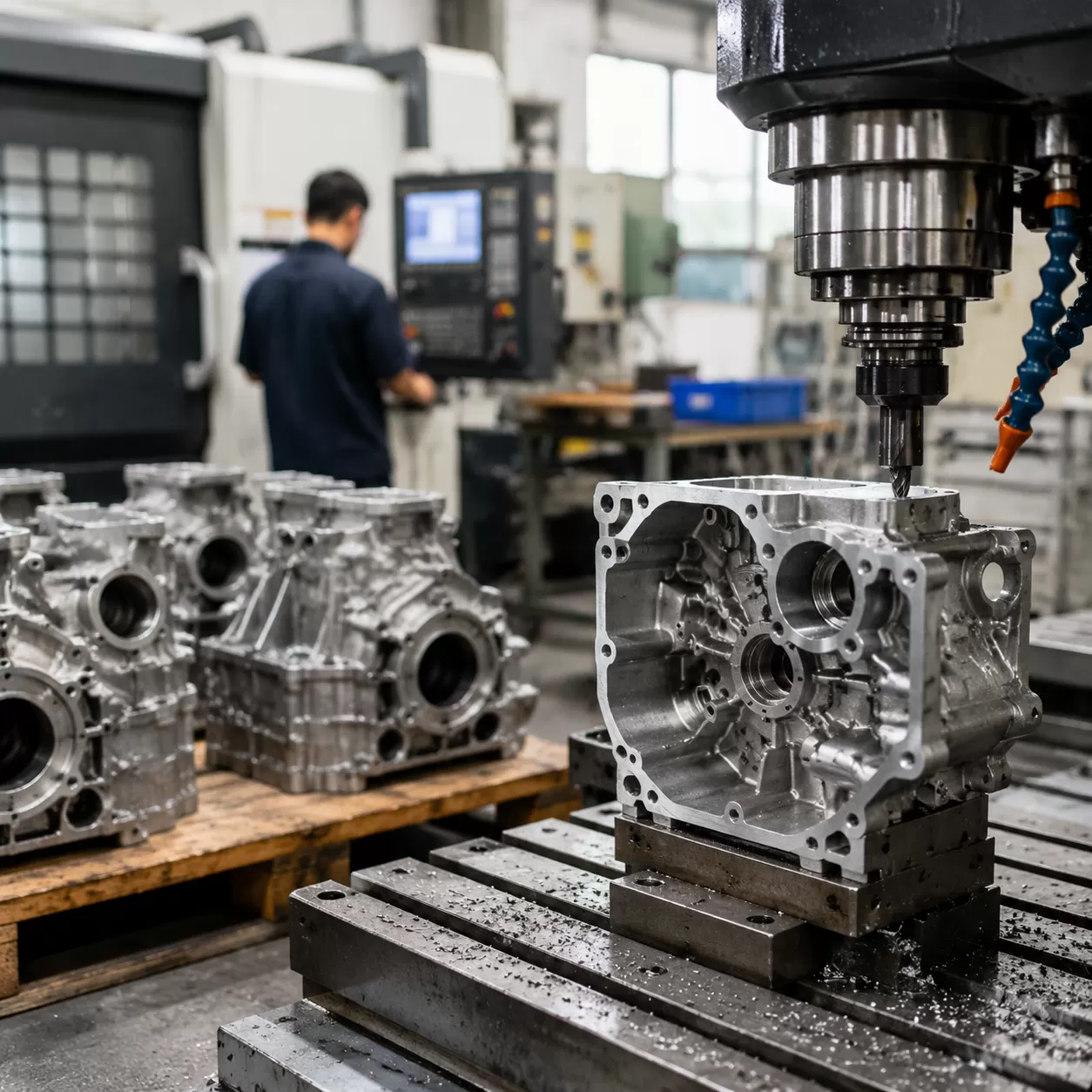
Casting and CNC machining aren’t rivals; they are partners. While casting handles the heavy lifting of creating the bulk shape, precision machining provides the final “handshake” between parts. We see these two processes as a single workflow designed to maximize efficiency.
The “Near-Net-Shape” Reality
Most metal casting processes aim for net-shape component manufacturing, but the reality is usually “near-net-shape.” Even the best molds have slight variations due to thermal contraction or mold wear. We use casting to get the part 90% of the way there, which significantly reduces material waste and speeds up production compared to carving a part out of a solid block of metal.
Elevating As-Cast Parts
To meet strict dimensional tolerance requirements, post-casting CNC machining is essential. We focus on refining the raw casting to ensure it fits perfectly in your assembly. This involves:
- Milling mating surfaces for perfectly flat, airtight seals.
- Drilling and tapping precise threaded holes that casting cannot reliably produce.
- Improving surface finish on critical wear areas, such as those found in CNC gear transmission parts machining.
- Correcting geometry to eliminate the impact of minor casting porosity defects.
The HXCNC Advantage
At HXCNC, we understand that a cast part is only as good as its final finish. We specialize in taking raw castings and turning them into high-performance components. Whether your project requires specialized alloy steel CNC machining or working with lightweight non-ferrous alloys, we bridge the gap between the foundry and the assembly line. We ensure every part meets the rigorous standards expected by our US industrial partners, combining the cost-savings of casting with the undeniable precision of CNC.
Frequently Asked Questions About Metal Casting
What is the difference between casting and molding?
While both processes rely on filling a cavity with material to shape a part, the core difference lies in the material used and the pressure applied. Casting typically involves pouring molten metal into a mold where it solidifies under gravity or high pressure. Molding, on the other hand, usually refers to plastics or polymers injected into a die.
Why do cast parts need secondary CNC machining?
While metal casting is excellent for creating near-net-shape components, it often lacks the precision required for mating surfaces, tight tolerances, and threaded holes. Post-casting CNC machining steps in to refine these critical areas. For instance, high-precision fluid control valve components start as raw castings but require precise CNC milling to ensure leak-free seals and flawless industrial performance.
Which casting process offers the best surface finish?
Investment casting (lost-wax manufacturing) delivers the finest surface finish and highest dimensional tolerance among traditional casting methods. If you are working with non-ferrous alloys at high volumes, high-pressure die casting (HPDC) also provides an exceptionally smooth, smooth-as-cast surface that minimizes the need for aggressive post-processing.