
Thermoplastics and thermosets are both engineering polymer families, but their molecular architecture creates very different rules for heat, load, processing, repair, and recycling.
Thermoplastics soften or melt when heated and solidify when cooled. Thermosets cure into cross-linked networks that do not remelt. Choosing between them requires matching material behavior to temperature, chemistry, production volume, mechanical load, and manufacturing route.
Best when melt processing, impact resistance, high-volume molding, or recycling potential matters.
Best when heat stability, chemical resistance, rigidity, or permanent shape retention drives the design.
Understanding Thermoplastics
Thermoplastics are polymers that soften when heated and harden when cooled. This behavior is primarily physical rather than a permanent curing reaction, which is why many thermoplastics can be injection molded, extruded, thermoformed, welded, remelted, or machined.
What Is a Thermoplastic?
At the molecular level, thermoplastics are made of polymer chains held together by secondary intermolecular forces rather than permanent cross-links. The chains may be linear or branched. When enough heat is applied, the chains gain mobility and the material becomes formable.
Reversible Melting and Softening
The defining mechanism is reversible softening or melting. Below the relevant transition range, the polymer behaves as a solid. Above it, chain mobility increases. If temperature, shear, and residence time remain below degradation limits, the material can be reshaped.
Important nuance: Reprocessing is not unlimited. Heat history, oxidation, moisture, contamination, fillers, and chain scission can reduce properties after repeated melt cycles.
Amorphous vs. Semi-Crystalline Thermoplastics
- Amorphous thermoplastics: Disordered molecular structure, no sharp melting point, generally good dimensional stability and transparency. Examples include PC, PMMA, ABS, and PS.
- Semi-crystalline thermoplastics: Ordered crystalline regions within amorphous zones, sharper melting behavior, often better chemical and wear resistance. Examples include PEEK, HDPE, PP, POM, and PA.
| Thermoplastic Type | Common Materials | Typical Strengths |
|---|---|---|
| Amorphous | PC, PS, PMMA, ABS | Clarity, impact performance, dimensional control, cosmetic finish. |
| Semi-crystalline | PEEK, HDPE, PA, PP, POM | Chemical resistance, fatigue performance, wear resistance, low friction. |
Understanding Thermosets
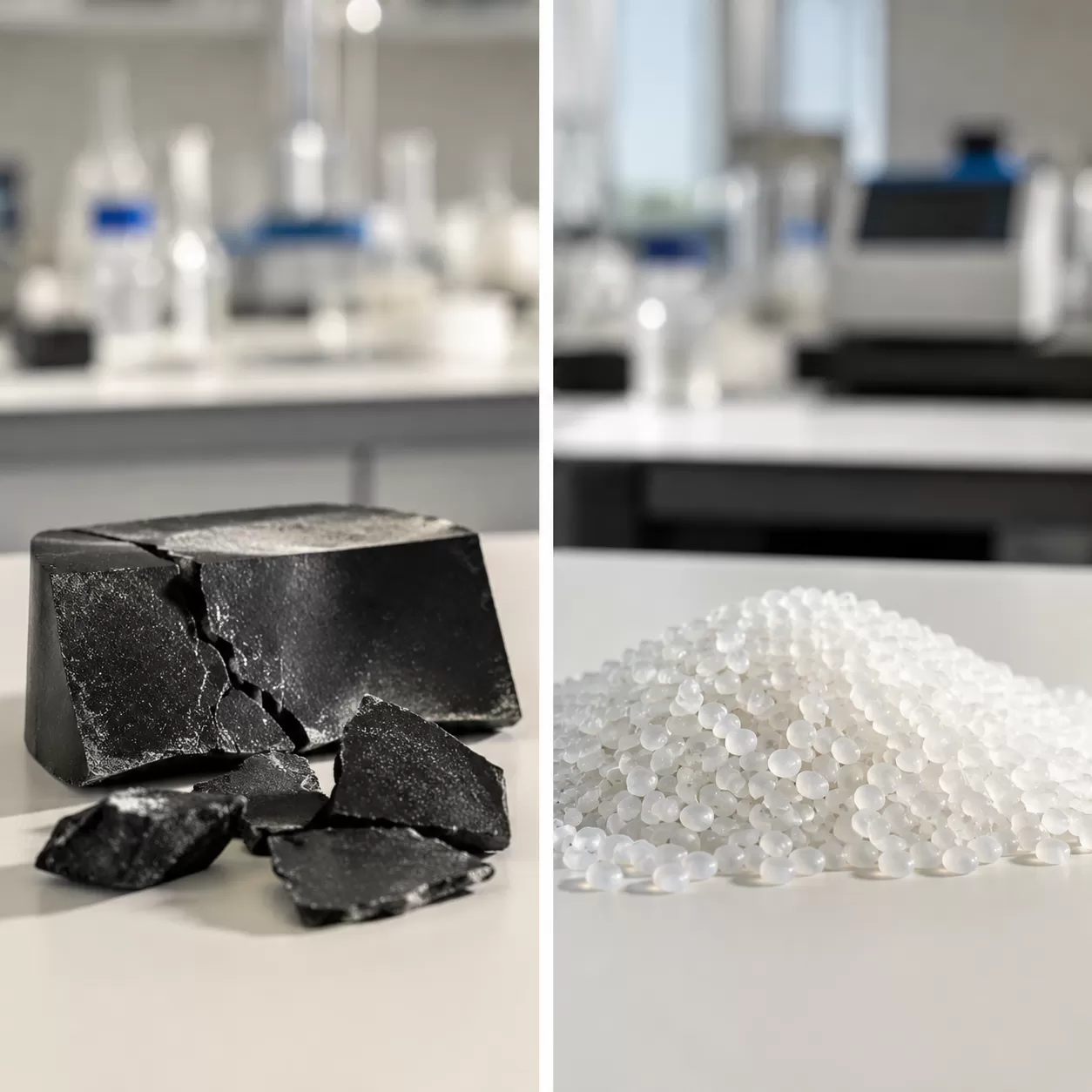
A thermoset polymer cures through an irreversible chemical reaction. Once cured, the polymer chains are linked into a three-dimensional network that cannot be remelted like a thermoplastic.
Polymer Cross-Linking
During curing, heat, catalysts, UV exposure, or chemical reaction can create covalent cross-links between polymer chains. These links restrict chain motion, which gives thermosets their heat resistance, creep resistance, and dimensional stability.
The Impact of Curing
The curing process turns a liquid, paste, powder, or malleable resin into a stable solid. Once cross-linked, heating above the service limit usually causes degradation, charring, or decomposition rather than melt flow.
- Dimensional stability: Often strong at elevated temperatures compared with many unfilled thermoplastics.
- Chemical resistance: Often excellent, but still resin-specific.
- Rigidity: High stiffness and creep resistance are common, especially in filled or fiber-reinforced systems.
Common Industrial Examples
- Epoxies: Adhesives, electronics encapsulation, composite matrices, aerospace structures.
- Phenolics: High-temperature electrical and friction applications.
- Polyurethanes: Foams, coatings, elastomers, and structural components.
- Silicones: Flexible seals, gaskets, medical parts, and thermally stable elastomeric components such as a pump valve interface adapter.
Design nuance: Thermosets are not automatically stronger in every metric. Toughened thermoplastics, fiber-reinforced thermoplastics, and high-performance grades can outperform thermosets in impact, fatigue, or ductility depending on the application.
Mechanical and Physical Differences
The practical difference is chain mobility. Thermoplastics can soften because chains can move when heated. Thermosets resist flow because cross-links lock the network together.
Thermal Performance
Thermoplastics are limited by glass transition, melting temperature, heat deflection temperature, and creep under load. Thermosets do not melt after curing and often retain shape better at elevated temperature, but they still have thermal-degradation limits.
Strength, Rigidity, and Impact
Thermosets often excel in rigidity and high-temperature dimensional stability. Thermoplastics often excel in toughness, impact absorption, and design flexibility. Filled and reinforced grades can change either family dramatically.
Chemical and Environmental Resistance
Chemical resistance depends on resin chemistry, crystallinity, additives, stress state, temperature, and exposure time. Semi-crystalline thermoplastics often resist chemicals better than amorphous thermoplastics, while many thermosets handle fuels, solvents, and heat well.
Sustainability and Recycling
Thermoplastics generally have better mechanical recycling potential because they can be remelted, but real recyclability depends on sorting, contamination, fillers, colorants, and property loss. Thermosets cannot be remelted, though grinding, filler reuse, pyrolysis, and chemical recycling routes exist for some systems.
| Performance Metric | Thermoplastics | Thermosets |
|---|---|---|
| Heat response | Softens or melts before degradation. | Does not remelt after cure; eventually degrades. |
| Rigidity | Wide range, from flexible to highly reinforced. | Often high, especially in filled systems. |
| Impact resistance | Often strong, especially toughened grades. | Can be brittle unless modified or reinforced. |
| Chemical resistance | Highly resin-specific. | Often strong, also resin-specific. |
| Reprocessing | Possible, but properties may degrade. | Cannot be remelted after curing. |
Comparison Dataset
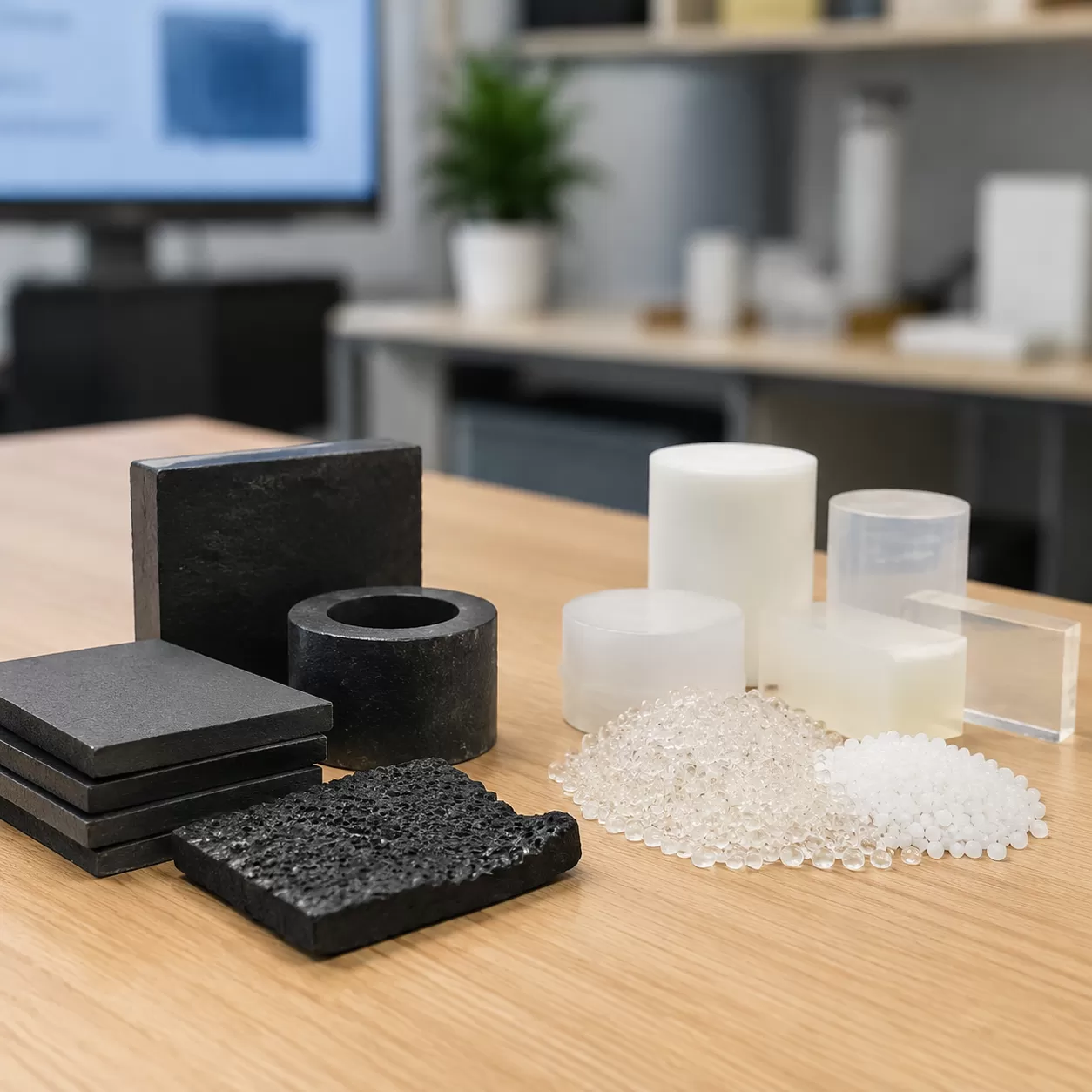
The table below is a high-level engineering dataset. It should narrow the material family, not replace grade-level selection. Specific materials like PEEK, PEI, PTFE, epoxy, phenolic, and silicone can vary widely.
| Design Factor | Thermoplastic Tendency | Thermoset Tendency |
|---|---|---|
| Production volume | Excellent for high-volume molding after tooling investment. | Often suited to lower or specialized volumes, though high volume is possible. |
| Tooling and cycle | Fast cooling cycles and reusable sprues/runners in some workflows. | Cure time controls cycle; scrap is harder to reuse. |
| Operating temperature | Limited by Tg, Tm, HDT, and creep. | Often better at sustained heat until degradation begins. |
| Surface finish | Excellent molded cosmetics and complex thin-wall geometry. | Can deliver smooth molded or coated surfaces, depending on compound. |
| Post-machining | Requires heat control to avoid melting, burrs, and stress. | Requires chip and fracture control; filled grades can be abrasive. |
Key Takeaways
- Choose thermoplastics when high-volume production, impact resistance, complex geometry, lightweight design, or recyclability potential matters.
- Choose thermosets when high-temperature shape retention, chemical resistance, electrical insulation, or permanent stiffness is the dominant requirement.
- Prototype carefully: CNC-machined prototypes may not perfectly replicate molded fiber orientation, shrinkage, residual stress, or cured network behavior.
For complex shapes such as a freeform shell, material choice and manufacturing route should be evaluated together.
Manufacturing and Processing Differences
Processing follows molecular behavior. Thermoplastics rely on physical softening and cooling. Thermosets rely on a chemical curing reaction.
Processing Thermoplastics
Common methods include injection molding, extrusion, blow molding, thermoforming, welding, and CNC machining from stock shapes.
For prototypes, short runs, or tight tolerances, HXCNC supports plastic machining through precision CNC machining services.
Processing Thermosets
Common methods include compression molding, transfer molding, reaction injection molding, casting, layup, potting, and machining after cure.
Cured thermosets may require carbide or diamond tooling, rigid workholding, and dust control.
CNC Machining Plastics
Thermoplastics can soften from frictional heat, absorb moisture, or move under clamping pressure. Thermosets can chip, crack, or abrade cutting tools. Successful machining depends on sharp tools, stable fixturing, suitable coolant or air blast, and material-specific feeds.
Common engineering plastics include nylon PA, ABS, PC, and PMMA, PTFE machined parts, and high-performance specialty polymers.
| Processing Feature | Thermoplastic Workflow | Thermoset Workflow |
|---|---|---|
| Primary mechanism | Physical melting, forming, and cooling. | Chemical curing and cross-linking. |
| Cycle driver | Melting, filling, cooling, ejection. | Filling, heat transfer, cure reaction, demolding. |
| Waste handling | May be reground or recycled, subject to quality limits. | Usually downcycled, ground as filler, or disposed of unless specialty recovery is available. |
| Machining risk | Heat softening, burrs, stress movement. | Chipping, dust, tool wear, brittle fracture. |
Industry Applications
Material family selection depends on service environment more than category labels. A high-temperature aerospace bracket, an EV battery component, a medical seal, and a consumer electronics housing may all need different polymer families.
Aerospace and Defense
Thermoset composites are common where structural stability and heat resistance are essential. High-performance thermoplastics such as PEEK, PEI, and PPS also appear in clips, brackets, ducting, and lightweight aircraft interiors. Related application: aerospace and UAV high-precision parts.
Automotive and Transportation
Thermosets are used in SMC body panels, insulation, encapsulation, and heat-resistant components. Thermoplastics dominate high-volume interior, under-hood, and fluid-handling parts where fast molding and impact performance matter. Related application: automotive and EV components.
Electrical and Electronics
Thermosets are widely used for insulation, encapsulation, and heat-resistant electrical components. Thermoplastics such as PC, ABS, PBT, and PA are common for device housings, connectors, clips, and communication hardware. Related application: electronics and communication components.
Medical Devices
Silicones and thermoset elastomers are used for flexible seals, tubing, and molded medical components. Thermoplastics are common for housings, trays, handles, fluid bags, and diagnostic equipment. Related application: medical high-cleanliness precision parts.
| Industry | Choose Thermoset For | Choose Thermoplastic For |
|---|---|---|
| Aerospace | Composites, heat shields, structural insulation. | Lightweight brackets, clips, interiors, ducts. |
| Automotive | SMC panels, encapsulation, heat-resistant parts. | Bumpers, tanks, trims, housings, connectors. |
| Electrical | Switchgear, terminal blocks, potting compounds. | Device housings, cable parts, connectors. |
| Medical | Silicone seals, tubing, flexible molded devices. | Trays, handles, housings, diagnostic components. |
Selection Guide
Use the following checklist to select the material family before narrowing to a specific grade.
Engineering Selection Algorithm
- Temperature: Compare continuous service temperature, short-term peaks, Tg, Tm, HDT, and degradation limits.
- Mechanical load: Check stiffness, impact, fatigue, creep, wear, and load duration.
- Chemical exposure: Validate against the exact fluid, concentration, temperature, and stress condition.
- Production volume: Balance tooling cost, cycle time, scrap, and post-processing.
- Dimensional control: Account for moisture absorption, cure shrinkage, molding shrinkage, machining stress, and thermal expansion.
- Compliance: Confirm medical, aerospace, electrical, food-contact, flame, or environmental requirements.
| Design Parameter | Thermoplastic Starting Point | Thermoset Starting Point |
|---|---|---|
| High-volume production | Often preferred after tooling investment. | Possible, but cure time may dominate cycle. |
| Sustained heat | Use high-performance grades and verify creep. | Often preferred for shape retention. |
| Impact and toughness | Often preferred, especially toughened grades. | Use modified or reinforced systems if impact is severe. |
| Severe chemical exposure | Resin-specific; PTFE, PEEK, PPS, and others may perform well. | Often strong, but must be matched to the chemistry. |
Manufacturing Precision with HXCNC
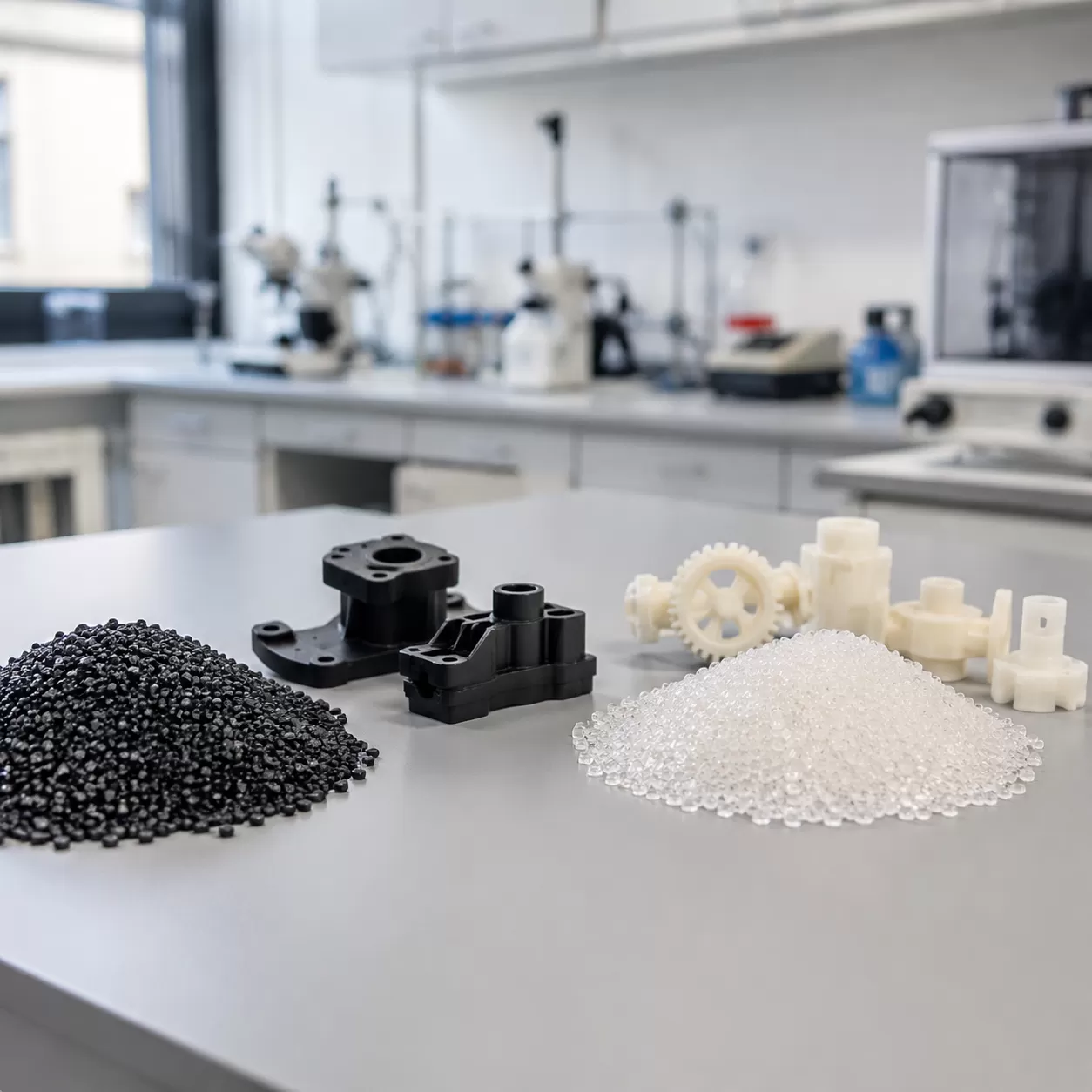
Choosing the polymer family is only the first step. Finished part performance depends on stock form, processing history, tooling, machining parameters, inspection method, and surface requirements.
Material Selection Support
HXCNC helps evaluate thermoplastics and thermosets against strength, heat, chemical exposure, dimensional stability, and production goals. Use the broader materials page as a starting point for comparing engineering options.
Advanced Capabilities
HXCNC machines high-performance plastics for prototypes, functional parts, housings, seals, and precision components. Surface options such as Teflon coating services or PTFE coating services may be selected when friction, release, or chemical exposure must be improved.
Quality Assurance
Dimensional verification is critical because plastics move differently than metals. HXCNC’s inspection capabilities support CMM, optical, and other measurement approaches for critical polymer components.
Frequently Asked Questions
Can you remelt a thermoset plastic?
No. Once cured, a thermoset does not remelt. Additional heat eventually causes degradation, charring, or decomposition rather than flow.
Which material family has higher strength and rigidity?
Thermosets often provide high rigidity and heat-stable structure, especially when reinforced. However, high-performance thermoplastics and fiber-reinforced thermoplastics can be extremely strong. Compare specific grades, not only material families.
Why does cross-linking prevent melting?
Cross-linking creates covalent bonds between polymer chains. These bonds restrict chain movement, so heat cannot simply let the chains slide past each other the way it does in thermoplastics.
Are thermoplastics better for CNC machining plastics?
Many thermoplastics machine cleanly and are widely used for prototypes and precision components. Cured thermosets can also be machined, but they may be abrasive or brittle and require different tooling and dust-control strategies.
Which option has better dimensional stability at elevated temperatures?
Thermosets often hold shape better at elevated temperatures because they do not soften like thermoplastics. High-performance thermoplastics can still be excellent when their service temperature, creep behavior, and load conditions are properly matched.