
PTFE Coating
Services
Pure and reinforced PTFE fluoropolymer coatings — including PTFE, PFA, FEP, and ETFE systems — engineered for ultra-low friction, broad chemical resistance, and continuous high-temperature service. All formulations PFOA-free.
We offer the full range of fluoropolymer coating chemistries, each optimised for specific performance priorities and processing requirements.
Polytetrafluoroethylene
The benchmark fluoropolymer. Lowest friction, widest chemical resistance, broadest temperature range. Pure non-stick for the most demanding applications.
–200 to +260°Cμ = 0.04Perfluoroalkoxy
Melt-processable fluoropolymer with smoother, thicker film capability. Superior film continuity preferred for chemical lining and barrier applications.
Up to 260°CThick FilmFluorinated Ethylene Propylene
Lower processing temperature. Excellent surface clarity and smooth non-stick properties. Good for food contact and optical applications up to 200°C.
Up to 200°CLow PorosityEthylene Tetrafluoroethylene
Superior mechanical strength and abrasion resistance among fluoropolymers. Best for high-wear applications requiring both fluoropolymer chemistry and toughness.
High Wear ResistanceTough FilmClarifying the commonly misunderstood terminology between PTFE and Teflon™ brand coatings.
PTFE Coating and Teflon™ Coating are the Same Material
Teflon™ is the registered trademark of Chemours for PTFE. Our industrial fluoropolymer coating service covers both branded Teflon™ systems and equivalent high-performance PTFE products from approved suppliers. All formulations are PFOA-free and RoHS compliant.
Controlled multi-layer application and precision sintering delivers a dense, well-adhered fluoropolymer film with consistent thickness and surface properties.
Blasting & Degreasing
Grit blast to Sa 2.5 for anchor profile. Solvent wipe and oven dry to remove all surface oil, moisture, and contamination prior to coating.
Primer Application
Fluoropolymer adhesion primer applied by spray and flash-dried at 80–100°C to provide the bonding layer for subsequent PTFE topcoats.
PTFE Topcoat Layers
One to three topcoat layers applied and flash-dried sequentially. Layer count determines total film thickness and pinhole elimination through the full film depth.
Sintering & QC
Sintered at 370–420°C to fuse PTFE into a continuous dense film. DFT measurement, holiday test, and adhesion cross-hatch on cooled parts.
Recent PTFE fluoropolymer coating projects across chemical processing, food, and precision engineering sectors.
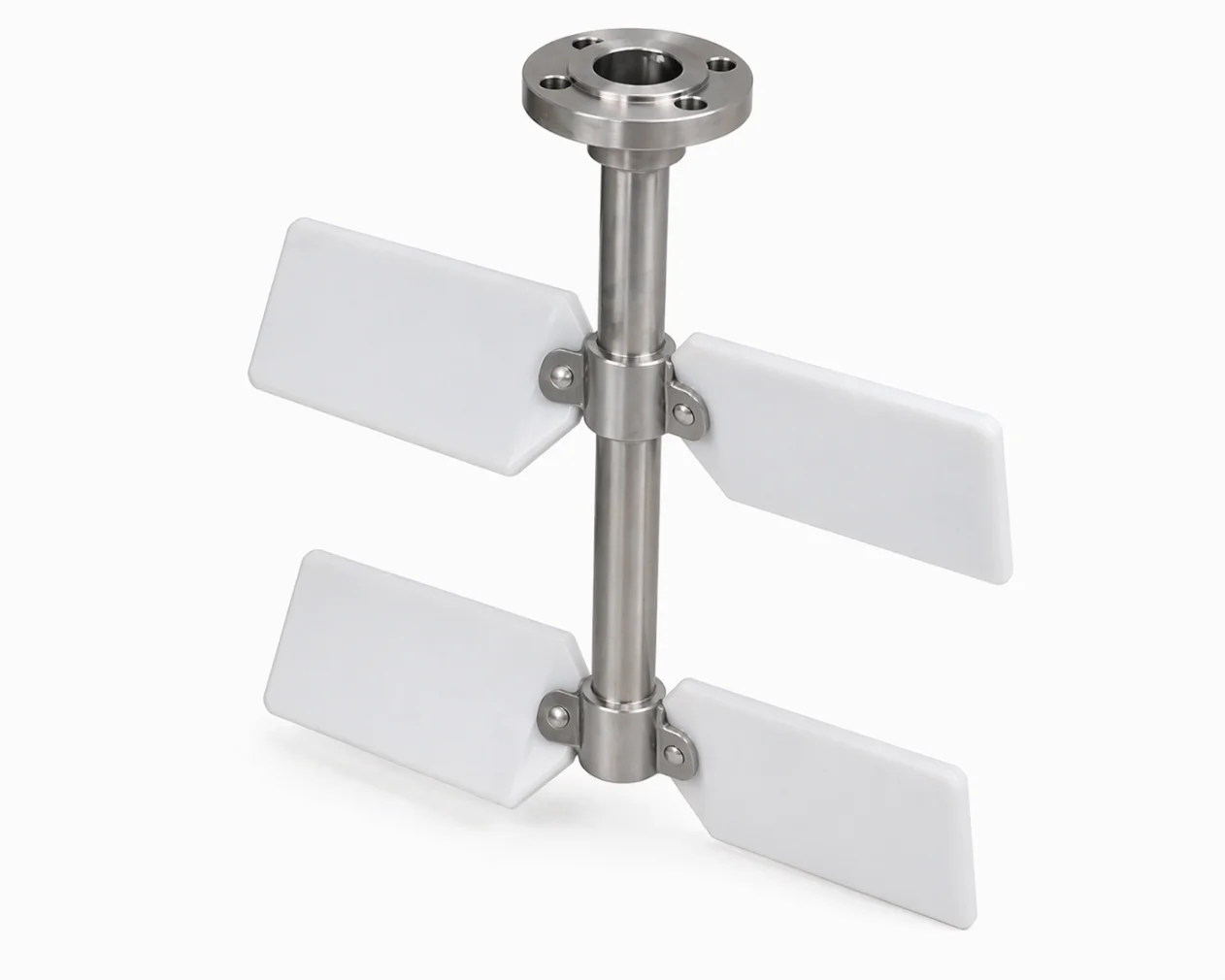
Chemical Reactor Agitator Blades
PFA fluoropolymer lining on Hastelloy reactor agitator blades. 50 μm, chemical barrier against HF and chlorinated solvents, pinhole-free spark-test verified.

Confectionery Conveyor Trays
PTFE non-stick coating on aluminium confectionery conveyor trays. FDA 21 CFR compliant, 25 μm, easy-release for sticky confectionery products in production.
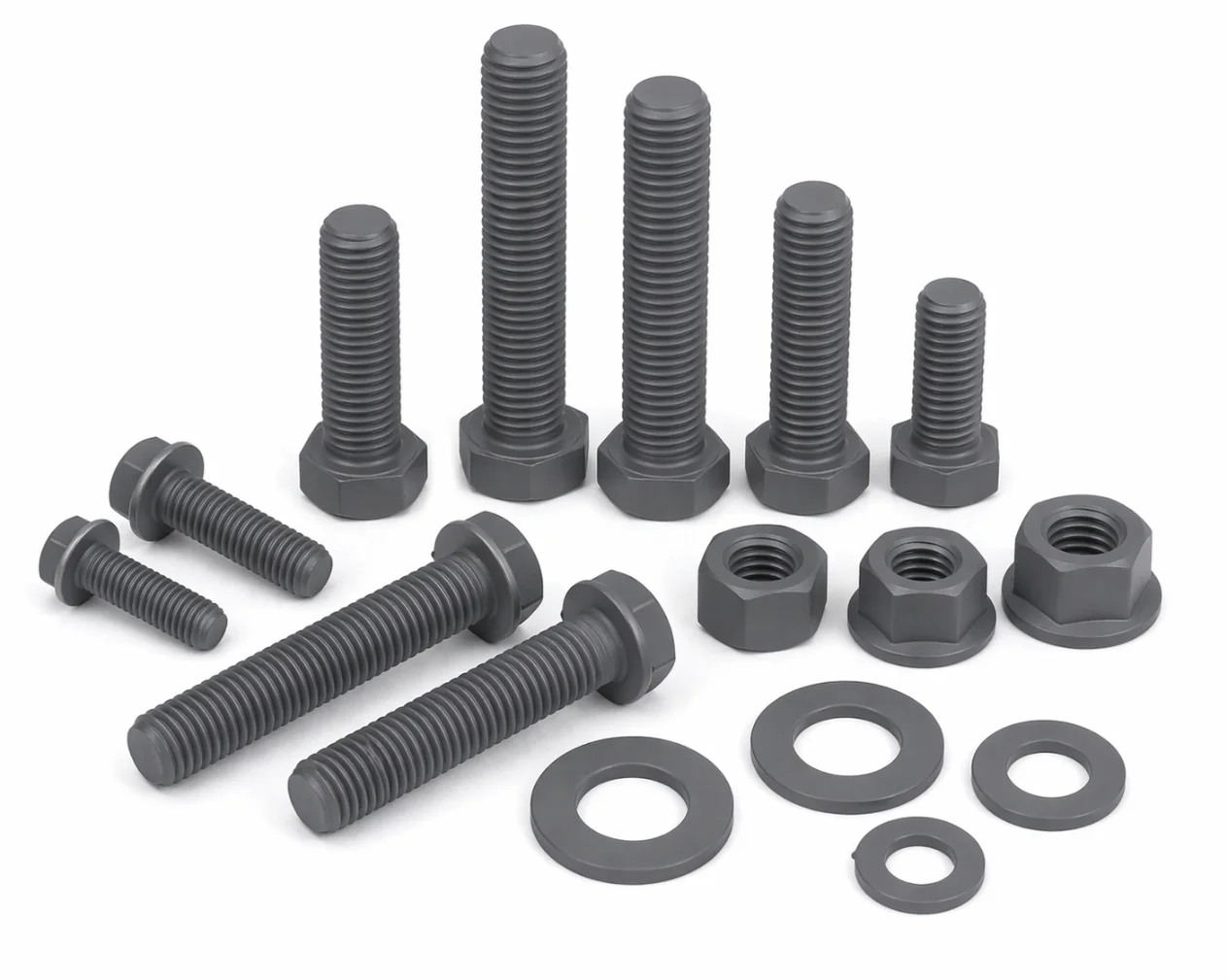
Precision Threaded Fastener Sets
PTFE dry-film lubricant on stainless fasteners. 10 μm, prevents galling on 316L assemblies, reduces assembly torque by 40% measured on customer assembly line.
Precision Molds
Injection molds, rubber molds, and composite tooling coated with PTFE for easy demoulding, extended tool life, and surface quality.
Chemical Processing
Reactor vessels, agitator blades, heat exchangers, and piping requiring PFA lining for aggressive acid and solvent service.
Food Equipment
Baking pans, chutes, hoppers, and conveyors requiring FDA-compliant PTFE non-stick coating for easy clean and food release.
Fasteners & Threads
Threaded fasteners, bolts, and fittings coated with PTFE for lubrication, galling prevention, and corrosion protection.
Medical Equipment
Surgical instruments, medical device housings, and diagnostic equipment requiring biocompatible, sterilisation-resistant surfaces.
Actuators & Bearings
Bearing housings, linear actuators, and sliding components requiring dry-film lubrication with PTFE or ETFE coatings.
Full Fluoropolymer Range
PTFE, PFA, FEP, and ETFE all available in-house. Single supplier for your entire fluoropolymer coating requirement across all part types and application environments.
PFOA-Free & Regulatory Compliant
All coating systems use PFOA-free formulations. FDA 21 CFR food-contact grade available. Full SDS and compliance documentation provided with every order.
Precise Film Thickness Control
DFT measured 100% with calibrated gauge. Multiple topcoat layers eliminate pinholes, ensuring continuous film for chemical barrier applications.
Engineering Application Support
Our coating engineers advise on fluoropolymer selection, substrate preparation, thickness specification, and post-coat dimensional allowances for your application.
Everything you need to know before ordering. Contact our team →