info@hxcnc.com Shenzhen, China Reply within 24 hours
ISO 9001 : 2015 Get Instant Quote
Precision Small-Part Turning

Swiss
Turning
Service

Custom Swiss turning for small-diameter, long, slender, and high-precision parts — ideal for medical, electronics, aerospace, and high-volume production.

Diameter Ø0.5–32 mm L/D Ratio up to 100:1 Exceptional Surface Finish High-Volume Production Ready Tight Tolerance Small Parts
Swiss Turned Precision Components
Diameter Range
Ø0.5 – 32 mm
L/D Ratio
Up to 100:1
Tolerance
±0.005 mm
Surface Finish
Ra 0.4 μm
Production Mode
Bar-Fed, Lights-Out
Quote Turnaround
24 Hours
Ø0.5–32mm
Diameter Range
100:1
Max L/D Ratio
±0.005mm
Precision Tolerance
Ra 0.4μm
Surface Finish
24hr
Quote Turnaround
Service Overview

What Is Swiss Turning?

Swiss turning uses a sliding headstock lathe where the bar stock feeds through a precision guide bushing — a bore that supports the workpiece directly at the cutting point. As the bar advances, the guide bushing moves with it, maintaining continuous support regardless of how long or slender the part is.

This is the fundamental difference from standard CNC turning — the workpiece is always supported where the tool cuts, eliminating deflection, vibration, and the dimensional errors they cause.

How the sliding headstock works
Bar Stock
Guide Bushing
Cutting Tool
The guide bushing supports the workpiece millimeters from the cutting point — deflection eliminated regardless of part length.
Sliding Headstock Guide Bushing Support No Deflection Small Diameter
Core Advantage

Why Swiss Turning for Small Precision Components

Standard CNC turning breaks down on small, slender, high-volume parts. Swiss turning was built precisely for these.

No Deflection on Long Slender Parts
Slender parts deflect under cutting force on a conventional lathe — causing vibration, taper, and inconsistent finish. The Swiss guide bushing eliminates deflection at the source, enabling parts with L/D ratios up to 100:1 that would be impossible to turn accurately any other way.
Ra
Superior Surface Finish on Small Diameters
Swiss turning consistently achieves Ra 0.4 μm and below on small-diameter parts. Stable workpiece support, minimal vibration, and short tool reach produce a finish quality that is difficult to match on small features with standard turning.
±
Tight Tolerance on Micro Features
Medical cannulas, dental implant bodies, and connector pins require ±0.005 mm and below on diameters measured in fractions of a millimeter. Swiss turning delivers this repeatably — across thousands of parts — because workpiece stability is built into the process itself.
HV
Built for High-Volume Repeatability
Bar-fed Swiss lathes run lights-out with consistent cycle times and stable process parameters. Ideal for recurring production of small precision components — the same quality, same dimensions, and same cost on the 50,000th piece as the first.
Capabilities

Swiss Turning Capabilities

CAP / 01
μ
Micro Diameter Turning
Precision OD and ID turning from Ø0.5 mm upward. Miniature shafts, connector bodies, dental pins, and precision hardware machined to sub-micron finish on the smallest diameters.
Ø0.5 mm min Ra 0.4 μm ±0.005 mm
CAP / 02
Long Slender Part Turning
Cannulas, probes, precision shafts, and pin parts with L/D ratios up to 100:1. The guide bushing provides continuous, unwavering support — no deflection, no chatter regardless of part length.
L/D up to 100:1 Cannulas Probes
CAP / 03
M
Swiss Threading & Grooving
Small-diameter thread cutting — metric M1 through M32, UNF, UNC, custom pitch. O-ring grooves, sealing grooves, snap ring grooves, and undercuts on miniature parts in one setup.
M1.0–M32 O-Ring Grooves Custom Pitch
CAP / 04
Cross Drilling & Secondary Features
Live tooling performs cross-holes, radial features, flats, and simple milled details in the same setup as turning — combining operations without re-fixturing the part.
Cross Holes Flats Radial Features
CAP / 05
←→
Back Working / Complete Machining
Sub-spindle back working finishes the rear end of the part without removing it from the machine — both ends complete in one pass, with concentricity maintained between front and back features.
Sub-Spindle Both Ends One Pass
CAP / 06
HV
High-Volume Swiss Production
Bar-fed, lights-out production with automated bar feeders and in-process gauging. Stable cycle times and fast changeovers for recurring precision production orders of small components.
Bar-Fed Lights-Out 100K+ parts
Part Gallery

Typical Swiss Turned Parts

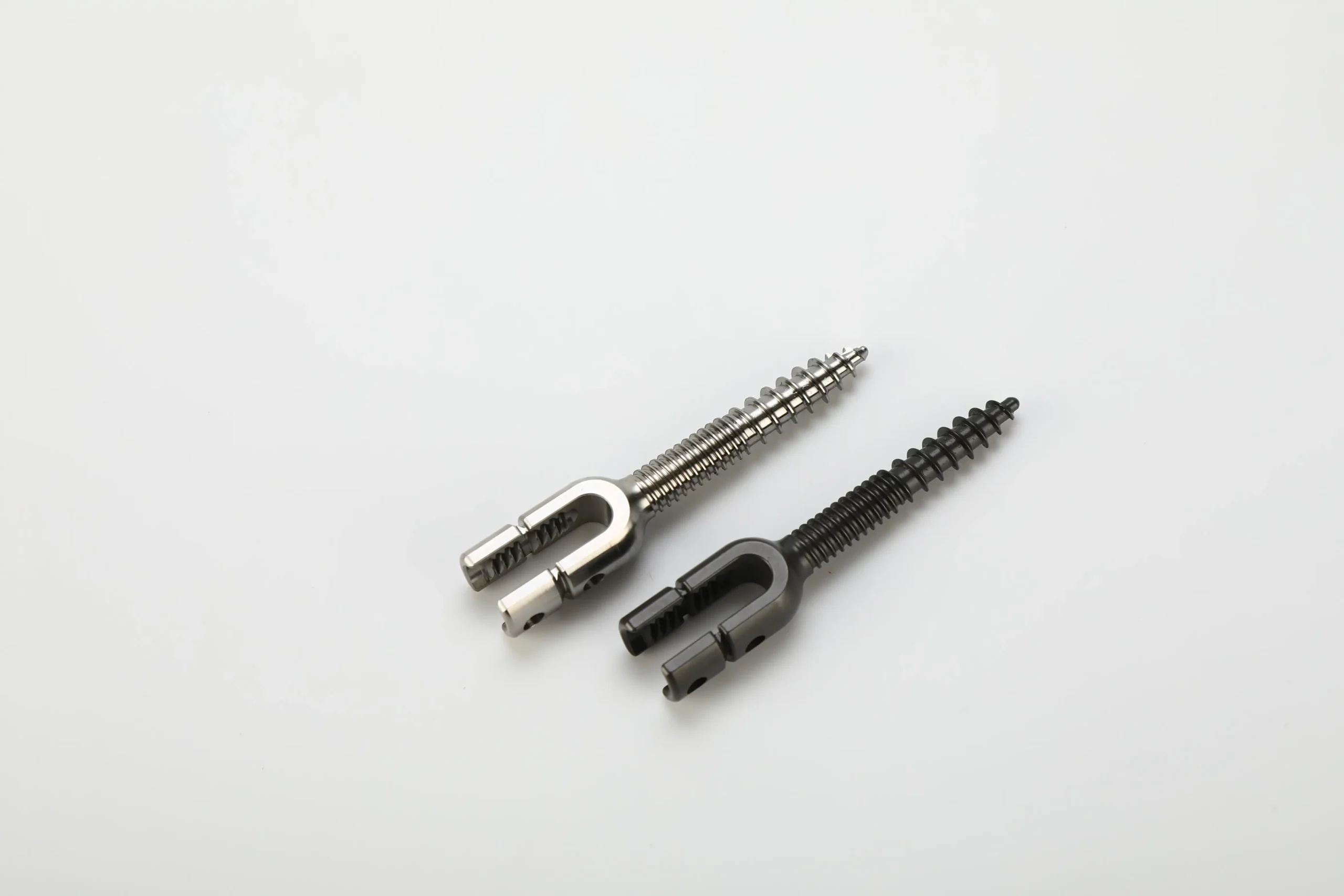
Medical Swiss Turned Parts
Electronic Pins
Precision Shafts
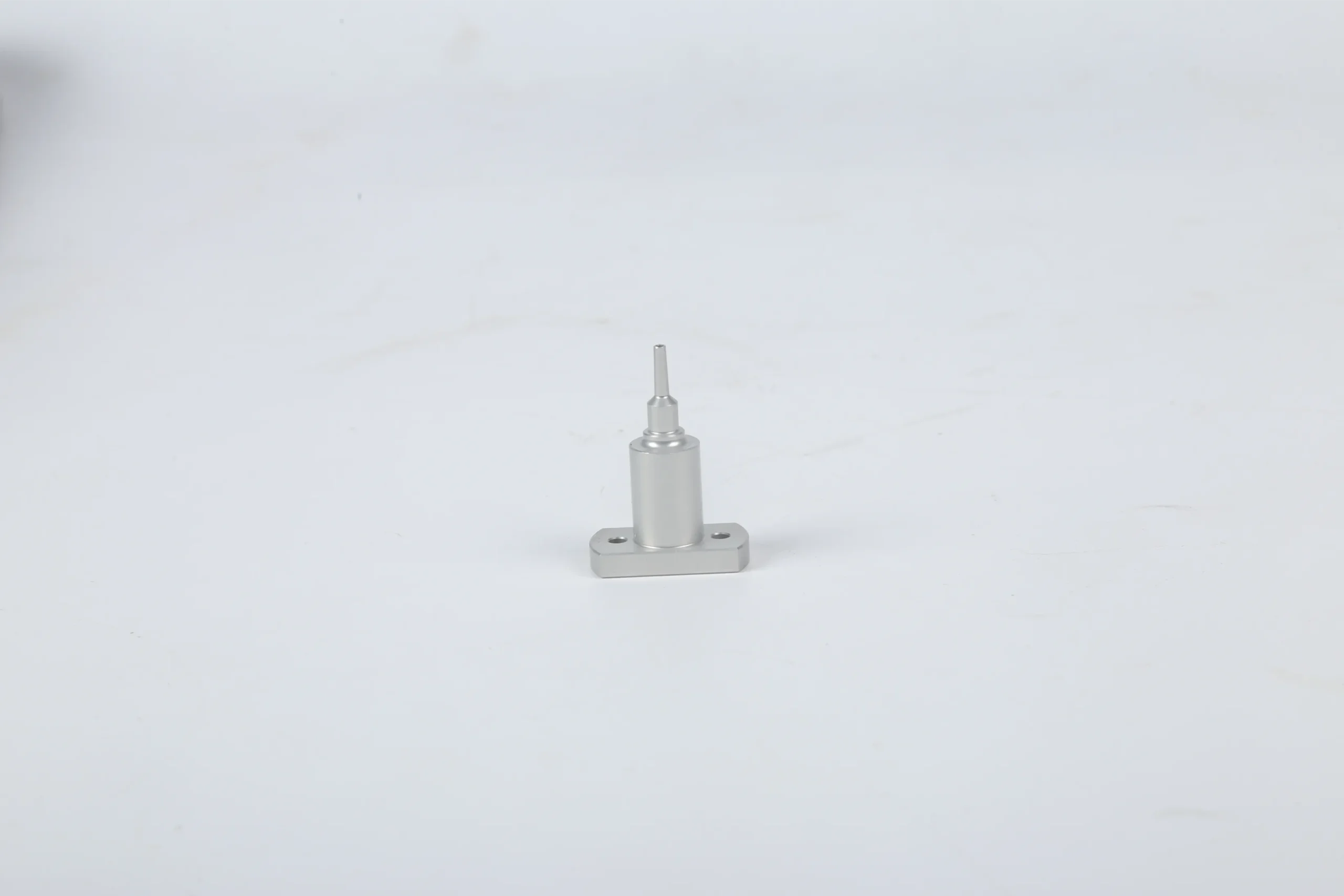
Swiss turning is the defining process for small, precise, and slender components across medical, electronics, aerospace, and fine mechanical applications. If the part is small, long, or requires both — Swiss turning is the answer.
Medical & Dental
Medical cannulas Surgical pins Bone screw blanks Dental implant parts Catheter components Instrument sleeves
Electronics & Connectors
Connector pins Terminal contacts Sensor housings Precision inserts Micro connectors
Aerospace & Fine Mechanics
Miniature fasteners Precision pins Watch shafts Probes Micro shafts Small bushings Miniature threaded parts
Technical Specifications

Technical Capability for Swiss Turning
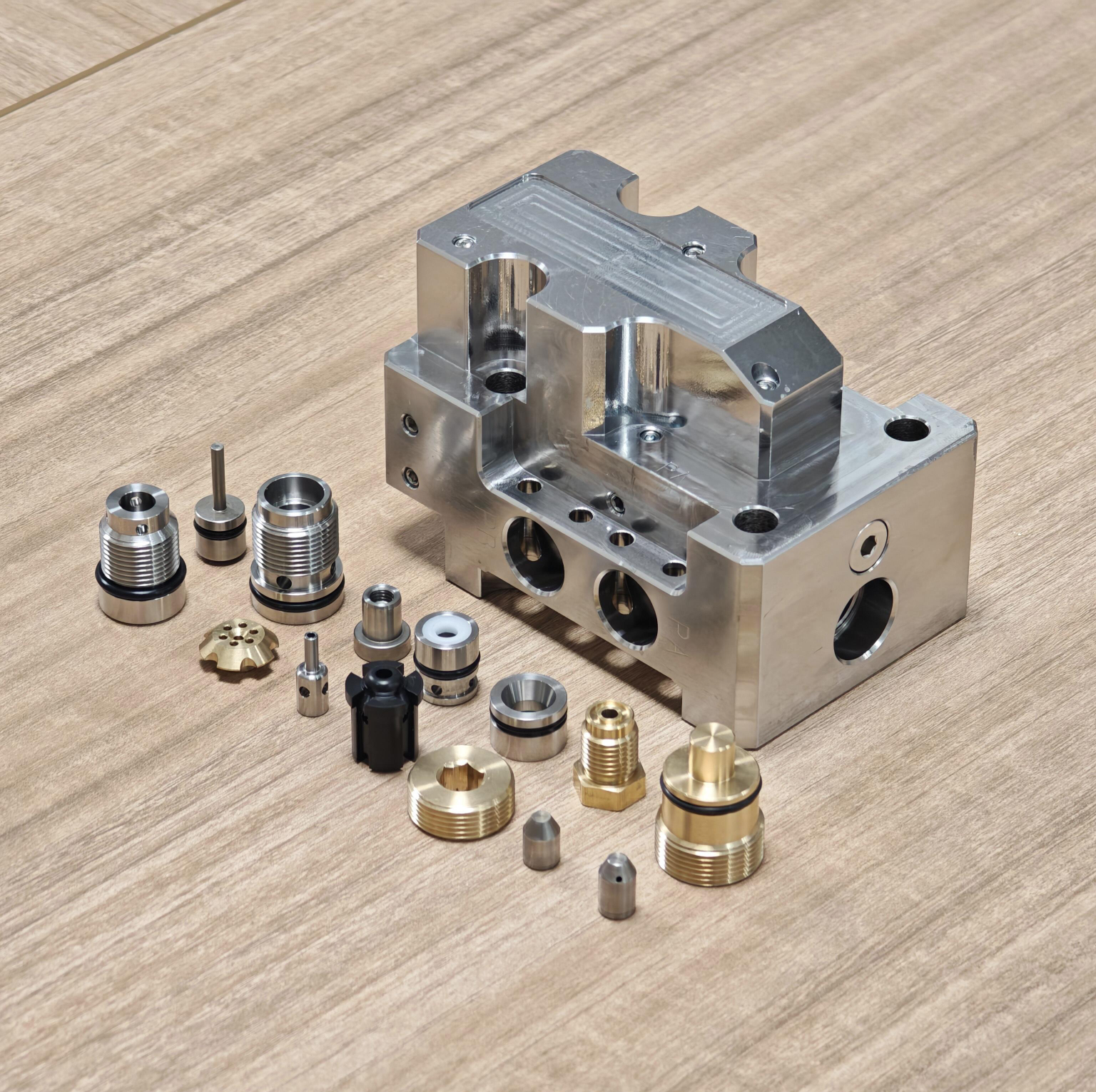
Diameter Range
Ø0.5–32mm
Micro to small precision parts
Max L/D Ratio
100:1
Long slender shafts & cannulas
Tolerance
±0.005mm
On critical precision features
Surface Finish
Ra 0.4μm
Finer finishes achievable
Concentricity and runout on miniature shafts
Thread verification — pitch, profile, Go/No-Go gauging
Material certification — medical and aerospace supply chains
Prototype to production — same facility, same quality
Swiss Turning Technical
Material Selection

Materials for Swiss Turning

Full Material Library →
303
Stainless 303
Free-machining SS · Best chip control for Swiss
316L
316L Stainless
Medical grade · Corrosion resistant
17-4
17-4PH Stainless
High-strength · Aerospace fasteners
304
304 Stainless
General purpose · Food & industrial
C360
Brass C360
Best machinability · Connectors & fittings
C260
Brass C260
Cartridge brass · Spring applications
C110
Pure Copper C110
Max conductivity · Electrical pins
BeCu
Beryllium Copper
Spring contact elements
GR2
Titanium Grade 2
Pure Ti · Medical & chemical
TC4
Ti-6Al-4V / TC4
Aerospace & implant grade
6061
Aluminum 6061
General purpose · Lightweight
7075
Aluminum 7075
High-strength aerospace parts
PEEK
PEEK
250°C · Medical & semiconductor
POM
Delrin / POM
Low friction · Precision sleeves
PTFE
PTFE / Teflon
Chemically inert · Seals & seats
UHMW
UHMW-PE
Wear resistant · Guide components
Process Guide

Swiss Turning vs Standard CNC Turning

Understanding which process fits your part means a faster quote and a better result.

Criterion
Swiss Turning
Standard CNC Turning
Diameter Range
Ø0.5 – 32 mm — optimized for small diameters
Up to Ø600 mm — all mid and large parts
L/D Ratio
Up to 100:1 — no deflection, any length
Practical ~5:1–10:1 without tailstock
Best Parts
Pins, cannulas, connectors, micro shafts, dental parts
General shafts, flanges, bushings, hubs, threaded connectors
Volume
High-volume — bar-fed, lights-out production
All quantities — prototype through production
Tolerance
±0.005 mm and tighter on small features
±0.01 mm standard; tighter on precision orders
Industries
Medical, Dental, Electronics, Aerospace, Watchmaking
All industries — general rotational machining
Not sure which turning process is right for your part? Upload your drawing and we will advise on the best approach.
Get Process Advice →
Quality Assurance

Quality Assurance for Small Precision Parts

μ
Critical Diameter Inspection
Small-diameter features measured with air gauges and laser micrometers. Diameter tolerances to ±0.001 mm and roundness verification on critical shafts and miniature pins.
TH
Thread Verification
All threads verified with Go/No-Go gauges appropriate for small M-series threads. Pitch diameter and form checked for precision miniature threaded components.
Ra
Surface Finish Checks
Ra measured with contact profilometers on critical surfaces. Surface finish requirements are specified on drawing and verified — particularly for medical cannulas and bearing-adjacent features.
BC
Batch Consistency Monitoring
Dimensional checks performed at defined intervals throughout production runs — not only at setup. Catches process drift early and maintains consistent output across the full batch.
MC
Material Certification
Mill certificates with heat number and chemical composition for all orders. Third-party material testing and biocompatibility documentation available for medical parts in titanium, 316L, and 17-4PH.
TR
Lot Traceability
Every production lot traced from raw material heat through machining records and inspection data to final shipment. Required for medical device and aerospace supply chains.
Production Capability

Built for High-Volume Precision Production

Swiss turning isn't just for prototypes. It was designed from the ground up for stable, high-volume small-part production.

100K+
Parts Per Run
Bar-fed, automated, lights-out capability
<1%
Part-to-Part Variation
Consistent dimensions across full batch
3–5day
Prototype Lead Time
Single-piece prototypes, no MOQ
24/7
Lights-Out Capable
Automated bar feeders, unattended shifts
Stable cycle times for recurring orders — consistent cost and quality batch after batch
In-process gauging maintains dimensional control throughout long production runs
Same setup and same quality controls whether you order 100 or 100,000 pieces
Ideal for medical and electronics OEM supply chains requiring reliable repeat production
Ø0.5–32mm
Diameter Range
100:1
Max L/D Ratio
±0.005mm
Precision Tolerance
24hr
Quote Turnaround
Workflow

How Our Swiss Turning Service Works

1
Upload CAD File
Send STEP, DXF, or PDF. 2D drawings with diameter, length, and thread callouts all accepted.
2
Swiss Suitability Review
We assess your part's diameter, L/D ratio, and feature complexity to confirm Swiss turning is the right process.
3
Quote & Process Plan
Detailed quote within 24 hours — material, tolerances, cycle plan, and lead time for prototype or production.
4
Swiss Production
Bar-fed Swiss turning with in-process gauging. Prototype and production from the same setup.
5
Inspection & Delivery
Full dimensional inspection, surface check, and material certs. Shipped worldwide with documentation.
FAQ

Frequently Asked Questions

All you need to know about Swiss turning — what it is, when to use it, and how it differs from standard CNC turning.

Swiss turning is a precision CNC turning process performed on a Swiss-type lathe, where a sliding headstock feeds the bar stock through a guide bushing that supports the workpiece directly at the cutting zone. This enables machining of extremely small-diameter, long, and slender parts without workpiece deflection — producing superior dimensional accuracy and surface finish compared to conventional CNC turning for small-diameter components.
Standard CNC turning clamps the workpiece in a chuck and machines from one end, limiting practical L/D ratios to about 5:1–10:1 before deflection becomes a problem. Swiss turning feeds the bar through a guide bushing that supports it millimeters from the cutting point, allowing L/D ratios of up to 100:1 without deflection. Swiss turning is the correct process for diameters Ø0.5–32 mm; standard CNC turning covers larger diameters up to Ø600 mm.
Swiss turning is optimized for bar diameters from Ø0.5 mm to Ø32 mm, with length-to-diameter ratios from 5:1 up to 100:1. Parts larger than Ø32 mm should use standard CNC turning.
On a conventional CNC lathe, slender workpieces bend under cutting forces, causing vibration, dimensional error, and poor surface finish. Swiss turning's guide bushing supports the bar at the exact cutting point at all times — the workpiece cannot deflect regardless of length.
We run stainless steel (303, 304, 316L, 17-4PH), brass (C360, C260), aluminum (6061, 7075), titanium (Grade 2, Grade 5/TC4), copper, and engineering plastics (PEEK, Delrin/POM, PTFE) on our Swiss turning lathes. Free-cutting grades like 303 stainless and C360 brass are preferred for high-volume Swiss production due to excellent chip control.
Yes. Swiss turning is the primary production process for medical small-diameter components — cannulas, bone screw blanks, surgical pins, catheter parts, and implant-adjacent hardware. For electronics, Swiss turning produces micro connector pins, terminal contacts, and sensor components at the volumes and tolerances required by medical and electronics OEMs.
Yes. Swiss lathes with bar feeders run unattended for entire shifts. Stable cycle times, fast bar changes, and in-process gauging make Swiss turning the ideal platform for 10,000-piece to 500,000-piece production runs.
Our Swiss turning capacity covers Ø0.5 mm to Ø32 mm. For parts above Ø32 mm, please refer to our CNC Turning Service which handles outer diameters up to Ø600 mm.
Get a Quote

Send Your Drawing.
Get a Quote.

Every enquiry includes a DFM review — tolerance feasibility, material confirmation, and process approach confirmed before production starts. MOQ 1 piece.

24hr
Quote Response
MOQ 1
Prototypes OK
ISO
9001:2015
📐
DFM Review on Every Enquiry
Tolerance feasibility, fixturing strategy, and material confirmation. Specific, actionable feedback — not generic pushback.
🎯
First Article Inspection — Standard
FAI report on every new run. Material certs and surface treatment certs included with every shipment.
🔄
Same Process: Prototype to Production
Process plan from your prototype applies to production batches. No re-qualification when you scale.
3 / 4 / 5-Axis CNC + Turning
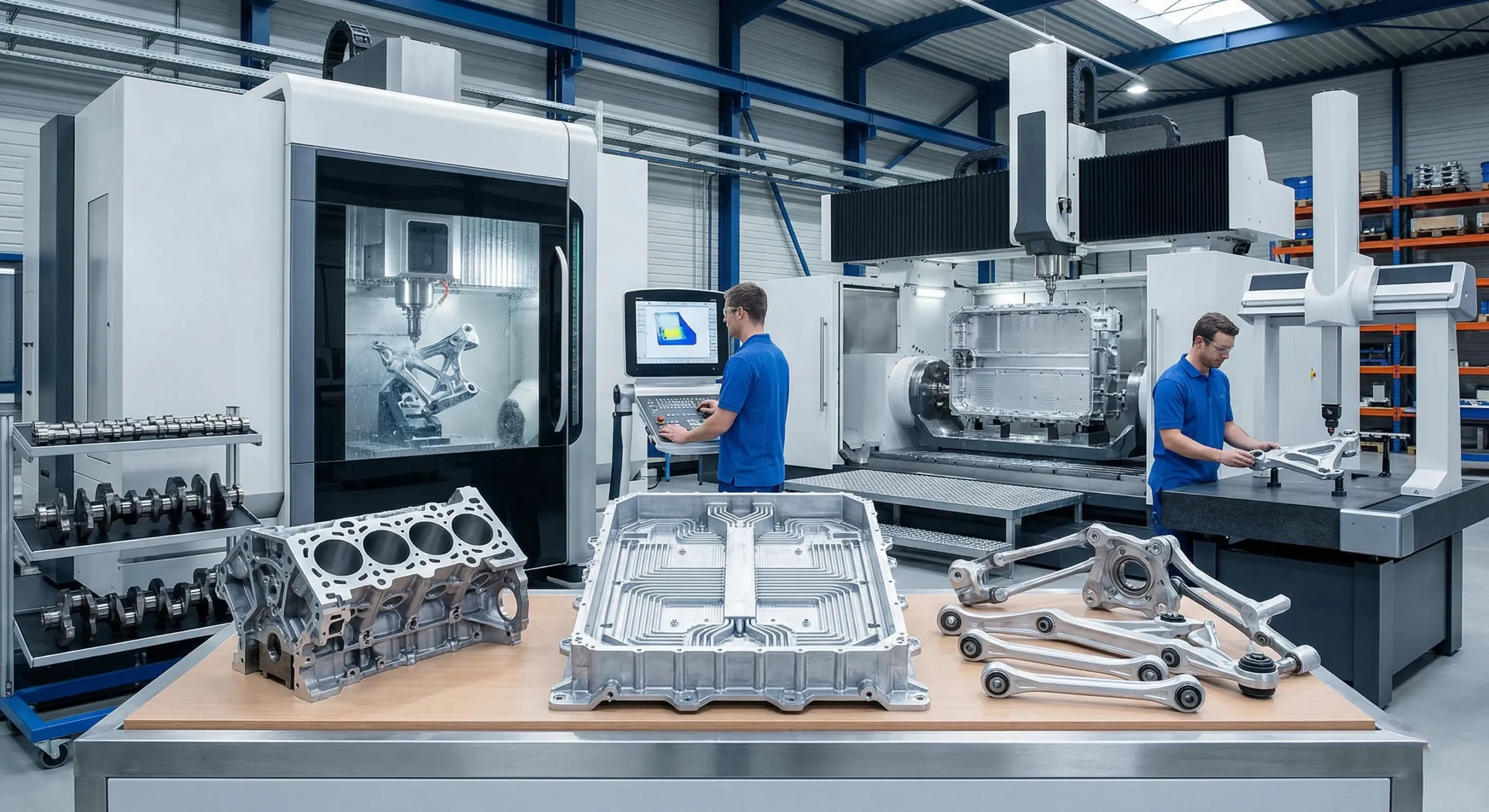
Complex structural parts, shafts, housings, and transmission components. Metals and engineering plastics.
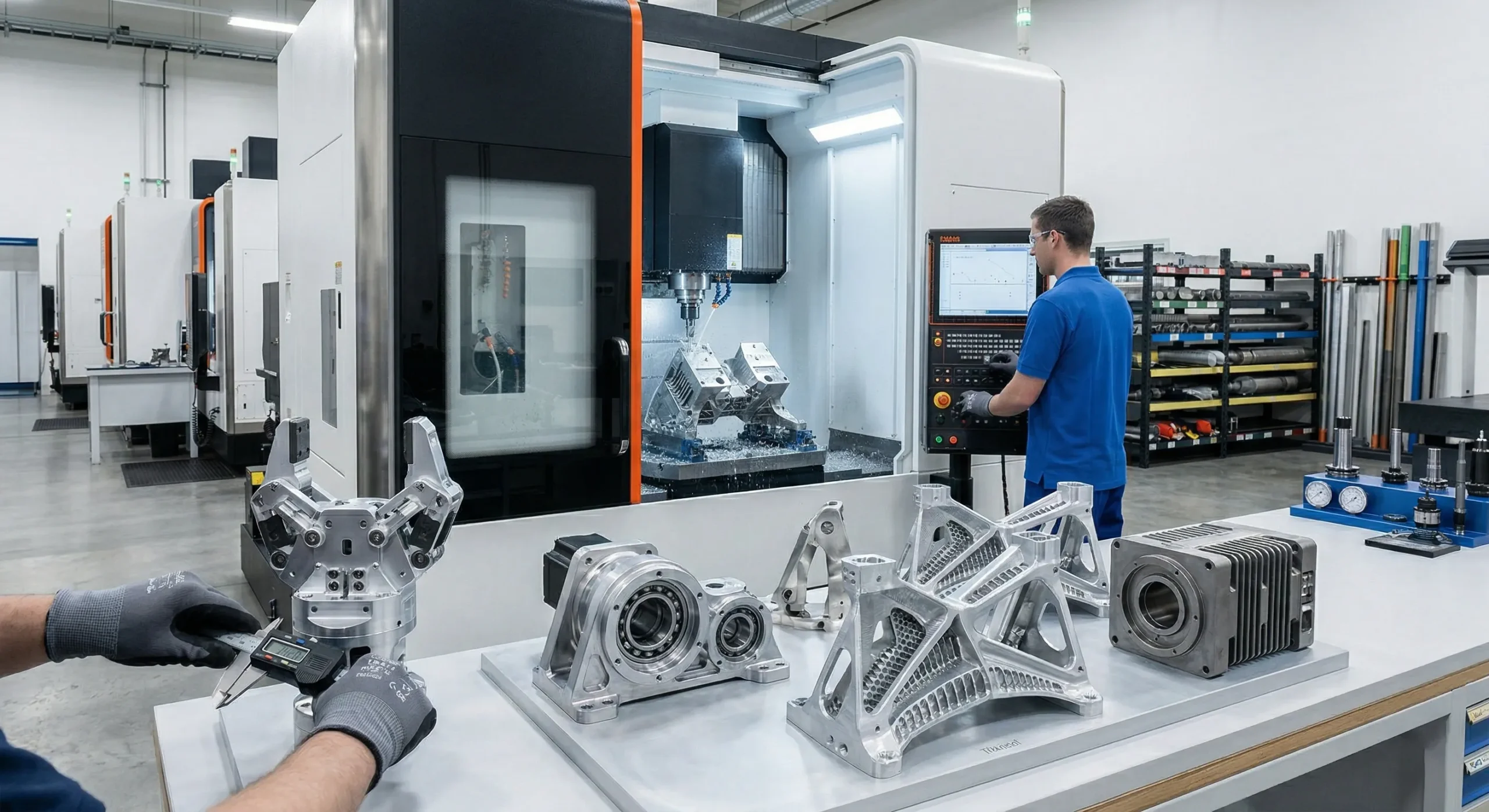
ISO 9001:2015 3/4/5-Axis Milling CNC Turning CMM Inspection Global Delivery