
Surface Treatment — Category 2 / 5CHT · 6 Processes
Chemical
Surface
Treatment
Six chemical surface treatment processes for CNC machined metal parts — anodising (Type II & III), black oxide, passivation, and acid pickling. Applied to aluminium, steel, stainless steel, and titanium.
Coating / Treatment Layer Thickness Comparison
Type III Hard Anodise25–50 μm
Type II Anodise5–25 μm
Black Oxide<1 μm
Passivation~3–5 nm
Acid PicklingRemoves scale
HV 400–600
Hard Anodise
6
Processes
RoHS
Compliant
ASTM A967
Passivation
24hr
Quote
ISO
9001:2015
🔵
Type II Anodise
⚫
Hard Anodise
🖤
Black Oxide
🛡
Passivation
⚗
Acid Pickling SS
🔩
Acid Pickling Steel
Type II Anodising 5–25μm ◆
Type III Hard Anodise HV 400–600 ◆
Black Oxide Steel <1μm ◆
Passivation ASTM A967 ◆
Acid Pickling Stainless Heat Tint ◆
Al · Steel · Stainless · Titanium ◆
Type II Anodising 5–25μm ◆
Type III Hard Anodise HV 400–600 ◆
Black Oxide Steel <1μm ◆
Passivation ASTM A967 ◆
Acid Pickling Stainless Heat Tint ◆
Al · Steel · Stainless · Titanium ◆
All 6 Processes
Chemical Surface Treatment —
Anodising · Passivation · Pickling
Chemical treatments alter the surface chemistry of metal parts to improve corrosion resistance, wear resistance, electrical insulation, or appearance. Process selection is determined by base material, required functional properties, and dimensional tolerance.

CHT-01
PROCESS 01
Type II Anodising (Decorative)
Sulphuric acid anodising for aluminium CNC parts at moderate current density — producing a 5–25μm porous oxide layer that can be dyed in a wide colour range before sealing. The standard cosmetic surface treatment for aluminium consumer electronics, instrument panels, and architectural components. The porous oxide accepts dye before the final sealing step (hot DI water or nickel acetate seal closes the pores and locks the colour). Colour options: clear (natural silver), black, gold, champagne, red, blue, and custom RAL/Pantone matching. Hardness HV 200–300. Corrosion resistance improved vs bare aluminium. Dimensional change: each surface adds approximately 50% of total layer thickness outward — account for this in pre-anodise machining dimensions for tight fits. RoHS compliant (no hexavalent chromium).
Layer Thickness5–25 μm
HardnessHV 200–300
ComplianceRoHS / MIL-A-8625 Type II
Aluminium alloys — all gradesGet Quote
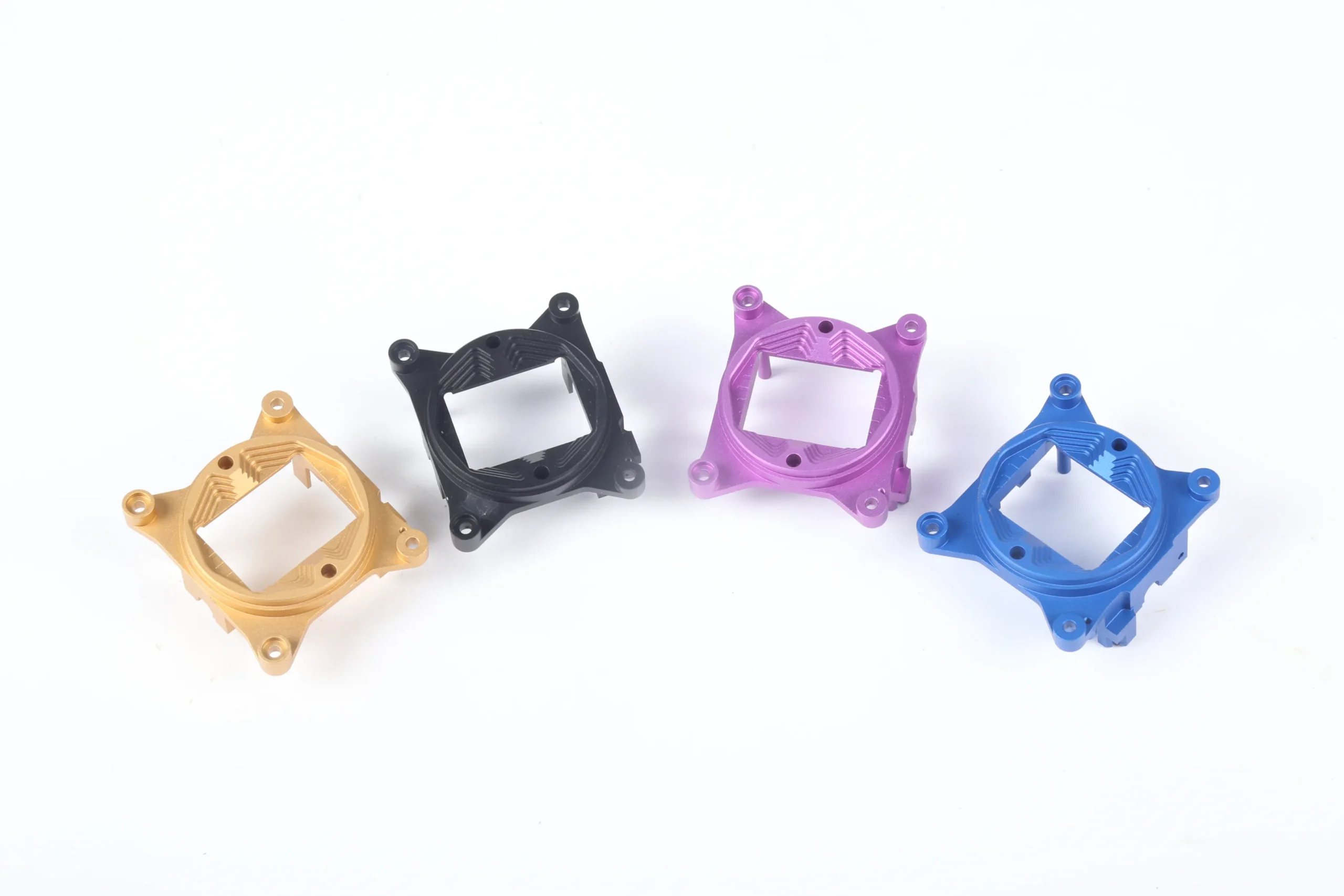
CHT-02
PROCESS 02
Type III Hard Anodising (Hardcoat)
High current density, low temperature sulphuric acid anodising producing a hard, dense oxide layer 25–50μm thick. Hardness HV 400–600 (comparable to hard chrome). Colour: dark grey to black in natural form due to layer thickness. Wear resistance excellent — standard for sliding aluminium components (pistons, valve bores, guide rails, aerospace structural parts). Corrosion resistance superior to Type II. Dimensional change is significant — typically 12–25μm added to each external surface — pre-anodise machining dimensions must be adjusted. For threaded holes: thread measured after hard anodise to confirm fit; for bore fits (H7), we calculate pre-anodise bore size at DFM. Compliance: MIL-A-8625 Type III.
Layer Thickness25–50 μm
HardnessHV 400–600
ComplianceMIL-A-8625 Type III
Aluminium alloys — 6061, 7075, 2024Get Quote

CHT-03
PROCESS 03
Chemical Oxidation (Black Oxide)
Alkaline blackening (black oxide, bluing) for steel and stainless steel CNC parts. A chemical conversion coating producing a thin magnetite (Fe₃O₄) layer <1μm thick — dimensions are essentially unchanged (no dimensional allowance required). Black finish for aesthetic and light-absorption applications. Mild corrosion resistance (significantly improved with post-treatment oil or wax). Primary applications: optical and photographic equipment components (reduce reflectivity), tooling and gauges (identification and mild corrosion protection), and fasteners (cosmetic appearance). Steel black oxide: alkaline salt bath at 130–150°C. Stainless black oxide: different chemistry — lower temperature process. Must be followed by oil or wax treatment for meaningful corrosion resistance.
Layer< 1 μm
Dim. ChangeNegligible
FinishMatte black
Steel · Stainless steelGet Quote

CHT-04
PROCESS 04
Chemical Passivation
Nitric or citric acid treatment for stainless steel and titanium CNC parts — removing free iron, iron oxide particles, and machining contamination to restore and enhance the chromium oxide passive layer. Machining operations introduce iron contamination (from steel tooling and fixtures) onto stainless steel surfaces — these particles cause premature rust spots in humid environments. Passivation removes this contamination. Specifications: ASTM A967 (nitric or citric acid passivation of stainless steel); AMS 2700 (aerospace). Citric acid passivation preferred for medical and food-contact parts (RoHS, no nitric acid disposal issues). Testing: copper sulphate test or salt spray per ASTM A380 to verify effective passivation. Mandatory for stainless steel medical device parts, food-processing equipment, marine hardware.
Passive Layer~3–5 nm Cr₂O₃
Dim. ChangeNegligible
TestASTM A380 / A967
Stainless steel · TitaniumGet Quote

CHT-05
PROCESS 05
Acid Pickling — Steel
Hydrochloric or sulphuric acid pickling for carbon steel CNC parts — removing mill scale, rust, heat tint, and heavy surface oxide contamination that undermines paint and coating adhesion. Mill scale (formed during hot rolling of steel bar stock) is an iron oxide layer up to 50μm thick that is cathodic to the steel substrate — if left under paint, it accelerates undercutting corrosion at any coating discontinuity. Acid pickling removes mill scale completely, exposing clean reactive steel that accepts paint, zinc phosphate, powder coating, and electroplating with maximum adhesion. Inhibited acid formulation prevents hydrogen embrittlement in high-strength steels (>1200 MPa UTS). Post-pickling rinse and immediate flash primer or conversion coating application required to prevent flash rust.
RemovesScale · Rust · Heat tint
StandardASTM A380
Post-treatFlash primer required
Carbon steel · Low alloy steelGet Quote
CHT-06
PROCESS 06
Acid Pickling — Stainless / Titanium
Nitric-hydrofluoric acid (HNO₃-HF) pickling for stainless steel and titanium CNC machined and welded parts — removing heat tint (the discoloured oxide zones around weld beads), heavy surface contamination, and embedded iron particles. Stainless steel weld heat tint is a chromium-depleted zone under the oxide discolouration — pickling removes both the tint oxide and the chromium-depleted layer, restoring the alloy's full corrosion resistance over the weld. Followed immediately by passivation (nitric or citric acid) to maximise the passive layer. Required for food-processing vessels, pharmaceutical equipment, and marine stainless steel assemblies where weld heat tint would compromise corrosion performance. Titanium pickling: removes alpha case (oxygen-enriched brittle surface layer formed during forging/heat treatment) and heat tint from titanium machined parts.
RemovesHeat tint · Cr-depleted zone
Post-treatPassivation (ASTM A967)
TitaniumAlpha case removal
Stainless steel · TitaniumGet Quote
Technical Reference
Layer Thickness & Dimensional Impact
📏
Layer Thickness by Process
Type III Hardcoat
25–50 μm
Type II Anodise
5–25 μm
Black Oxide
< 1 μm
Passivation
~3–5 nm
Pickling
Removes material
⚙
Key Technical Data
Type III Hardness
HV 400–600
Comparable to hard chrome. Wear-resistant aluminium sliding surfaces and valve bores.
Type II Colours
10+
Clear, black, gold, red, blue, champagne, custom Pantone/RAL. Colour locked before seal.
Passivation Spec
ASTM A967
Nitric or citric acid. Citric preferred for medical and food-contact. AMS 2700 aerospace.
Anodise Dim. Add
50% outward
Half layer thickness adds to each external surface. Account for in pre-anodise bore sizing.
Capability
Critical Considerations for
Chemical Treatment Success
📐
Anodising Dimensional Allowance
Anodising adds layer thickness that changes part dimensions. We calculate pre-anodise machining dimensions at DFM for all tolerance-critical features — bores, shafts, thread fits. Type II: allowance ~5–12μm per surface. Type III: allowance ~12–25μm per surface. The correct pre-anodise dimension is specified on the route card and machined accordingly.
🎭
Masking for Selective Treatment
When only partial surface area should be treated (e.g., anodised body but bare threads for electrical contact, or passivated shaft but hard-anodised bore), we apply masking compounds to the areas to be excluded. Masking specification is agreed at DFM and recorded on the route card for all subsequent batches.
🔬
Process Testing and Verification
Anodise thickness measured by eddy-current gauge per ASTM B244. Passivation verified by copper sulphate test or salt spray per ASTM A380. Hard anodise hardness verified by Vickers micro-hardness testing on witness coupons. Test results documented and available on request for aerospace and medical applications.
Our Advantage
Why Engineers Choose Our Chemical Treatment
DFM
Dimensional Allowance at DFM
We calculate anodising dimensional allowances at DFM before machining begins — not after the customer reports that anodised threads or bores don't fit. Pre-anodise bore and shaft dimensions are specified on the route card and verified at incoming inspection.
Med
Citric Passivation for Medical
We specify citric acid passivation (ASTM A967 Method C1) for all medical device and food-contact stainless steel parts — not nitric acid, which produces nitrous oxide waste and has stricter disposal requirements. Citric passivation is equally effective and preferred by FDA-regulated manufacturers.
RoHS
RoHS Compliant Processes
All chemical treatments offered are RoHS compliant — no hexavalent chromium (Cr⁶⁺) is used in any process. Type II and III anodising are inherently chromium-free. Passivation uses only nitric or citric acid.
Test
Treatment Verified by Test
Layer thickness, hardness, and passivation effectiveness verified by test — not assumed from process parameters. Test certificates available for all aerospace, medical, and OEM-qualified applications requiring objective evidence of treatment compliance.
FAQ
Chemical Treatment — Common Questions
Type II (decorative): 5–25μm, HV 200–300, wide colour range, cosmetic applications. Type III (hardcoat): 25–50μm, HV 400–600, dark grey/black, wear-resistant engineering applications. Type III adds ~12–25μm per surface — bore dimensions must be pre-calculated. We confirm anodise type at DFM and specify pre-anodise machining dimensions for all tight-tolerance features.
Passivation (ASTM A967) removes iron contamination from machined stainless steel surfaces — restoring the chromium oxide passive layer. Mandatory for: medical devices, food-processing equipment, marine hardware, and any stainless steel application where maximum corrosion resistance is required. We use citric acid passivation for medical and food-contact parts; nitric acid for standard industrial applications.
Yes — anodising adds layer thickness. Half the total layer grows outward from each surface, half grows inward into the substrate. Type II at 15μm: ~7.5μm added outward per surface. Type III at 50μm: ~25μm added outward per surface. Bores decrease in diameter; external diameters increase. We calculate pre-anodise machining dimensions at DFM for all tolerance-critical features.
Pickling removes heavy contamination: steel pickling (HCl/H₂SO₄) removes mill scale and rust before coating. Stainless/Ti pickling (HNO₃-HF) removes weld heat tint and restores the passive layer over weld zones. Pickling is typically followed by passivation for stainless steel weldments. Required for food-processing vessels, pharmaceutical tanks, and marine stainless assemblies where weld heat tint would compromise corrosion performance.
Structured data embedded · Eligible for Google FAQ rich results