
Choosing the right helical gear starts with understanding why these components are vital for high-performance machinery. Unlike a standard spur gear, which has straight teeth, a helical gear features teeth cut at an angle to the axis of rotation. This design allows for gradual tooth engagement, resulting in smoother, quieter operation and a higher load-carrying capacity.
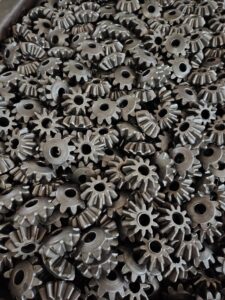
Helical Gear vs. Spur Gear
When comparing a spur and helical gear, the primary difference lies in noise and vibration. While spur gears are efficient, they can be noisy at high speeds. Helical gears excel in high-speed applications because the angled teeth reduce impact stress, making them the preferred choice for automotive transmissions and heavy industrial drives.
Common Applications
You will find these components in a wide array of power transmission systems, including:
- Helical gearboxes and speed reducers.
- Helical gear motors for conveyor systems and automation.
- Helical gear pumps used in fluid power applications.
- Helical gear limited slip differentials in performance vehicles like the 2026 GT3 RS.
- Crossed helical gears for non-parallel, non-intersecting shafts.
Key Specifications to Consider
To ensure you source the correct custom helical gears, pay close attention to these technical variables:
| Specification | Importance |
|---|---|
| Helix Angle | Determines the smoothness and axial thrust of the gear. |
| Material Type | Options range from hardened steel to plastic helical gears for light loads. |
| Gear Geometry | Includes double helical gears (herringbone) to cancel out axial thrust. |
| Metric Helical Gears | Standardized sizing for international machinery compatibility. |
Whether you are looking for a helical gear reducer or a specialized helical bevel gear, understanding these fundamentals ensures your equipment runs with maximum efficiency and minimal downtime.
Key Factors for Choosing a Helical Gear Manufacturer

Finding the right partner for helical gear production goes beyond just finding a shop with a lathe. To ensure your machinery runs smoothly, you need a manufacturer that balances technical precision with reliable logistics.
Quality Standards and Certifications
The first thing we look for is a commitment to international standards. A reputable helical gear manufacturer should hold ISO 9001 certifications at a minimum. This ensures that every gear—whether it’s a standard helical gear or a complex double helical gear—meets strict dimensional tolerances and material integrity requirements.
Technical Expertise and Customization
Every application has unique needs, from specific helix angles to specialized finishes. You need a supplier capable of custom helical gear production who can handle:
- Bespoke Sizes: Ability to scale from small helical gears to large industrial drives.
- Precision Machining: Advanced multi-face complex structures and tight tolerances are non-negotiable for high-speed applications.
- Material Variety: Expertise in working with hardened steel, alloys, and even plastic helical gears for quieter operations.
Advanced Technology and Innovation
We invest heavily in the latest helical gear hobbing and helical gear milling technology. Modern CNC machining allows for superior surface finishes and tooth geometry, which directly reduces noise and increases the lifespan of your gearbox helical gears.
Production Capacity and Value
Price is important, but value is king. When evaluating helical gear providers, consider the total cost of ownership.
- Lead Times: Ensure the vendor has the production capacity to meet your deadlines without compromising quality.
- Scalability: Can they handle a one-off custom helical gear prototype as easily as a mass-production run?
- After-Sales Support: A reliable partner stands by their work with robust warranties and technical assistance.
Comparison Matrix for Gear Suppliers
| Feature | Low-End Suppliers | Premium Manufacturers |
|---|---|---|
| Precision | Standard tolerances | Ultra-fine, high-speed specs |
| Machining | Manual or basic CNC | Advanced 5-axis & CNC shaft machining |
| QC Testing | Visual inspection | Coordinate Measuring Machine (CMM) & NDT |
| Customization | Limited to catalog items | Full bespoke engineering |
Choosing the right partner means prioritizing precision helical gears over the lowest sticker price to avoid costly downtime and premature gear failure.
How to Evaluate Potential Helical Gear Manufacturers
Finding the right partner for helical gear production requires a hands-on approach. You can’t just pick the first name that pops up; you need to verify that their shop can actually handle your specific tolerances and volume.
Step-by-Step Evaluation Strategy
- Conduct Targeted Research: Start with industry-specific online directories and trade associations. Look for helical gear manufacturers that specialize in your specific sector, whether it’s automotive or heavy industrial machinery.
- Request Samples and Detailed Quotes: Never skip the prototype phase. Analyze samples for dimensional accuracy and surface integrity. This is the best time to see if their mechanical surface finishing meets your friction and noise reduction requirements.
- Vetting References and Reviews: Dig into customer testimonials and third-party audits. A reliable supplier should be transparent about their track record with custom helical gears and provide case studies upon request.
- Facility Tours (Physical or Virtual): Transparency is everything. A tour allows you to inspect their helical gear hobbing equipment and quality control stations. You want to see real-time testing, not just a clean showroom.
- Assess Support and Communication: Evaluate their responsiveness during the quoting process. A company that takes a week to answer a simple question about helix angles will likely be a headache during a production delay.
Quick Evaluation Checklist
| Evaluation Factor | What to Look For |
|---|---|
| Technical Accuracy | Ability to hit precise metric helical gear specs consistently. |
| Prototyping | Fast turnaround on samples to verify helical gear milling quality. |
| Transparency | Willingness to share material certifications and testing logs. |
| Scalability | Can they jump from a small-batch custom order to mass production? |
By focusing on these practical touchpoints, you ensure the gear helical components you receive are built for durability and high-load performance. Always prioritize manufacturers who offer robust warranty policies and clear communication channels to protect your investment.
Common Pitfalls When Selecting a Helical Gear Manufacturer

Choosing the wrong partner for helical gear production can lead to catastrophic mechanical failures and blown budgets. Avoiding these common traps is essential for maintaining your competitive edge in the U.S. industrial market.
The Hidden Cost of Low-Price Bids
Selecting a helical gear manufacturer based solely on the lowest quote is a gamble that rarely pays off. Cheap gears often suffer from poor surface finishes or inaccurate helix angles, leading to excessive noise and premature wear.
- Consequence: High frequency of replacements and unplanned downtime.
- Solution: Focus on the total cost of ownership, including the lifespan and efficiency of the gear.
Overlooking Material Quality and Testing
A major risk in custom helical gear sourcing is the use of sub-par alloys. If a supplier skips rigorous stress testing or uses inferior metals, the gears will fail under high-torque applications. Ensuring precision often requires advanced CNC grinding to achieve the necessary tolerances for smooth operation.
- Risk: Internal fractures or “pitting” on the gear teeth.
- Solution: Demand material certifications and verify that the manufacturer uses high-grade steel or specialized polymers tailored to your specific environment.
Proactive Strategies for Success
To safeguard your supply chain, pivot away from “middle-man” vendors and partner directly with certified experts.
- Prioritize Certifications: Only work with shops that hold ISO 9001 or equivalent standards.
- Verify Equipment: Ensure they utilize modern helical gear hobbing and milling technology for consistent accuracy across small-batch and mass production runs.
- Demand Transparency: A reliable partner will provide detailed inspection reports and allow for third-party audits of their quality control processes.
Top Questions to Ask a Helical Gear Manufacturer
When you’re vetting a helical gear manufacturer, you can’t afford to be vague. Precision is the name of the game, and the right partner should be able to answer technical specifics without hesitation. Use these targeted questions to separate the experts from the amateurs.
Technical Capability and Precision
- What specific helix angles can you accommodate? Whether you need a standard angle or a specialized orientation for a helical bevel gear setup, the manufacturer must have the CNC flexibility to hit your exact degree requirements.
- How do you ensure precision in helical gear milling? Ask about their equipment. Top-tier shops utilize multi-axis helical gear hobbing machines and automated inspection tools to ensure the tooth profile and lead are perfect.
- What is your process for quality assurance and material testing? You need to know if they perform NDT (Non-Destructive Testing) or hardness testing in-house to guarantee the helical cut gears won’t fail under high-torque loads.
Production and Logistics
- Can you handle small-batch custom orders versus mass production? Some vendors only want the big contracts, but a reliable partner offers custom helical gear services for prototypes and small runs without a massive price hike.
- Do you offer integrated components? If your project involves complex assemblies, ask if they can manufacture related parts like a precision impeller or specialized housings to ensure total system compatibility.
Essential Checklist for Vetting Suppliers
| Question | Why It Matters |
|---|---|
| Material Sourcing | Ensures the helical spur gear or worm gear uses high-grade alloy or polymer. |
| Lead Times | Critical for maintaining your production schedule and inventory flow. |
| Surface Finishes | Proper finishing reduces noise and heat in gearbox helical gears. |
| Secondary Operations | Confirms they can handle heat treatment, grinding, and coating in-house. |
By pinning down these details early, you ensure your helical gear drive components are built to last and that your supplier has the technical backbone to support your engineering needs.
Making the Decision on Your Helical Gear Manufacturer
Choosing the right helical gear manufacturer comes down to balancing technical precision with long-term business reliability. Once you have narrowed down your shortlist of top helical gear vendors, it is time to move from evaluation to execution. I recommend using a weighted decision matrix to objectively compare candidates. Assign scores based on critical factors like helix angle accuracy, lead times, and inspection capabilities to ensure your choice aligns with your specific engineering requirements.
Finalizing the Partnership
Before signing any agreements, ensure your contract is airtight. A solid partnership is built on clear expectations regarding:
- Payment Terms: Establishing milestones that protect both parties.
- Quality Guarantees: Defining clear rejection criteria for parts that don’t meet your precision helical gear tolerances.
- Logistics: Confirming shipping schedules to avoid downtime in your production line.
Starting with Pilot Orders
I always suggest starting with a small-batch pilot order rather than jumping straight into mass production. This “test run” allows you to verify the actual helical gear milling quality and the manufacturer’s ability to hit deadlines under real-world conditions. Successful completion of a pilot order provides the confidence needed to scale up to full-scale custom helical gear production, ensuring your supply chain remains robust and reliable.
FAQs for Choosing Helical Gear Suppliers
Choosing the right partner for your power transmission needs often comes down to getting clear answers on technical capabilities and timelines. Here are the most frequent questions we address for our U.S. clients regarding helical gear sourcing.
What are the most common materials for high-performance helical gears?
Performance depends entirely on the application’s stress levels. For most industrial settings, we utilize:
- Alloy Steels: Grades like 4140 or 8620 are standard for high-strength, heat-treated gears.
- Stainless Steel: Best for food processing or corrosive environments.
- Bronze/Brass: Often used for crossed helical gears or worm gear pairings to reduce friction.
- Engineering Plastics: Lightweight solutions for low-torque, quiet operations.
How long does a typical custom helical gear production take?
Lead times vary based on complexity and volume. For custom helical gears requiring specialized helical gear milling or heat treatment, a typical window is 4 to 8 weeks. Standard batches may move faster, while highly specialized designs involving unique helix angles or precision grinding might extend the timeline.
What certifications should I look for in a gear manufacturer?
To ensure you are receiving a reliable product, verify that the helical gear manufacturer maintains:
- ISO 9001:2015: The baseline for quality management systems.
- AS9100: Essential if you are sourcing for aerospace applications.
- AGMA Standards: Ensure the manufacturer follows American Gear Manufacturers Association guidelines for tolerances and load ratings.
Can you provide high-precision internal components?
Yes. Beyond external gearing, we specialize in complex internal geometries. If your assembly requires specific tooth profiles, we can integrate high-quality internal ring gears to match your helical setup perfectly.