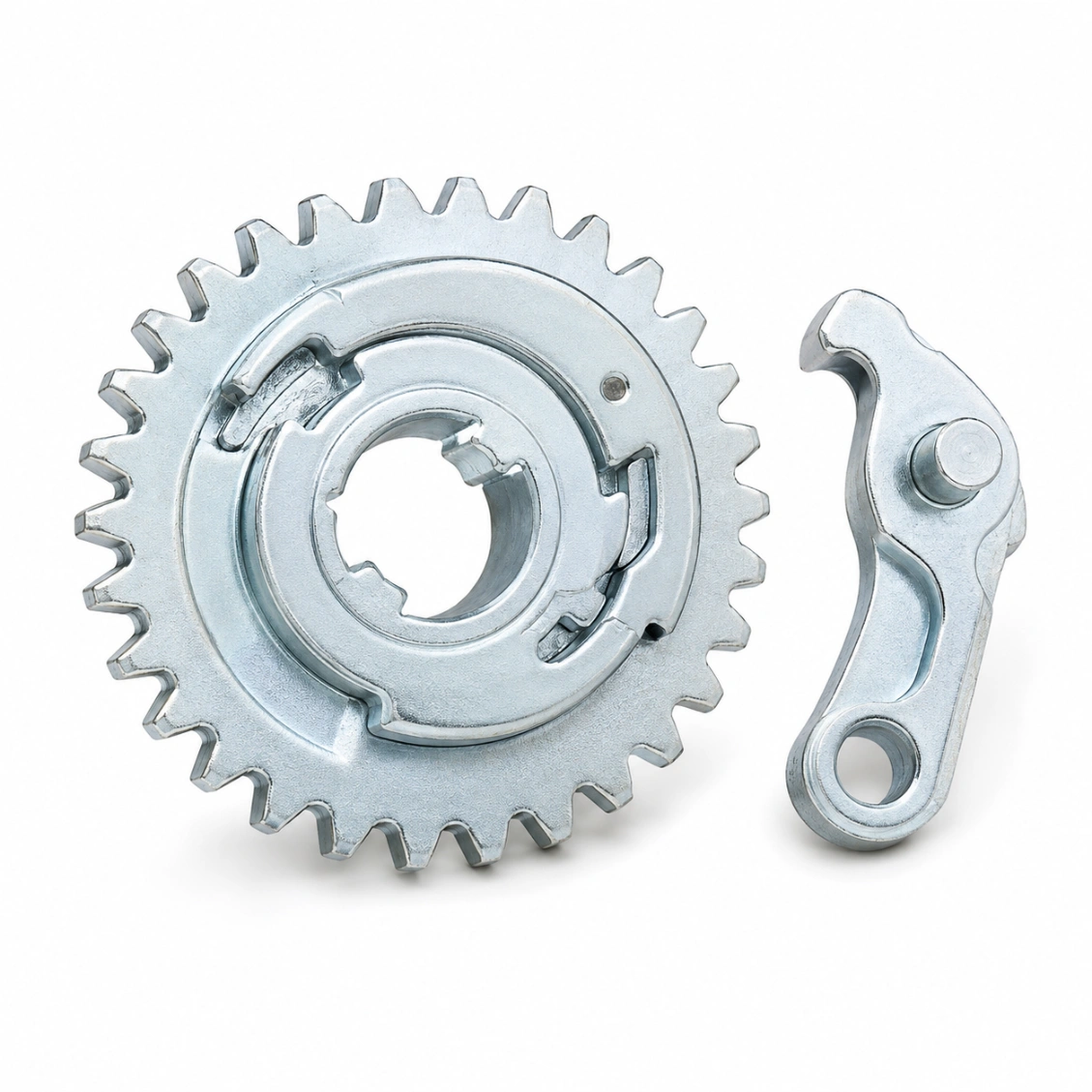
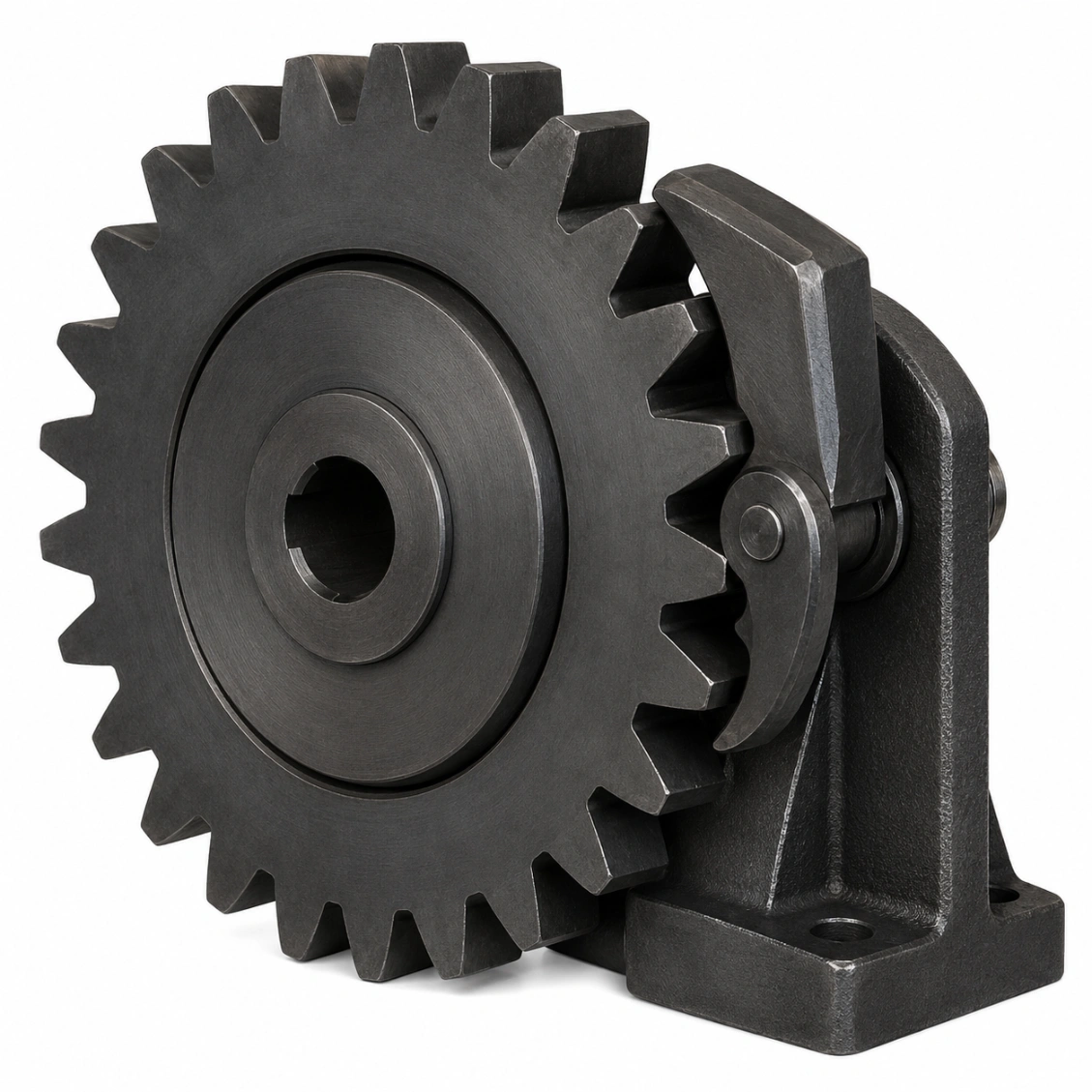
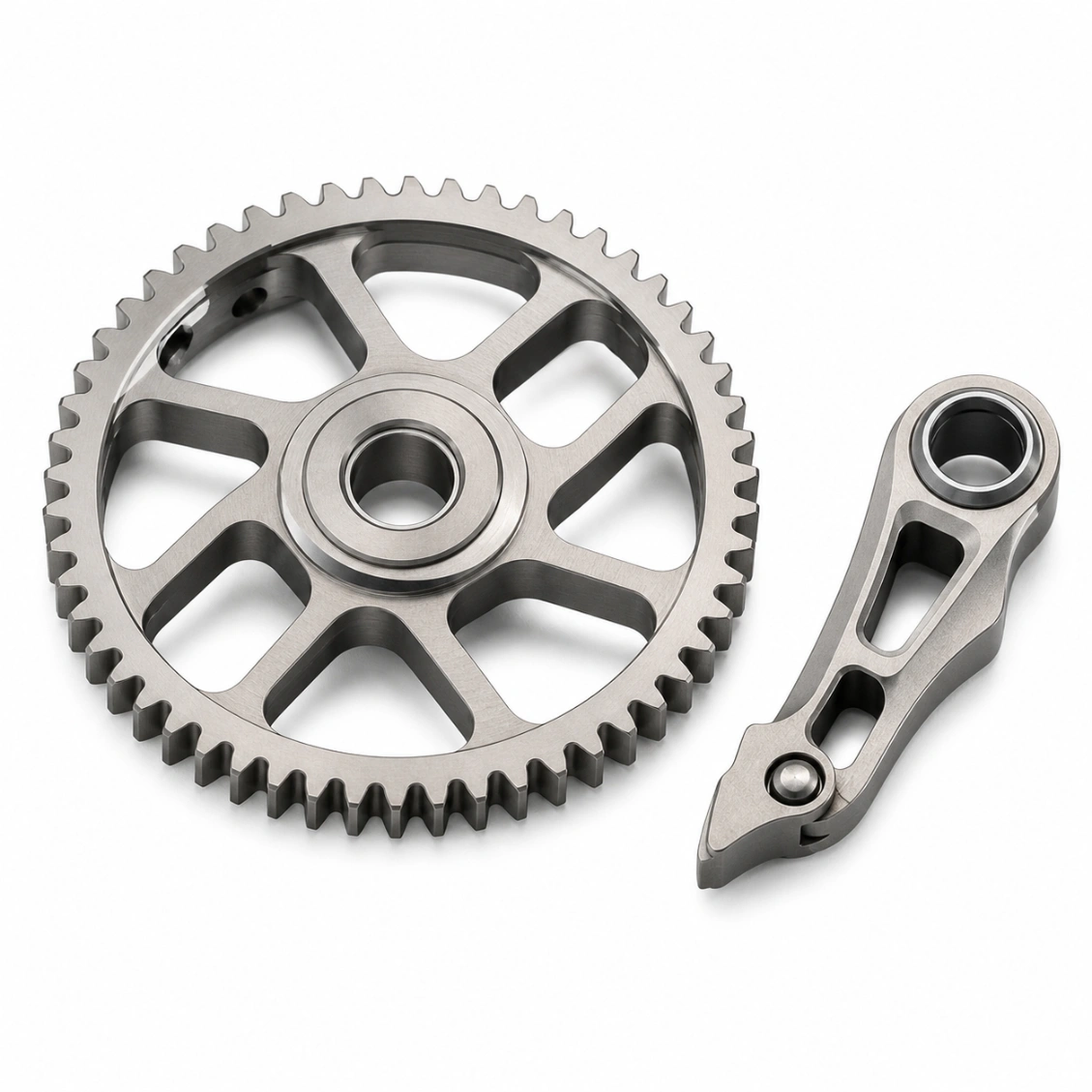
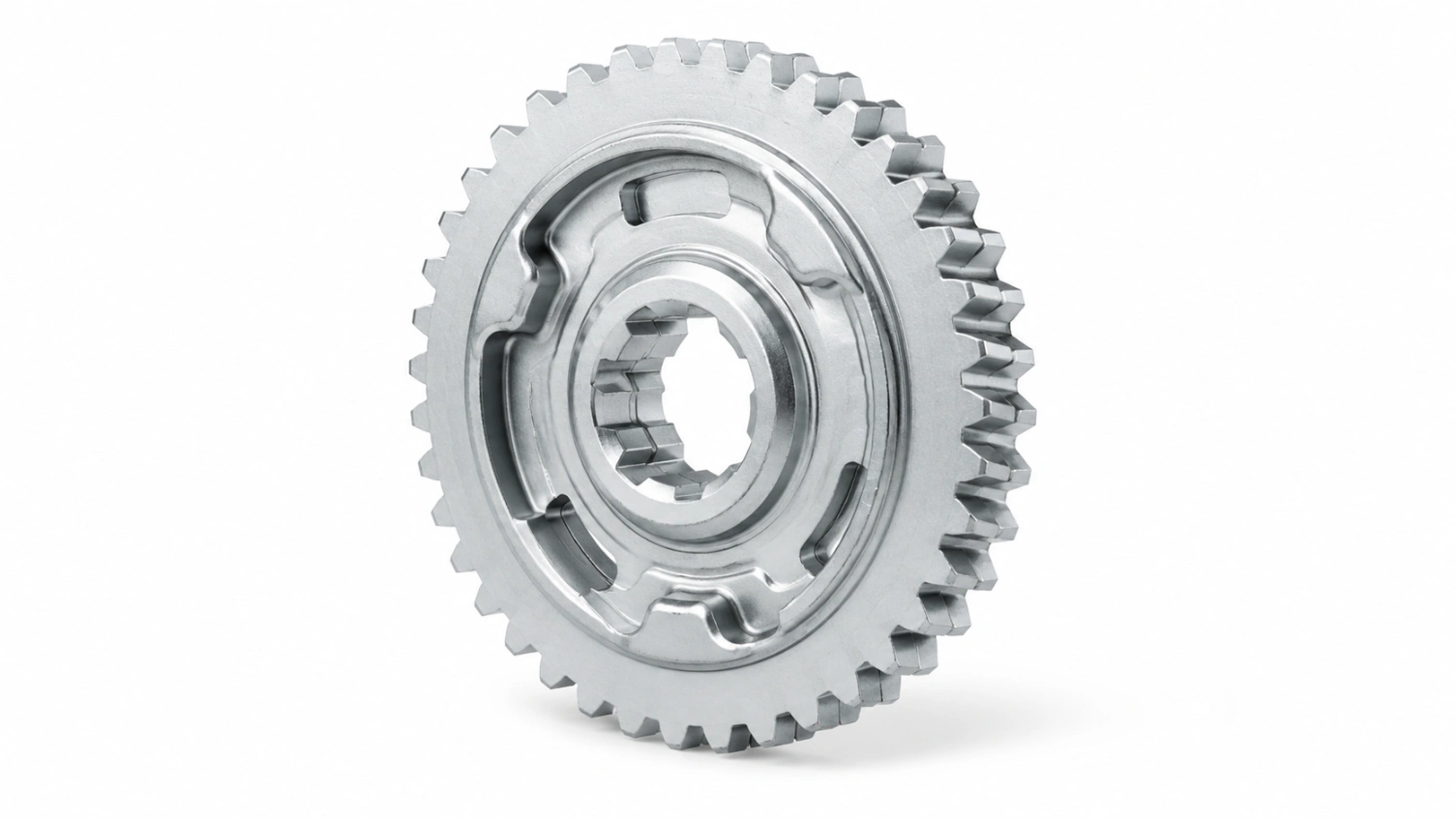
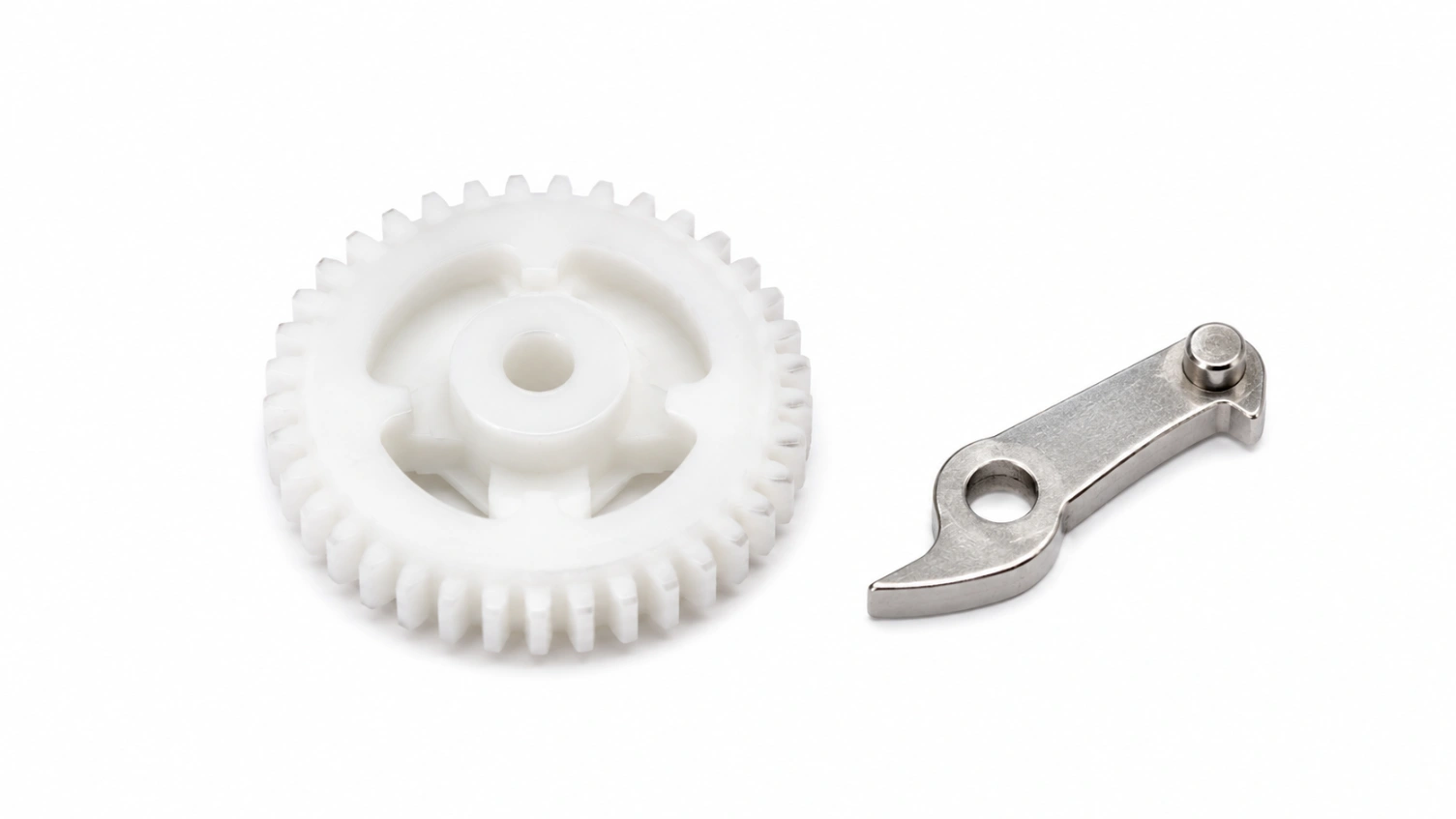
Roue de cliquet à haute précision, pênes et assemblages complets pour l'indexation, le dépassement et les applications d'arrêt de secours. Tout pas, tout nombre de dents, toute géométrie — de prototype à la production en série, chaque pièce entièrement inspectée au CMM et testée pour l'engagement 100%.
Plan PART · PRA-000 CLÉQUET 36T · 42CrMo4ISO 9001 · Levage CE SF 4:1
36 dents · Pas 10°
Verrou de pêne 0–5°
HRC 48–55
Externe · Interne · Face · Linéaire
Types de cliquets
42CrMo4 · 20CrMnTi · SUS · POM
Matériaux
48hr Devis · MOQ 1
Service
±0.010mm
Tolérance de forme de dent profil et pas
4–300 T
Plage de nombre de dents tout pas et angle de pression
5 Jours
Délai de livraison le plus rapide commandes d'échantillons
1–50,000
Quantité de commande du prototype à la production de masse
Notre travail
Produits que nous avons fabriqués
Commandes réelles de cliquets et de roues à rochet expédiées à des clients dans les secteurs de la levée, de l'automobile, du médical, de l'extérieur et de l'industrie.
Capacités d'usinage de cliquets et de roues à rochet
Quatre processus — des roues à rochet standard brochées à l'intégration complète de sous-assemblages avec ressorts, goupilles et boîtiers.
⚙️
Fraisage de roues à rochet
Forme de dent CNC
🔬
Brochage et façonnage
Interne à haut volume
🏭
Tournage CNC Pawl
Géométrie de pivot
🔧
Assemblage complet
Ressort + goupille + boîtier
Fraisage CNC de roue à rochet
Le fraisage CNC 5 axes génère n'importe quel profil de dent de rochet — en dents de scie asymétriques, carrées ou personnalisées — sur des roues à rochet externes ou internes. Idéal pour les pas personnalisés, les grands diamètres et les prototypes. Alésage, rainure de clavette et caractéristiques de montage intégrés usinés en une seule opération.
Gamme OD
8 – 800 mm
Nombre de dents
4 – 300
Plage de pas
0,5 – 50 mm
Tol. forme dent.
±0.010 mm
Type
Externe · Interne · Face n'importe
Quantité Minimum de Commande
1 pièce
Délai de livraison
5 – 12 jours
Matériaux
Tous métaux + plastiques techniques
Brochage et taillage d'engrenages
Le brochage offre des profils de rochet internes constants à haut volume avec une excellente finition de surface. Le taillage d'engrenages est utilisé pour les rochets internes et les rochets de face où le brochage n'est pas réalisable. Les deux procédés conviennent aux séries de production moyennes à grandes avec une géométrie de dent répétable.
Plage de diamètre intérieur
12 – 300 mm
Nombre de dents
8 – 200
Tol. forme dent.
±0,012 mm
Finition de surface Ra
0,8 – 1,6 µm
Quantité typique
100 – 50 000 pièces
Délai de livraison
7 – 16 jours
Matériaux
Acier, Al, Laiton, Fonte
Post-traitement
Traitement thermique · Placage · Rectification
Tournage et fraisage CNC de cliquets
Les cliquets sont usinés entièrement — alésage de pivot, nez d'engagement, logement de ressort et toutes les faces d'arrêt — en
une seule configuration 5 axes pour une concentricité maximale. La géométrie personnalisée des cliquets, y compris les conceptions à double cliquet et à ressort intégré, est entièrement prise en charge.
Diamètre alésage de pivot.
2 – 50 mm
Longueur hors tout
5 – 250 mm
Tol. forme du nez.
±0.010 mm
Poche à ressort
Oui — toute géométrie
Conception à double pêne
Oui — supporté
Quantité Minimum de Commande
1 pièce
Délai de livraison
5 – 10 jours
Matériaux
Acier, Inox, Al, POM, PEEK
Sous-ensemble complet
HXC fournit des unités de pêne et de cliquet entièrement assemblées et testées — roue de cliquet, pêne, pivot, ressort de rappel, et boîtier ou support de fixation — prêt à être intégré dans votre produit. Chaque assemblage est testé d'engagement avant expédition.
Portée
Roue + pêne + ressort + broche
Options de boîtier
Aluminium · Acier · Plastique
Type de ressort
Torsion · Compression · Feuille
Test d'engagement
Oui — 100% cyclé
Quantité de test de cycle
Jusqu'à 1 000 cycles échantillon de contrôle qualité
Délai de livraison
10 – 18 jours
Quantité Minimum de Commande
1 ensemble
Format de dessin
Assemblage DXF / STEP accepté
Matériaux
Plus de 50 matériaux certifiés
Certificats complets d'usine et analyse spectrale sur chaque lot. Matériaux de roue à cliquet et de pêne sélectionnés
ensemble pour une durée d'engagement optimale.
Métaux
Plastiques d'ingénierie
Acier inox SUS316L
Passivé pour les environnements marins, de transformation alimentaire et médicaux. Excellente résistance à la corrosion.
MaritimeNorme alimentaire
Acier allié 42CrMo4
Traitement thermique jusqu'à HRC 48–55. Norme industrielle pour les roues à cliquet à haute charge dans la levée et les entraînements industriels.
Charge élevéeTrempéLevage
Al 6061-T6
Léger, anodisable. Mécanismes d'indexation aérospatiaux et applications robotiques.
LégerAérospatiale
Laiton C36000
Usinage facile, faible bruit. Cliquets à pas fin pour instruments, horloges et équipements optiques.
Pas FinInstruments
Acier 20CrMnTi
Surface trempée en profondeur HRC 58–62, noyau résistant. Retracteurs de ceintures de sécurité automobiles et applications à haute cyclicité.
Traitement par casageAutomobile
POM (Delrin)
Autolubrifiant, faible bruit. Idéal pour dispositifs médicaux, équipements de bureau et mécanismes de cliquet légers.
Faible bruitMédical
Nylon PA66-GF30
Rempli de verre pour améliorer la rigidité et réduire la déformation. Assemblages de cliquets silencieux dans les produits de consommation.
SilencieuxLéger
PEEK
Stérilisable jusqu'à 260°C. Mécanismes de cliquet pour instruments chirurgicaux et de laboratoire.
StérilisableMédical
Études de cas
Projets réels, Résultats réels
Commandes sélectionnées couvrant notre gamme — des prototypes uniques aux séries de 10 000 unités.
Équipement de levage
Ensemble de cliquet et pêne pour treuil manuel
Roues
42CrMo4 HRC 52
Finition
Oxide noir
Quantité
800 ensembles
Délai de livraison
14 jours
✓ Engagement testé 100% · Documentation de marquage CE fournie
Automobile
Roue de râtchet de rétracteur de ceinture de sécurité
Ensemble de pompe à infusion silencieuse à râtchet
Roues
POM Delrin
Poulie
SUS316L
Quantité
1 000 ensembles
Délai de livraison
10 jours
✓ Bruit < 38 dB vérifié · certificats de matériaux FDA fournis
Comment ça fonctionne
De la dessin à votre porte
Téléchargez votre fichier CAO ou croquis — nous gérons tout, de l'optimisation de la géométrie des dents au test d'assemblage complet et à l'expédition mondiale.
01
Télécharger CAO / Dessin
STEP, DXF, DWG, PDF ou même un croquis avec le nombre de dents, le pas, le diamètre extérieur et la direction d'engagement.
02
Devis en 48 heures
Revue de la géométrie des dents, recommandations sur le matériau et la dureté, portée de l'assemblage, et délai ferme.
03
Contrôle qualité de l'usinage et de l'assemblage
Usinage CNC avec CMM en cours de processus sur la forme et le pas de la dent. Ensembles assemblés 100% soumis à un test d'engagement avant emballage.
04
Expédition dans le monde entier
Emballage protecteur, rapport d'inspection joint. Disponible via DHL / FedEx / fret maritime.
Qualité
Engagement zéro défaut
Chaque assemblage de cliquet et de pignon passe par un protocole d'inspection en 4 étapes — y compris un test d'engagement fonctionnel 100% — avant de quitter notre installation.
Certifications & Équipements
✓
ISO 9001:2015
Système de gestion de la qualité — tous les processus certifiés
📐
Normes DIN / Normes du client
Forme de la dent, pas, et déviation selon la tolérance du dessin ; PPAP IATF 16949 sur demande
🔭
CMM Zeiss + CMM optique
Mesure de coordonnées 3D et scan de profil optique pour la vérification de la forme de la dent
📄
Certification complète du matériau
Certificat de forge + analyse spectrale sur chaque lot ; certificats tiers disponibles sur demande
Protocole d'inspection en 4 étapes
1
Contrôle des matériaux entrants
L'analyseur spectral confirme la qualité de l'alliage pour le blank de la roue dentée et du cliquet avant tout usinage.
2
Inspection du premier article
Mesure complète CMM de la première roue dentée — forme de la dent, pas, diamètre extérieur, alésage, et déviation confirmés avant la production en lot.
3
Vérification de la forme de la dent en cours de processus
La numérisation du profil optique à intervalles définis pendant la production vérifie la cohérence de l'angle de la dent, du rayon de la racine et de la pas.
4
Test d'engagement fonctionnel 100%
Chaque ensemble assemblé est soumis à un cycle dans sa direction d'engagement pour confirmer le verrouillage positif du pêne et le jeu arrière libre avant expédition.
Avis
De confiance des ingénieurs du monde entier
★★★★★
"Ensemble de 800 jeux de cliquets de treuil — trempés, à oxyde noir, testés d'engagement 100%. Chaque ensemble a passé notre inspection à la réception du premier coup. La documentation CE était complète et nous a fait gagner des semaines. Exactement ce qu'un fournisseur devrait faire."
DH
Dirk H.
Ingénieur Produit · France
★★★★★
"10 000 roues de cliquet de rétracteur de ceinture de sécurité sur un calendrier automobile serré. HXC a respecté toutes les dimensions, soumis le PPAP à temps, et n'a eu aucun NCR lors de notre audit IATF. Ils sont désormais notre fournisseur privilégié pour les estampages de précision et les cliquets."
MO
Maria O.
Ingénieur Qualité Fournisseur · Espagne
★★★★★
"Assemblages de cliquets en POM silencieux pour notre pompe à infusion — un bruit inférieur à 38 dB était une exigence stricte. HXC a réussi la géométrie dès le premier prototype, fourni les certificats de conformité FDA, et a évolué vers la production en 10 jours. Exceptionnel."
KW
Kevin W.
Ingénieur Conception Mécanique · USA
FAQ
Foire aux questions
Tout ce que les ingénieurs et acheteurs demandent à propos des assemblages de pêne et de cliquet — répondu par notre équipe de fabrication.
Un pêne et un cliquet est un assemblage mécanique qui permet la rotation dans une direction tout en empêchant la rotation dans l'autre. La roue de cliquet est un disque denté avec des dents asymétriques — généralement en forme de scie. Le pêne est un levier ou une broche pivotante dont le nez s'engage entre les dents de la roue. Lorsque la roue tourne dans la direction permise, le nez du pêne glisse sur les faces inclinées des dents. Lorsque la roue tente de tourner dans la direction bloquée, le nez du pêne se bloque dans la face escarpée de la dent et empêche le mouvement. Ensemble, ils constituent l'un des éléments mécaniques à sens unique les plus anciens et les plus fiables.
Le cliquet est la roue dentée (ou le pignon ou le cercle). C'est l'élément entraîné ou maintenu avec des dents asymétriques qui déterminent la résolution angulaire et la capacité de charge de l'ensemble. verrou c'est l'élément d'engagement — le bras pivotant, levier ou broche qui s'articule avec les dents du cliquet pour permettre ou empêcher le mouvement. Ils fonctionnent toujours ensemble ; aucun ne fonctionne sans l'autre. Dans l'usage courant, " cliquet " fait souvent référence à l'ensemble complet, mais en ingénierie de précision, les deux pièces sont spécifiées et fabriquées séparément.
Les principaux types sont : cliquet externe — dents sur la circonférence extérieure ; le type le plus courant dans les treuils, outils à main et transmissions ; cliquet interne — dents sur le trou intérieur ; utilisé dans les moyeux à roue libre et mécanismes compacts ; cliquet face (de fin) — dents sur la face de fin d’un disque ; utilisé lorsque l’engagement axial plutôt que radial est nécessaire ; cliquet linéaire (râteau) — une barre dentée avec un pêne pour un mouvement linéaire unidirectionnel ; et râteau à came (embrayage à came) — utilise des rouleaux ou des came plutôt qu’un pêne discret, offrant un engagement silencieux et une résolution angulaire quelconque. HXC fabrique tous ces types.
Un râteau de positionnement est conçu pour avancer un mécanisme par une étape angulaire précise et répétable — un dent par course d’action. Chaque dent représente un incrément angulaire fixe : un râteau à 36 dents indexe 10° par étape, un râteau à 72 dents indexe 5°. Les râteaux de positionnement sont utilisés dans des tables de positionnement rotatives, des mécanismes d’alimentation, des mécanismes de comptage, des échappements, et toute application où un arbre doit être avancé par des incréments précis. La résolution angulaire est déterminée uniquement par le nombre de dents — plus il y a de dents, plus la étape est fine. Les râteaux de positionnement à pas fin avec jusqu’à 300 dents sont utilisés dans des instruments de précision.
Un râteau à butée est un ensemble râteau et pêne où le pêne est fixé au logement (ne bouge pas), et sa seule fonction est d’empêcher la rotation inverse d’un arbre chargé. Contrairement à un râteau de positionnement, il ne fait pas avancer l’arbre — il maintient simplement la position. Les râteaux à butée sont utilisés sur convoyeurs inclinés (empêchant le recul de la bande en cas de perte de puissance), treuils et palans (maintenant des charges suspendues), et actionneurs de vannes (empêchant la rétroaction par la pression de ligne). Ils sont conçus pour supporter des charges statiques élevées et sont généralement spécifiés avec un facteur de sécurité de 3 à 5× le couple de fonctionnement.
Un râteau à débrayage permet à l’arbre entraîné de courir plus vite que l'arbre de transmission sans transmettre de couple inverse — la fonction classique de roue libre ou d'embrayage unidirectionnel. L'exemple le plus familier est le moyeu arrière de vélo : le pédalage entraîne la roue, mais la roue peut rouler librement sans faire tourner les pédales en arrière. Dans les applications industrielles, les cliquets à débrayage sont utilisés dans embrayages de sécurité, démarreurs de moteur, entraînements de convoyeurs à débrayage, et configurations à double moteur où un moteur doit dépasser un autre sans verrouiller les deux. Les cliquets à dents fines offrent un engagement plus précis et une roue libre plus fluide que les designs à dents grossières.
Le profil le plus courant est le en forme de scie asymétrique: une face de verrouillage presque radiale (ou légèrement sous-coupée) et une face d'entraînement à pente progressive. L'angle de la face de verrouillage est généralement de 0 à 15° par rapport au radial — des faces plus raides offrent un verrouillage plus positif et résistent au saut de la came sous des charges de choc ; des faces plus plates nécessitent moins de force de ressort de la came pour l'engagement. Pour des applications à haute charge ou critiques pour la sécurité, une légère inclinaison négative (sous-coupure) sur la face de verrouillage offre une action de blocage automatique. Pour les cliquets à sélection bidirectionnelle, des dents symétriques ou quasi-symétriques sont utilisées. Des dents carrées sont utilisées pour les cliquets de face. HXC peut usiner n'importe quel profil selon votre dessin.
La capacité de couple de maintien est principalement déterminée par : la résistance à la flexion des dents (matériau, module/pas, et largeur de face) ; le nombre de came en engagement simultané (plusieurs cames multiplient la capacité de charge) ; et la géométrie de la face de la dent (undercut contre face de verrouillage radiale). La formule simplifiée pour un seul pêne est : T = F × r, où F est la force sur la face de la dent et r est le rayon de pas. La force sur la face de la dent F ≤ σ_maximum × b × m², où b est la largeur de face et m est le module. Pour les applications de levage critiques pour la sécurité, appliquer un facteur de sécurité ≥ 3 à la capacité calculée. Les ingénieurs HXC peuvent examiner votre cas de charge et recommander le module, le nombre de dents et le matériau pour le couple requis.
Le saut de cliquet (décrochage du pêne) se produit lorsque le pêne passe au-dessus de la face de verrouillage au lieu de s’engager. Les principales causes sont : force de ressort du pêne insuffisante — le ressort doit maintenir le nez du pêne contre la racine de la dent à toutes les vitesses de fonctionnement ; angle de face de verrouillage trop faible — les angles inférieurs à 5° par rapport au radial sont sujets au saut sous charges d’impact ; vitesse de fonctionnement excessive — à haute vitesse de rotation, la force centrifuge peut tirer le pêne loin de la roue ; faces de dents usées ou arrondies — les faces de verrouillage durcies par travail ou usées réduisent l’engagement ; et désalignement — l’axe de pivot du pêne doit être parallèle à l’axe de la roue à cliquet. Ajouter un second pêne décalé d’une demi-dent augmente la capacité de charge et élimine le saut d’une dent.
Contrairement au jeu de l'engrenage, le "jeu" du cliquet est la course angulaire libre avant que le chien n'engage la dent suivante — équivalent à un pas de dent complet. Une roue à cliquet de 36 dents a 10° de course libre avant que le chien ne se bloque ; une roue de 72 dents en a 5°. Cela est inhérent à la conception et explique pourquoi les cliquets à dents fines sont utilisés lorsque le mouvement perdu minimal est important. Pour approcher un jeu nul dans un mécanisme de type cliquet, les concepteurs utilisent des chiens à double décalage (réduisant l'angle libre de moitié), plusieurs points d'engagement, ou passent à un embrayage à came ou à un cliquet à rouleaux qui possède un jeu d'engagement réellement nul. Pour un indexage de précision, cet angle libre constitue la limite principale de résolution.
Un cliquet à double chien a deux chiens décalés angularement de la moitié d'une dent (180° / nombre de dents). Les avantages sont : une capacité de charge doublée — les deux chiens partagent la charge de maintien de manière égale ; un jeu d'angle libre réduit — pendant qu'un chien est entre deux dents, l'autre est déjà au niveau de la racine de la dent ; et une redondance — si le ressort d'un chien échoue, l'autre maintient. Les conceptions à double chien sont standard dans les applications de levage critiques pour la sécurité (Directive Machines CE), dans les composants automobiles à haute fréquence, et dans tout cliquet où la réduction du mouvement perdu est importante. HXC peut usiner et assembler des unités à double chien selon votre dessin.
Trois types de ressorts sont courants : ressort de torsion — un ressort hélicoïdal qui entoure la broche du chien, le choix le plus compact et fiable pour la plupart des applications ; ressort de compression dans une cavité blindée — pousse le nez du pêne radialement dans la roue, facile à entretenir et à remplacer ; et ressort à lame — un ressort plat intégré dans le boîtier, utilisé dans des mécanismes à profil fin comme les roue libre de vélo et les cliquets d'instrument. Critères de conception clés : la force du ressort doit dépasser la force centrifuge sur le pêne à la vitesse maximale de fonctionnement, tout en assurant une force d'engagement fiable à la racine de la dent. Les ressorts en acier inoxydable sont nécessaires pour les applications marines, alimentaires et médicales.
Dans les équipements de levage, les cliquets servent de butées de maintien de charge. Lorsqu'une manivelle, un tire-fort ou un palan manuel est utilisé, la roue à cliquet est fixée au tambour ou à l'arbre de transmission. Lorsque l'opérateur pause ou relâche la poignée, le pêne engage les dents du cliquet et empêche la charge de revenir en arrière. Cela permet de soulever par étapes sans tenir la poignée sous charge. Pour les équipements de levage portant la marque CE, l'ensemble du cliquet doit être évalué pour un facteur de sécurité de 4:1 sur la charge de maintien statique et doit passer un test de charge d'épreuve. HXC peut fournir les certificats de matériau pertinents et les rapports dimensionnels requis pour la conformité CE.
Pour les cliquets de levage et de maintien de charge, la priorité est la résistance à la fracture fragile sous charges d'impact, et pas seulement la dureté. Le choix standard est 42CrMo4 trempé jusqu'à HRC 48–55 — il combine une haute limite d'élasticité avec une bonne ténacité à la fissuration et est largement accepté dans les équipements de levage portant la marque CE. Pour les applications à très haut cycle (retracteurs automobiles), acier cémenté 20CrMnTi donne une surface de dent plus dure avec un noyau ductile. Évitez la trempe totale au-dessus de HRC 58 dans les cliquets de levage — bien que la dureté soit plus élevée, le matériau devient fragile et susceptible de fracture soudaine sous choc. Les ingénieurs de HXC conseilleront la plage de dureté appropriée pour votre cas de charge.
Un tendeur à cliquet est un mécanisme de came à levier manuel utilisé pour tendre une sangle en toile autour d'une charge pour le transport. L'axe du mécanisme de came enroule la sangle lorsque la poignée est actionnée ; le pêne empêche la sangle de se relâcher lorsque la poignée est relâchée. Les corps de mécanisme de came et les axes de serrage sont généralement en acier pressé ou en zinc moulé sous pression pour les produits grand public, ou en acier usiné pour les applications de chargement lourd. HXC fabrique les composants usinés de précision utilisés dans systèmes de fixation de cargaison lourde — axes de mécanisme de came, porte-pêne et axes de pivot conformes aux exigences de charge de travail EN 12195-2 — pour les clients fournissant les secteurs du transport et de la logistique.
Oui. Un mécanisme de came réversible utilise l'un des plusieurs mécanismes pour permettre à l'opérateur de sélectionner la direction autorisée : un pêne à bascule qui peut être tourné physiquement de 180° pour engager la face de dent opposée ; un sélecteur de pêne coulissant qui se déplace entre deux pênes — un pour chaque direction ; ou un roue à came à double face avec des géométries de dents différentes sur chaque face. L'exemple le plus familier est la clé à cliquet réversible. Les machines HXC fabriquent toutes ces variantes, y compris les mécanismes de sélection, les billes de détente et les leviers de basculement. Pour une utilisation bidirectionnelle verrouillage neutre (verrouillé dans les deux sens), deux pignons opposés peuvent être engagés simultanément.
Fournissez autant que possible de ces éléments : diamètre extérieur et intérieur de la roue à cliquet, nombre de dents et pas (ou module), profil de dent (angle de dents de scie, sous-cut ou non), largeur de face, sens d'engagement (horaire ou anti-horaire), matériau et dureté, géométrie du pignon (diamètre du trou de pivot, rayon du nez, type de ressort), champ d'assemblage (roue uniquement / pignon uniquement / assemblage complet avec ressort et goupille), Finition de surface, et quantité. Un croquis, un fichier CAO (STEP/DXF), ou même une photo d'une pièce existante suffit pour commencer. Pour les exigences de couple de maintien, fournissez votre couple de charge maximal et le facteur de sécurité requis — nous recalculerons la géométrie.
Obtenir un devis
Envoyez votre dessin. Obtenez un devis.
Chaque demande comprend une revue DFM — faisabilité des tolérances, confirmation du matériau et approche du processus avant le début de la production. MOQ 1 pièce.
24hr
Réponse au devis
Quantité Minimum de Commande 1
Prototypes OK
ISO
9001:2015
📐
Revue DFM sur chaque demande
Faisabilité des tolérances, stratégie de fixation et confirmation des matériaux. Retour spécifique et exploitable — pas de refus générique.
🎯
Inspection du premier article — Standard
Rapport FAI sur chaque nouvelle série. Certificats de matériaux et de traitement de surface inclus avec chaque expédition.
🔄
Même processus : Prototype à Production
Le plan de processus de votre prototype s'applique aux lots de production. Pas de requalification lors de la montée en gamme.
⚙
Usinage CNC 3 / 4 / 5 axes + tournage
Pièces structurelles complexes, arbres, boîtiers et composants de transmission. Métaux et plastiques d'ingénierie.
ISO 9001:2015Fraisage 3/4/5 axesTournage CNCInspection CMMLivraison mondiale