
Nylon / Usinage CNC en polyamide
Nylon / PA
Usinage CNC
PA6 — Usage général
PA66 — Haute température
Nylon MC — Coulée robuste
PA-GF rempli de verre
Engrenages · Poulies · Plaques d'usure
Usinage CNC de précision de PA6, PA66, Nylon MC (polyamide coulé) et nylon rempli de verre pour engrenages, poulies, galets, plaques d'usure, supports structurels et pièces d'ingénierie à haute résistance à l'impact où la robustesse, la lubrification automatique et la performance à haute température sont requises.

Résistance à la traction du Nylon MC
85–100 MPa

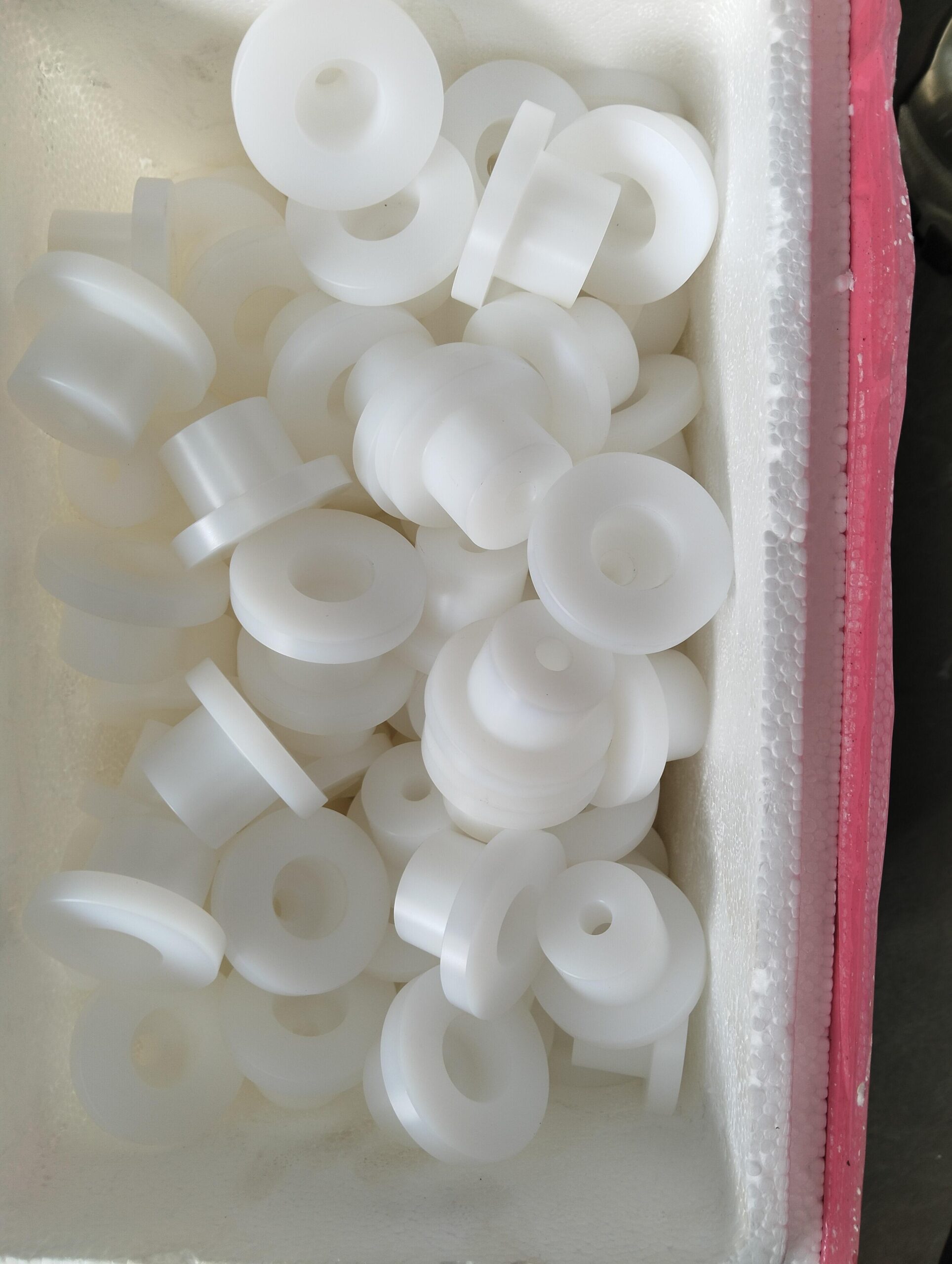
Nylon PA6 à usage général ✦
Nylon PA66 haute température ✦
Polyamide coulé MC Nylon PA6-G ✦
PA-GF rempli de verre 15 / PA-GF30 ✦
Engrenages · Poulies · Roues de treuil · Roues de grue ✦
Plaquettes d'usure · Bandes de glissement · Bushings ✦
Supports structurels à haute résistance ✦
Auto-lubrifiant · Réduction du bruit ✦
Nylon PA6 à usage général ✦
Nylon PA66 haute température ✦
Polyamide coulé MC Nylon PA6-G ✦
PA-GF rempli de verre 15 / PA-GF30 ✦
Engrenages · Poulies · Roues de treuil · Roues de grue ✦
Plaquettes d'usure · Bandes de glissement · Bushings ✦
Supports structurels à haute résistance ✦
Auto-lubrifiant · Réduction du bruit ✦
Grades de matériaux
Quatre grades de nylon, Quatre niveaux de performance différents
PA6
Nylon 6 · Polycaprolactame · ISO 1874-1
Nylon à usage général — Résistance à l'impact, ténacité et faible coût
PA6 (Nylon 6) est la gamme de nylon usinée la plus largement disponible et économique. Elle offre une bonne résistance à la traction, une excellente résistance à l'impact et à la fatigue, ainsi qu'une auto-lubrification inhérente — ce qui en fait le nylon de choix pour les engrenages, paliers, pads de glissement et pièces d'usure structurelles en machinerie générale. Disponible en barre, plaque et tube en grands diamètres. Plus populaire en Europe et en Asie.
💧Le PA6 absorbe jusqu'à 2,51 % d'humidité à 50 % d'humidité relative — à prendre en compte dans les calculs de tolérance pour les applications de trous ou d'arbres de précision.
70–80 MPa
Résistance à la traction
2 500 MPa
Module de flexion
220°C
Point de fusion
Excellent
Usinabilité
EngrenagesDouillesPlaquettes d'usureBandes de glissementPoulies
Voir les détails du PA6
Propriétés clés
| Densité | 1,13 g/cm³ |
| Température maximale de service | 80–100°C en continu |
| Absorption d'eau (saturée) | ~9,5% (dans l'eau) |
| Absorp. d'eau (50% HR) | ~2.5% |
| Dureté (Shore D) | D80 |
| Impact (Charpy, enfoncé) | ~8 kJ/m² |
Propriétés clés
Excellente résistance à l'impact et à la fatigue — plus résistant que le POM
Autolubrifiant — adapté pour une utilisation sans lubrification dans les engrenages et les roulements
L'absorption d'humidité provoque une croissance dimensionnelle — prévoir des jeux
Produisent des copeaux filandreux — outil à rupture de copeaux requis
PA66
Nylon 6,6 · Polyhexaméthylène adipamide · ISO 1874-1
Higher Temperature & Stiffness — Automotive & Structural
PA66 (Nylon 6,6) has a higher melting point (260°C vs 220°C for PA6), slightly greater stiffness, and better performance at continuous elevated temperatures — making it the preferred nylon for automotive underhood components, electrical connectors, and structural parts operating above 80°C. Slightly harder than PA6, which translates to marginally better wear resistance in sliding contact. More common in North American specifications. Performance difference from PA6 is modest in most room-temperature machined part applications.
💧PA66 absorbs slightly less moisture than PA6 (~2.0% at 50% RH) but dimensional change must still be accounted for in precision fits.
75–85 MPa
Résistance à la traction
2,800 MPa
Module de flexion
260°C
Point de fusion
Excellent
Usinabilité
Auto BracketsConnecteursPièces de pompeHot Environments
View PA66 Details
Propriétés clés
| Densité | 1.14 g/cm³ |
| Température maximale de service | 90–120°C continuous |
| Absorption d'eau (saturée) | ~8.5% (in water) |
| Absorp. d'eau (50% HR) | ~2.0% |
| Dureté (Shore D) | D82 |
| Impact (Charpy, enfoncé) | ~7 kJ/m² |
Propriétés clés
Higher melting point — better for hot environments vs PA6
Slightly stiffer — marginally better gear tooth stiffness
Standard for automotive underhood and electrical connectors
Same moisture absorption precautions as PA6 apply
Nylon MC
Cast PA6 · PA6-G · Monomer Cast Polyamide
Highest Strength & Wear Life — Heavy-Duty Machined Parts
MC Nylon (Monomer Cast Nylon, also labelled PA6-G or Cast PA6) is produced by casting liquid caprolactam monomer into a mold under controlled conditions, polymerizing in situ. The resulting material has significantly higher molecular weight and better mechanical properties than extruded PA6 — tensile strength 85–100 MPa, superior fatigue resistance, and lower internal stress. Available in very large diameters and thicknesses without centerline defects. The first choice for heavy-duty machined gears, crane wheels, pulleys, sheaves, and large wear pads where maximum strength and service life are required.
85–100 MPa
Résistance à la traction
3,200 MPa
Module de flexion
HRC 65+
Relative Wear Life
Excellent
Usinabilité
Crane WheelsLarge GearsPouliesSheavesPlaquettes d'usureRollers
View MC Nylon Details
Key Properties vs Extruded PA6
| Résistance à la traction | 85–100 MPa (+20%) |
| Fatigue Resistance | Significantly better |
| Max Section Size | Up to 1,000 mm dia. |
| Centerline Porosity | None — cast solid |
| Internal Stress | Very low |
| Wear Life (relative) | 2–3× extruded PA6 |
Propriétés clés
Superior to extruded nylon for all structural applications
Very large section sizes available — up to 1,000 mm diameter
Oil-filled (MC901) and MoS₂-filled grades for even lower friction
Same moisture absorption considerations as extruded PA6
PA-GF
PA6-GF15 / PA6-GF30 / PA66-GF30 · ASTM D4066
Maximum Stiffness, Creep Resistance & Dimensional Stability
Glass-fiber reinforced nylon (15–30% short glass fiber) transforms nylon from a tough but flexible plastic into a high-stiffness, creep-resistant structural material. Flexural modulus jumps from ~2,500 MPa (unfilled PA6) to 6,000–12,000 MPa (PA66-GF30), making PA-GF perform closer to aluminum in rigidity per unit weight. Significantly better dimensional stability under sustained load and at elevated temperatures. The primary trade-off: glass fibers are highly abrasive to cutting tools — carbide tooling with controlled tool life is mandatory, and tool wear must be monitored closely.
120–150 MPa
Résistance à la traction
6,000–12,000 MPa
Module de flexion
Faible
Moisture Sensitivity
Carbide Req.
Outillage
Supports StructurelsEngine MountsCreep-Resistant PartsHot Housings
View PA-GF Details
Key Properties (PA66-GF30)
| Résistance à la traction | 130–155 MPa |
| Module de flexion | 9,000–12,000 MPa |
| Température maximale de service | 120–140°C continuous |
| Absorp. d'eau (50% HR) | ~1.0% (less than unfilled) |
| Impact (Charpy, enfoncé) | ~6 kJ/m² |
| Tool Wear | Very high — carbide only |
Propriétés clés
4–5× stiffer than unfilled nylon — approaches aluminum rigidity
Excellent creep resistance under sustained load at temperature
Lower moisture absorption than unfilled — better dimensional stability
⚠ Glass fibers are highly abrasive — carbide tooling mandatory, tool wear monitored
Guide de sélection des grades
Choisir le bon Nylon Grade
⚙
Choose PA6 when…✓General-purpose gears, bushings, and wear pads
✓Maximum impact and toughness required
✓Cost-sensitive application — PA6 is least expensive
✓European / Asian supply chain standard
✓Service temperature below 80–100°C
🌡
Choose PA66 when…✓Higher service temperature required (80–120°C continuous)
✓Automotive underhood or hot environment parts
✓Electrical connectors and housings (standard PA66 spec)
✓North American specification standard
✓Marginally higher stiffness than PA6 needed
★
Choose MC Nylon when…✓Maximum strength and wear life required
✓Large diameter parts (crane wheels, large gears, pulleys)
✓Heavy-duty applications — overhead lifting, port machinery
✓Upgrading from extruded PA6 that wears too quickly
✓Oil-filled (MC901) for even lower friction in bearings
◼
Choose PA-GF when…✓High stiffness required — unfilled nylon deflects too much
✓Sustained load at temperature — creep must be minimised
✓Structural brackets operating in hot environments
✓Better dimensional stability than unfilled nylon needed
✓Impact toughness is not the primary concern
Comparaison des matériaux
Comparaison complète des propriétés — All Four Nylon Grades
| Propriété | PA6 | PA66 | MC Nylon (Cast PA6) | PA66-GF30 | POM-C (ref) |
|---|---|---|---|---|---|
| Production Method | Extruded | Extruded | Cast — higher MW | Extruded + GF | Extruded |
| Résistance à la traction | 70–80 MPa | 75–85 MPa | 85–100 MPa — Best | 130–155 MPa (GF) | 62–68 MPa |
| Module de flexion | 2 500 MPa | 2,800 MPa | 3,200 MPa | 9,000–12,000 MPa | 2,800–3,100 MPa |
| Résistance aux chocs | Excellent | Very good | Excellent — best PA | Reduced by glass fiber | Bon |
| Water Absorption (50% RH) | ~2.5% | ~2.0% | ~2.5% | ~1.0% (glass stabilises) | 0.2% — Much better |
| Dimensional Stability | Moderate — moisture-sensitive | Modéré | Modéré | Good — glass reduces CTE | Excellent — best |
| Température maximale de service | 80–100°C | 90–120°C | 80–100°C | 120–140°C | 90–100°C |
| Usinabilité | ★★★★ Stringy chips | ★★★★ Stringy chips | ★★★★★ Excellent | ★★★ Abrasive — carbide only | ★★★★★ Meilleur |
| Best Application | General gears, bushings, pads | Hot environments, auto | Heavy gears, crane wheels, large parts | Stiff structural, hot brackets | Precision dimensional, sliders |
Notes de usinage
Machining Nylon / PA — Grade-Specific Considerations
⚠
Key Challenges!
Moisture absorption — machine at service moisture conditionNylon parts machined bone-dry (freshly dried rod) will absorb moisture in service and expand. A 50 mm bore machined to exact size in dry nylon may be 0.1–0.3 mm oversize when the part equilibrates to ambient humidity. For precision fits: machine nylon at equilibrium moisture content (store rod at ambient humidity for 48–72 hours before machining) and calculate fit clearances accounting for the operating environment humidity.
!
Stringy chips in unfilled PA6 / PA66 / MC NylonAll unfilled nylon grades produce long, continuous stringy chips that wrap around the tool, spindle, and workpiece — particularly in turning and deep drilling. This is nylon's single most disruptive machining characteristic. Mitigation: use chip-breaking insert geometries on turning, peck drilling with full retract on holes deeper than 2× diameter, and spiral flute taps to prevent chip packing in threads.
!
Glass-fiber PA-GF is extremely abrasive to toolingThe short glass fibers in PA-GF15/GF30 act as microscopic abrasives on the cutting edge, causing rapid flank wear on standard HSS tooling. Uncoated or TiN-coated carbide inserts must be used — and tool life must be monitored closely. For PA-GF30, a set of carbide inserts will last only a fraction of the time they would on unfilled nylon. Plan for more frequent insert changes and factor this into production cost estimation.
!
Heat buildup during drilling and tappingNylon's low thermal conductivity traps heat at the tool tip during drilling and tapping. Deep holes drilled without chip clearing produce enough heat to melt and re-fuse the nylon around the drill — seizing the tool. Peck cycles with full retract every 1–2 diameters are mandatory for holes deeper than 3× diameter. Air cooling rather than flood coolant; some cutting oils attack nylon chemically.
!
Stress-relief before precision machining of large MC Nylon blocksLarge-diameter MC Nylon rod and cast blocks benefit from thermal stress relief (annealing at 100–120°C for 2–8 hours depending on section size) before precision final machining. While cast nylon has lower residual stress than extruded rod, large-section castings still contain enough internal stress to cause dimensional drift in precision machined features if not stress-relieved before final cuts.
✓
How We Address These Challenges✓
Moisture conditioning protocol — equilibrium machiningAll nylon stock for precision bore and fit applications is stored at ambient workshop conditions (50–55% RH) for a minimum of 48 hours before machining. For critical applications, we can condition stock to the customer's specified service humidity and machine at that condition — or calculate the moisture expansion allowance and machine to a pre-adjusted dimension.
✓
Chip-breaking tooling geometry — standard on all nylon turningWe use chip-breaking insert geometries on all nylon CNC turning operations as a standard practice — not an upgrade. This breaks the stringy continuous chip into manageable segments, preventing chip-induced surface damage and allowing uninterrupted production runs without operator intervention to clear chip nests.
✓
Grade-specific tooling — carbide for GF, sharp HSS/carbide for unfilledUnfilled PA6/PA66/MC Nylon: sharp, positively raked HSS or uncoated carbide gives cleanest surface finish. PA-GF grades: carbide only (AlTiN or uncoated K-grade), with tool life monitored by piece count rather than visual assessment — glass fiber wear is progressive and predictable when managed this way.
✓
Peck-drilling protocol on all holes deeper than 2× diameterStandard CNC program includes a full peck-and-retract cycle on every nylon hole deeper than 2× diameter — regardless of diameter. This is non-negotiable in our nylon machining protocols and prevents the single most common nylon machining failure: tool seizure in melted plastic.
✓
Moisture expansion fit advisory with every nylon orderFor every nylon part involving a precision bore-to-shaft or slider fit, we provide a moisture expansion note with the quote — specifying the expected dimensional change at the customer's service humidity condition, and our recommended machined clearance to achieve the desired running fit in service. This prevents the most common nylon machined part failure: parts that fit in the workshop but jam in the field.
Capacité de fabrication
Comment nous usinons Nylon Parts

PROCESSUS / 01
CNC Turning — Bushings, Rings & Spacers
Precision CNC turning of PA6, PA66, MC Nylon, and PA-GF bushings, flanged sleeves, spacers, and rotational components. Chip-breaking geometry standard. Air cooling. H7/H8 bore fits with moisture expansion advisory on all precision bore-to-shaft applications.

PROCESSUS / 02
Gear Hobbing — Nylon Spur, Helical & Worm Gears
Gear hobbing of PA6, PA66, and MC Nylon spur gears, helical gears, and worm wheels to DIN 6–8 quality. Module 0.5–8. MC Nylon preferred for heavy-load gears; PA66 for hot environments. Keyways and bores completed in one setup.

PROCESSUS / 03
CNC Milling — Structural Brackets & Housings
Flat milling, pocket milling, and profile machining of PA-GF structural brackets, housings, and mounting plates. Carbide tooling with controlled tool life on glass-filled grades. Flatness and parallelism verified on precision mounting surfaces.
Galerie d'applications
Typical Nylon Parts Nous produisons
Nylon MC
Crane Wheels & Sheaves
MatériauMC Nylon (Cast PA6-G / MC901)
ProcessusCNC Turning · Groove Profiling · Bore
Secteur d'activitéCrane & Hoist · Port Machinery
PA6 / PA66
Plastic Gears
MatériauPA6 / PA66 or MC Nylon (heavy load)
ProcessusCNC Turning + Gear Hobbing
Secteur d'activitéMachinery · Conveyors · Automation
 Nylon MC
Wear Pads & Slide Strips
MatériauMC Nylon or PA6 plate
ProcessusCNC Milling · Routing · Drilling
Secteur d'activitéMining · Steel · Heavy Industry
Secteurs desservis
Where Nylon Replaces Metal and Lasts Longer
From Rod / Plate to Finished Part
Comment nous produisons Nylon Parts
ÉTAPE 01
Grade Selection & Moisture Conditioning
PA6 / PA66 / MC / GF grade confirmed. Rod or plate stocked at ambient humidity 48–72h before precision machining. MC Nylon cast blanks sourced with material cert. FDA grade confirmed if specified.
ÉTAPE 02
Stress Relief (if required)
Large MC Nylon parts annealed at 100–120°C before final precision machining. Releases casting residual stresses — prevents post-machine distortion on large-diameter gear and wheel blanks.
ÉTAPE 03
Usinage CNC
Grade-specific tooling: chip-breaking geometry for unfilled nylon, carbide with monitored life for GF grades. Peck drilling on all holes >2× diameter. Air cooling or light mist.
ÉTAPE 04
Opérations secondaires
Gear hobbing, keyway broaching, threaded insert installation, tapping, and deburring. All secondary ops in-house — no outsourcing of gear cutting or insert installation.
ÉTAPE 05
Contrôle et livraison
CMM verification, bore gauge, surface check. Moisture expansion advisory included with all bore-to-shaft fit parts. Material cert and FAI on new part numbers shipped with order.
Post-traitement
Post-Processing Options for Nylon Parts
Nylon parts are typically supplied as-machined. When enhanced performance, marking, or joining is required, the following options are compatible with PA6, PA66, and MC Nylon.
Threaded Inserts (Ultrasonic)
Brass or stainless steel threaded inserts installed ultrasonically for high-cycle fastener applications — M3 to M16. Pull-out strength 5–10× direct-tapped nylon. Required wherever screws are repeatedly tightened and loosened in nylon housings, brackets, and structural parts. Standard service for all nylon milled parts with threaded fastener requirements.
Laser Engraving & Part Marking
Laser engraving of part numbers, serial numbers, date codes, and directional arrows on nylon parts. Natural PA6/PA66 produces a high-contrast dark mark. Black nylon produces a lighter grey or charred mark. Used for traceability on wear parts, identification of non-interchangeable similar parts, and installation direction marking on asymmetric components.
Oil-Impregnated Grade (MC901)
MC901 is a cast nylon grade with mineral oil uniformly distributed through the material during casting. In bearings, bushings, and sliding surfaces, the oil slowly migrates to the surface during operation — providing continuous lubrication without an external oil supply. Reduces friction coefficient by 40–50% vs standard MC Nylon, significantly improving service life in slow-speed bearing applications. Available as standard stock for machining.
Ultrasonic & Spin Welding
Nylon can be joined by ultrasonic welding or spin welding to create strong permanent assemblies — used for sealed enclosures, two-piece gear and pulley hubs, and fluid-contact assemblies requiring a hermetic joint. Nylon welds better than POM due to its higher moisture content acting as a plasticizer during the weld process. Joint design must include an energy director for ultrasonic welding.
4
Nylon Grades
100 MPa
Tension du Nylon MC
±0,05mm
Tolérance standard
24hr
Délai de devis
Pourquoi travailler avec nous
Pourquoi nous choisir pour Nylon Machining
H₂O
Moisture Expansion Advisory — Every Precision Fit Order
Every nylon bore-to-shaft and slider fit order includes a moisture expansion advisory — specifying expected dimensional change at service humidity and our recommended machined clearance. This single advisory prevents the most common nylon machined part failure: parts that fit in the workshop but jam in the field.
MC
MC Nylon Large Diameter Capability — Up to 600 mm
Cast PA6-G blanks up to 600 mm diameter sourced and machined in-house with stress-relief protocol. Crane wheels, large gear blanks, pulley sheaves — the heavy-duty nylon applications most shops decline to quote. We quote them routinely.
GF
Glass-Filled Nylon Expertise — Carbide Tool Life Management
PA-GF grades are abrasive to tooling — we establish a piece-count insert change interval for every PA-GF job based on measured wear progression. This maintains dimensional consistency across large batches without surprise out-of-tolerance pieces from a worn insert.
HOB
In-House Gear Hobbing for Nylon Gears
PA6, PA66, and MC Nylon gear hobbing in-house — Module 0.5 to 8, spur, helical, and worm wheels. No outsourcing. Moisture conditioning before hobbing and DIN 6–8 profile quality standard. One order, one delivery, one quality system.
FAQ
Foire Aux Questions
Common questions about PA6, PA66, MC Nylon, and glass-filled nylon — grade selection, moisture, tolerances, glass fiber machining, gear cutting, and food contact compliance.
Nylon (Polyamide, PA) is one of the most widely used engineering thermoplastics for CNC machining. It offers high tensile strength, excellent toughness and impact resistance, good fatigue resistance, self-lubricating properties, and a broad service temperature range. Compared to POM/Acetal, nylon is tougher and better at elevated temperatures. The main consideration is moisture absorption — nylon absorbs 1–3% water at ambient humidity, causing dimensional change. For precision dimensional applications, this must be factored into fit calculations, or POM should be considered instead.
PA66 has a higher melting point (260°C vs 220°C for PA6), slightly higher stiffness and hardness, and better performance at elevated temperatures. PA6 has better impact resistance, is easier to process, and absorbs slightly more moisture. In CNC machining practice, both grades machine similarly — PA6 is more common in Europe and Asia, PA66 more common in North America. For high-temperature applications (above 100°C), PA66 is preferred. For impact-loaded structural parts, PA6 is often specified. The performance difference in most machined parts is modest.
MC Nylon (Monomer Cast Nylon, also called PA6-G or cast PA6) is produced by casting liquid caprolactam monomer directly into a mold. This produces a material with higher molecular weight, lower residual stress, and better mechanical properties than extruded nylon — tensile strength 85–100 MPa vs 70–80 MPa for extruded PA6. Key advantages: significantly higher tensile and fatigue strength, very large section sizes available (up to 1,000 mm diameter), no centerline defects, and 2–3× wear life vs extruded PA6. MC Nylon is the first choice for heavy-duty machined gears, crane wheels, pulleys, sheaves, and large wear pads.
Glass-filled nylon (PA6-GF or PA66-GF) is nylon reinforced with short glass fibers, typically 15–30% by weight. Glass reinforcement dramatically increases stiffness (flexural modulus from ~2,500 MPa to 6,000–12,000 MPa), tensile strength, creep resistance, and dimensional stability at elevated temperatures. However, glass fibers reduce impact toughness and the material is significantly more abrasive to cutting tools — carbide tooling is required. Specify PA-GF when dimensional stability at temperature is critical, when higher stiffness than unfilled nylon is needed, or when creep under sustained load is a concern.
Nylon absorbs moisture from the environment (PA6: approximately 2.5% at 50% RH). This moisture causes the material to expand — a 100 mm dimension in dry nylon can grow by 0.3–0.8 mm when fully conditioned. Best practices: machine nylon at equilibrium moisture content for the intended service environment, or account for moisture expansion in bore and shaft clearance calculations, or specify POM/Acetal if dimensional stability across humidity changes is critical. For large structural parts where exact dimensional fit is less critical, moisture absorption is managed by design clearance.
Standard CNC tolerance for unfilled nylon (PA6, PA66, MC Nylon) is ±0.05–0.10 mm, with ±0.03–0.05 mm achievable on bore fits and shaft diameters when machined at equilibrium moisture conditions. Glass-filled nylon (PA-GF) holds slightly better tolerance due to reduced thermal expansion and moisture sensitivity — ±0.05 mm standard. Note that nylon parts machined in a dry state may expand by 0.2–0.5 mm on a 50 mm dimension when exposed to ambient humidity. Always specify the operating environment when ordering precision nylon parts.
Key nylon machining challenges: (1) Moisture-induced dimensional instability — parts should be machined at or near service moisture content. (2) Heat generation — nylon has low thermal conductivity; air or mist cooling prevents thermal distortion. (3) Stringy chips — unfilled nylon produces long, stringy chips; chip-breaking geometries and peck cycles on deep bores are required. (4) Glass fiber tool wear in PA-GF — glass fibers are highly abrasive; carbide tooling with monitored tool life is mandatory. (5) Stress cracking in the presence of some cutting fluids — water-based coolants or air cooling is preferred.
PA6 and PA66 in natural (uncolored) grades are generally suitable for food contact under FDA 21 CFR 177.1500 and EU Regulation 10/2011, subject to specific conditions. Always confirm with a certificate of compliance from the raw material supplier for regulated food contact applications. For medical device applications, medical-grade nylon with ISO 10993 biocompatibility documentation is available. Black or colored nylon may contain pigments not approved for food contact — always verify the specific grade and its additive package before use in regulated applications.