info@hxcnc.com Shenzhen, Chine Réponse dans les 24 heures
Martensitic Stainless Steel CNC Machining

Martensitic Stainless
Usinage de l'acier

410 / 420 / 440C 440C up to HRC 60 Coordination du traitement thermique Precision Grinding Post-HT Bearings · Valves · Cutlery · Surgical

CNC machining of 410, 420, and 440C martensitic stainless steel — the only stainless family that can be hardened like tool steel. From general structural parts in 410 to HRC 60 bearing-grade 440C, with heat treatment, post-HT grinding, and full material certification.

Martensitic Stainless Steel 440C Precision Parts
Dureté maximale
HRC 60 (440C)
CNC Turning Martensitic Stainless
Heat Treatment Stainless Steel
3
Grades: 410 / 420 / 440C
HRC60
Max Hardness (440C)
±0,005mm
Post-HT Grinding
24h
Délai de devis
410 Martensitic Stainless 420 Stainless Steel 440C Bearing Grade HRC 60 Achievable Heat Treatment + Grinding Ball Bearings & Valve Seats Instruments chirurgicaux Precision Wear Parts 410 Martensitic Stainless 420 Stainless Steel 440C Bearing Grade HRC 60 Achievable Heat Treatment + Grinding Ball Bearings & Valve Seats Instruments chirurgicaux Precision Wear Parts
Grades de matériaux

Martensitic Stainless Steel Grades Nous usinons

410
General-Purpose Martensitic · 11.5–13.5% Cr
Structural Martensitic Stainless
Best Toughness & Weldability
The most widely used martensitic stainless grade. Lowest carbon content of the three (0.08–0.15%) makes it the most weldable, toughest, and most corrosion resistant of the martensitic family. Heat-treatable to HRC 35–42. The default choice for general martensitic applications — valve bodies, pump shafts, fasteners, and structural stainless hardware requiring moderate hardness.
Max hardness: HRC 35–42 after Q&T
Weldability: Good (pre/post-heat required)
Corrosion resistance: Moderate
Hardness RangeHRC 35–42
Corps de vanneArbres de pompeFixationsBrides
View 410 Details
420
Cutlery Grade · 12–14% Cr · Higher C
Cutlery & Instrument Grade Stainless
Best Balance of Hardness & Corrosion
Higher carbon than 410 (0.15–0.40%) enables hardness up to HRC 50–52 after heat treatment — suitable for cutting edges, instrument surfaces, and wear-critical precision parts. The standard grade for stainless cutlery, surgical instruments, dental tools, and precision pivot pins. Better corrosion resistance than 440C in many environments while providing a hard, polishable surface.
Max hardness: HRC 50–52 after Q&T
Excellent polishability — mirror finish achievable
Corrosion resistance: Good
Hardness RangeHRC 50–52
CutlerySurgical ToolsDentairePivot Pins
View 420 Details
440C
Bearing Grade · Highest C Stainless · 16–18% Cr
Highest-Hardness Stainless Steel
Hardest Standard Stainless Available
The highest carbon content of any standard stainless steel (0.95–1.20%) gives 440C the highest achievable hardness — HRC 58–60 — making it functionally equivalent to a tool steel in hardness while retaining stainless corrosion resistance. The definitive grade for ball bearings, bearing races, valve balls, high-quality knife blades, and precision wear surfaces requiring both corrosion resistance and maximum hardness.
Max hardness: HRC 58–60 after Q&T
Corrosion resistance: Very Good (highest in martensitic family)
Weldability: Not recommended (high C)
Hardness RangeHRC 58–60
Ball BearingsSièges de soupapeKnife BladesWear Surfaces
View 440C Details
Choix de la gamme

Comparing 410, 420, and 440C — Which Grade Fits Your Part?
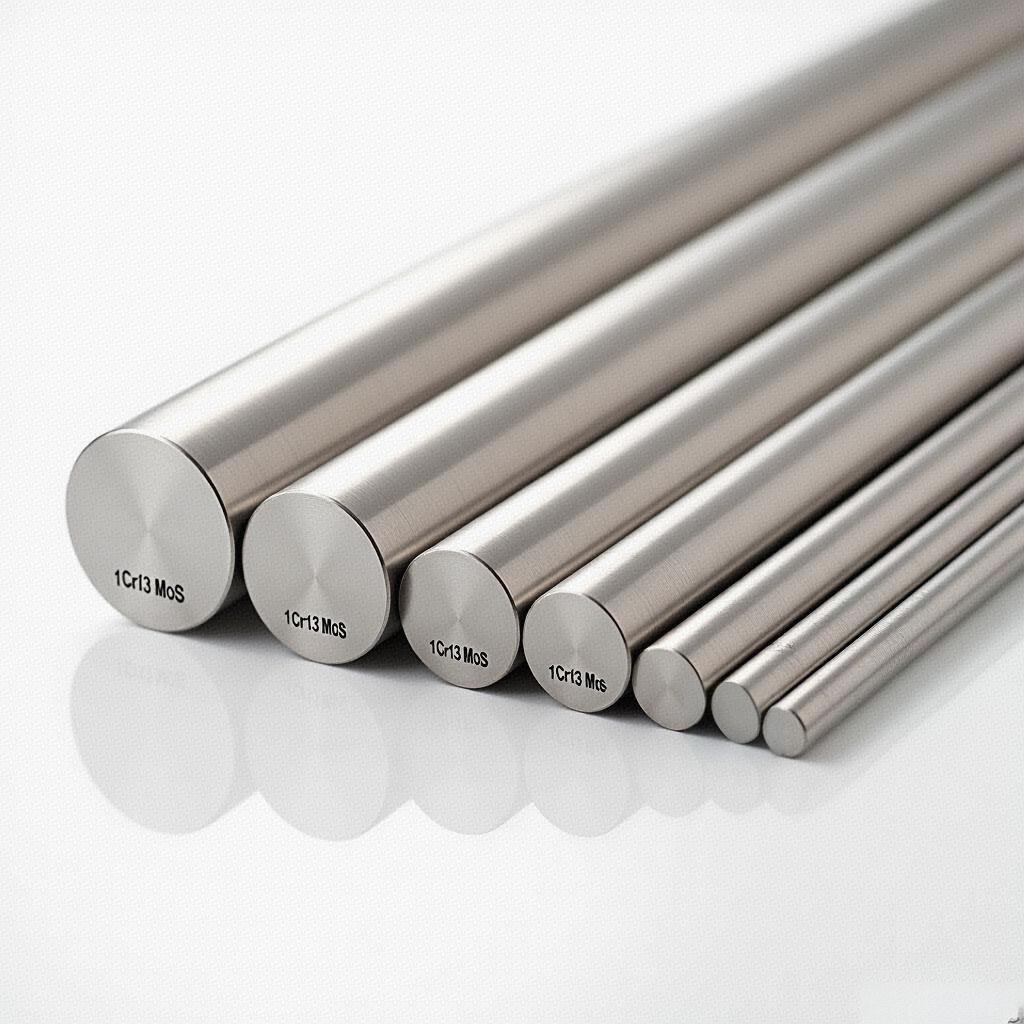
Martensitic Stainless Hardness Comparison

Carbon content is the primary differentiator — more carbon means harder but less weldable and slightly more susceptible to corrosion. Choose the minimum hardness grade that satisfies your application requirement.

410
HRC 35–42
General Structural
420
HRC 50–52
Cutlery / Surgical
440C
HRC 58–60
Bearings / Wear
Reference: 4140 alloy steel — HRC 28–34 (Q&T)
Reference: D2 Tool Steel — HRC 58–62
Selection rule: Specify 410 unless hardness >HRC 42 is needed. Move to 420 for cutlery/instrument applications. Specify 440C only when maximum hardness is required — it is the most expensive to machine and heat treat of the three.
Propriété 410 420 440C 304 (reference)
Carbone % 0.08–0.15% 0.15–0.40% 0.95–1.20% 0.08% max
Chromium % 11.5–13.5% 12–14% 16–18% 18–20%
Max Hardness (HT) HRC 35–42 HRC 50–52 HRC 58–60 Non-hardenable
Résistance à la corrosion Modéré Bon Very Good (for martensitic) Excellent
Soudabilité Limited (pre-heat) Difficile Non recommandé Excellent
Magnétique Yes ✓ Yes ✓ Yes ✓ No (annealed)
Usinabilité ★★★★ Bon ★★★ Modéré ★★★ Modéré ★★★ Modéré
Pièces typiques Valves, shafts, flanges, fasteners Cutlery, surgical instruments, dental tools Bearings, valve balls, knife blades, wear parts General corrosion-resistant parts
EN Equivalent 1.4006 1.4021 / 1.4028 1.4125 1.4301
Heat Treatment Process

From Annealed to Final Hardness — Our Managed Process

Martensitic stainless parts are machined soft, heat-treated, then precision-ground on critical surfaces. We coordinate all three stages as a single managed order — no inter-supplier coordination required from the customer.

🔩
Rough Machine
Annealed Condition
OD, ID, faces, and features machined with grinding allowance left on critical surfaces. Annealed stainless machines cleanly at this stage.
🔥
Austenitize
980–1065°C
Part heated to austenitizing temperature — 980°C (410/420) or 1010–1065°C (440C) — held to dissolve carbides into austenite matrix.
Quench
Air or Oil Quench
Rapid cooling transforms austenite to martensite — creating the high-hardness structure. Distortion controlled through fixture and orientation design.
🌡
Temper
150–370°C
Controlled tempering relieves brittleness while maintaining target hardness. Final HRC verified by hardness test on part or representative coupon.
Precision Grind
±0,005 mm
Post-HT OD/ID grinding recovers final tolerance on critical surfaces after heat treatment distortion. CMM verification of final dimensions before shipment.
Notes de usinage

Machining Martensitic Stainless — Considérations clés

Challenges with Martensitic Grades
!
Work-hardening — less than austenitic, but presentMartensitic grades work-harden less aggressively than 304/316, but still require sharp tooling and consistent feeds to prevent surface hardening and edge build-up.
!
440C is abrasive — high carbide contentThe high carbon / chromium carbide content of 440C is significantly more abrasive than 410 or 420. Carbide inserts wear faster — planned tool change intervals are essential for consistent results in production.
!
Post-HT machining requires grinding, not turningOnce hardened to HRC 55+, 440C and 420 cannot be conventionally turned — only CBN grinding or EDM are practical. Part design must leave appropriate grinding stock.
!
Heat treatment distortion must be anticipatedAll three grades distort during quench — critical diameters and faces must be planned with sufficient grinding allowance to recover tolerance after heat treatment.
How We Manage These Challenges
Machine soft, grind hard — planned sequenceAll martensitic parts are rough-machined in annealed condition with grinding stock, heat-treated, then precision-ground to final tolerance. This is our standard workflow, not an exception.
Grade-specific tooling and insert selection440C requires tougher carbide grades (PVD-coated, positive rake). We maintain separate tooling strategies per grade to optimize tool life and surface finish per batch.
Distortion mapped from experience, not guessworkKnown distortion patterns for 440C and 420 after quench are incorporated into the grinding allowance — we do not leave this to the customer to discover during first article.
Single-source heat treatment coordinationWe manage austenitizing, quench, and tempering as part of the order — hardness verified by test coupon or part surface measurement before releasing to grinding.
Capacité de fabrication

Comment nous usinons Acier inoxydable martensitique
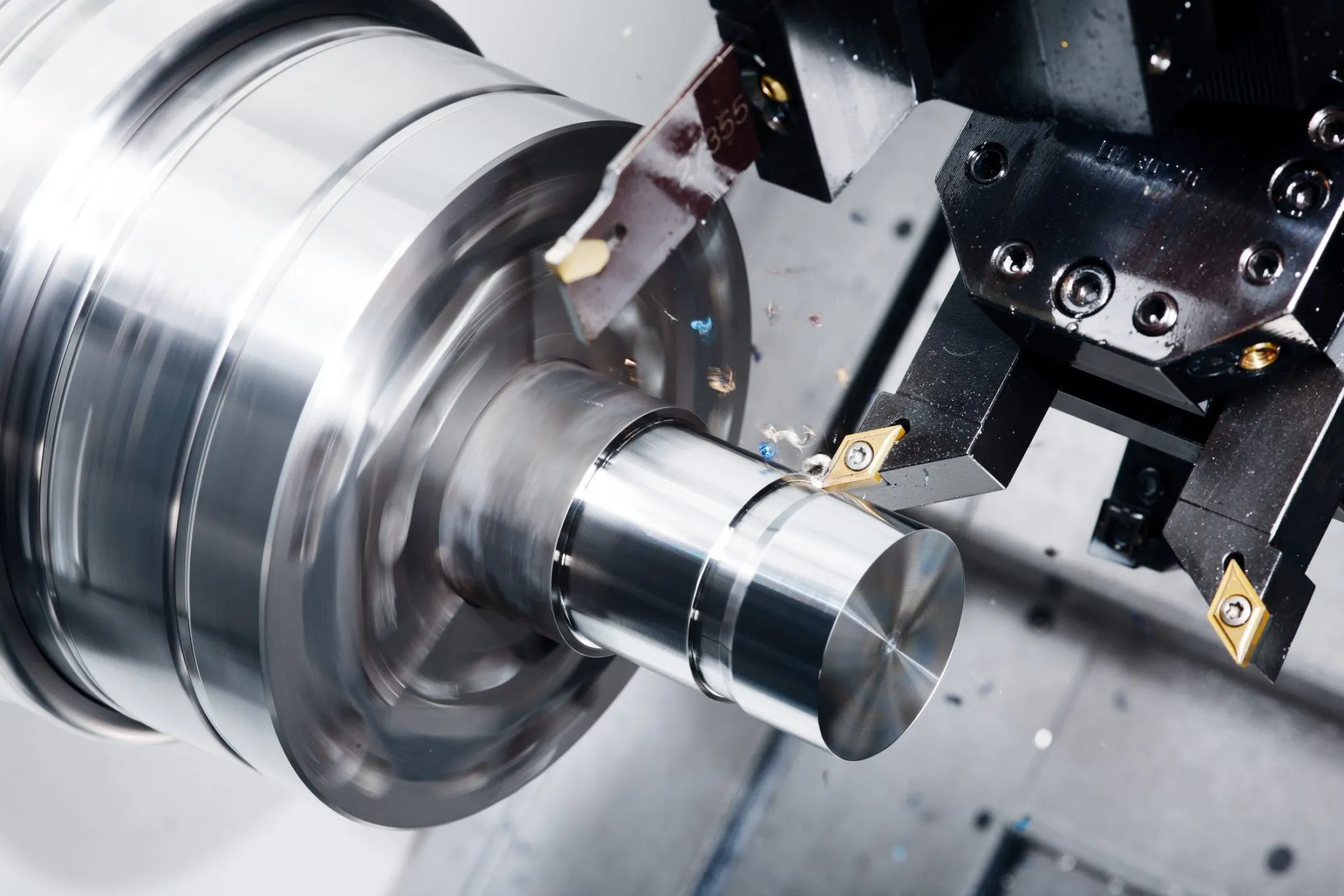
CNC Turning 410 420 Stainless Steel
PROCESSUS / 01
CNC Turning (Annealed)
Rough and semi-finish turning of 410, 420, and 440C in annealed or normalized condition. External profiles, OD steps, threads, grooves, and bores machined with designed-in grinding allowance on critical surfaces before heat treatment.
Annealed ConditionGrinding AllowanceTous les 3 grades
CNC Milling 410 420 Stainless Steel
PROCESSUS / 02
CNC Milling (Annealed & Pre-Hardened)
3-axis and 4-axis milling of 410 and 420 valve bodies, housings, flanges, and structural parts. 410 in pre-hardened (HRC 25–32) condition can be directly milled using optimized carbide tooling for some applications.
Corps de vanneCartersBridesPre-Hardened 410
Prototype to Production Martensitic Stainless
PROCESSUS / 03
De la conception à la production
1-piece prototypes through to production quantities of thousands of martensitic stainless parts. The full machine → heat treat → grind → inspect sequence runs for all quantities with no minimum order.
Pas de quantité minimumFull SequenceSame QC
Galerie d'applications

Typical Martensitic Stainless Parts Nous produisons

Precision Bearings & Races
Matériau440C — HRC 58–60 after Q&T
ProcessusTurning → Q&T → OD/ID Grinding
Secteur d'activitéAerospace · Marine · Food Machinery
Surgical & Dental Instruments
Matériau420 — HRC 50–52, polishable
ProcessusCNC Turning → Q&T → Mirror Polish
Secteur d'activitéMedical · Dental · Surgical
Valve Bodies & Pump Shafts
Matériau410 — HRC 35–42 after Q&T
ProcessusCNC Turning · Milling · Q&T
Secteur d'activitéOil & Gas · Chemical · Industrial
Valve Balls & Seats
Matériau440C — Corrosion + Wear Resistant
ProcessusCNC Turning → Q&T → Lapping
Secteur d'activitéFluid Control · Oil & Gas · Marine
Precision Pivot Pins & Shafts
Matériau420 (std) / 440C (max wear)
ProcessusSwiss Turning → Q&T → Grinding
Secteur d'activitéOptical · Instruments · Precision Mech.
Fasteners & Structural Hardware
Matériau410 — Best weldability, moderate HRC
ProcessusCNC Turning · Threading · Q&T
Secteur d'activitéMarine · Petrochemical · Construction
Secteurs desservis

Martensitic Stainless for Applications exigeantes

Medical / Dental
420
Roulements
440C
🔧
Valves / Pumps
410 / 440C
Aérospatiale
440C / 410
Maritime
410 / 440C
Oil & Gas
410 / 420
From Bar Stock to Hardened, Ground Part

Comment nous produisons Martensitic Stainless Parts

ÉTAPE 01
Matière première
410 / 420 / 440C annealed bar or billet with ASTM A276 / A484 mill cert — heat number, chemistry, and mechanical properties verified on receipt.
ÉTAPE 02
Usinage brut
CNC turning, milling, and boring in annealed condition. Grinding stock (0.2–0.5 mm per side) left on all critical surfaces before heat treatment.
ÉTAPE 03
Traitement thermique
Austenitize → quench → temper (+ sub-zero for 440C if specified). Hardness verified on test coupon or part surface before proceeding.
ÉTAPE 04
Meulage de précision
OD, ID, and surface grinding recovers final tolerance (±0.005 mm) after heat treatment distortion. Concentricity and roundness verified.
ÉTAPE 05
Contrôle et livraison
CMM dimensional report, hardness test record, material cert, and surface finish verification packed with every order. Worldwide delivery.
Post-traitement

Traitements de surface pour Martensitic Stainless Parts
Toutes finitions →
Passivation
Citric or nitric acid passivation (ASTM A967) removes free iron and strengthens the chromium oxide layer. Less effective on martensitic grades than austenitic due to lower Cr content, but provides a measurable improvement in atmospheric corrosion resistance.
ASTM A967410 / 420Light Corrosion Protect
Oxide noir
Hot caustic blackening provides a matte black finish with minimal dimensional change (<0.001 mm). Common on 410 and 420 valve components, tool bodies, and precision instrument parts requiring a non-reflective appearance with light rust protection.
~0 Dim. ChangeMatte Black410 / 420
Mechanical & Mirror Polishing
420 and 440C accept excellent polished finishes due to their fine carbide structure — Ra 0.1 μm mirror finish achievable. Standard for surgical instruments, dental tools, and cutlery where both hardness and surface finish quality are required.
Ra 0,1 μm420 / 440CSurgical Grade
PVD Coating (TiN / CrN)
Physical vapor deposition of TiN or CrN wear coatings on 440C parts. Applied after hardening and grinding — adds Hv 2200+ surface hardness and reduces friction coefficient, extending service life on wear surfaces, valve seats, and precision dies.
440CTiN / CrNWear Enhancement
HRC60
Max Hardness (440C)
±0,005mm
Post-HT Grinding
Ra 0,1μm
Mirror Polish (420/440C)
24hr
Délai de devis
Precision Grinding Stainless Steel Workshop
Pourquoi travailler avec nous

Pourquoi nous choisir pour Martensitic Stainless Machining

HT
Traitement thermique géré dans le cadre de la commande
Austenitizing, quench, temper, and sub-zero treatment (for 440C) coordinated and managed by us — not outsourced for the customer to manage separately. One order, one hardness-verified delivery.
GR
Post-HT Precision Grinding to ±0.005 mm
Critical diameters, bearing seats, and bore fits precision-ground after heat treatment. Concentricity and runout verified by CMM. Tolerances held consistently across batches — not just on first article.
SZ
Sub-Zero Treatment for 440C — Included When Specified
Sub-zero treatment (−75°C to −196°C) converts retained austenite in 440C to martensite, maximizing hardness and dimensional stability. We include this in the heat treatment sequence when the application demands it.
QC
Hardness Testing + CMM Reports + Material Certs
Rockwell hardness test records, CMM dimensional reports, and ASTM/EN mill certificates with every order. No hunting for documentation after delivery — everything ships with the parts.
FAQ

Foire Aux Questions

Common questions about 410, 420, and 440C martensitic stainless steel — hardness, heat treatment, machining, and surface finishing.

Les aciers inoxydables martensitiques sont une famille d'aciers alliés au chrome (généralement 11–18% Cr) pouvant être durcis par traitement thermique — trempe et revenu — pour atteindre des valeurs de dureté élevées jusqu'à HRC 60. Contrairement aux grades austenitiques (304, 316) qui ne peuvent pas être durcis et sont appréciés pour leur résistance à la corrosion, les grades martensitiques sacrifient une partie de cette résistance pour la capacité d'atteindre une dureté élevée, une résistance à l'usure et une tenue du tranchant. Ils sont la seule famille d'aciers inoxydables pouvant être trempés en profondeur comme l'acier à outils, ce qui les rend adaptés pour les couteaux, les roulements, les composants de vannes et les pièces de précision soumises à une usure critique.
Les trois grades diffèrent principalement par la teneur en carbone, qui détermine la dureté maximale atteignable et la résistance à l'usure. Le 410 a la teneur en carbone la plus faible (0,08–0,15%), ce qui le rend le plus soudable et le plus résistant des trois — utilisé pour des pièces structurelles générales, des corps de soupapes et des composants de pompes où une dureté modérée suffit. Le 420 a une teneur en carbone plus élevée (0,15–0,40%) permettant d'atteindre une dureté HRC 50–52, avec une meilleure résistance à l'usure — courant pour la coutellerie, les instruments chirurgicaux et les outils dentaires. Le 440C a la teneur en carbone la plus élevée (0,95–1,20%) de tous les aciers inoxydables standards, atteignant HRC 58–60 après traitement thermique — l'acier inoxydable le plus dur disponible, utilisé pour les roulements à billes, les couteaux de haute qualité, les sièges de soupapes et les surfaces de frottement de précision.
Martensitic stainless steels can be welded but require pre-heat and post-weld heat treatment to avoid cold cracking and hardened heat-affected zones. 410 has the best weldability of the three grades. 420 requires more care. 440C is generally considered difficult to weld and is rarely specified for welded assemblies — its high carbon content makes HAZ cracking a significant risk. If your part requires welding and stainless properties, consider austenitic 304L or 316L instead.
Après traitement thermique de trempe et de revenu : le 410 atteint une dureté HRC de 35 à 42 selon la température de revenu. Le 420 atteint une dureté HRC de 50 à 52. Le 440C atteint une dureté HRC de 58 à 60 — la dureté la plus élevée de tous les grades d'acier inoxydable standard. Ces valeurs de dureté sont réalisables après un austenitisation, une trempe et un revenu appropriés. Nous coordonnons le traitement thermique dans le cadre de la commande d'usinage, avec une vérification de la dureté fournie.
Parts are typically rough-machined in the annealed or pre-hardened condition, heat-treated to final hardness, then finish-ground or precision-turned on critical surfaces to recover final tolerance after heat treatment distortion. Machining in the hardened condition (particularly 440C at HRC 58–60) requires CBN tooling or grinding and is significantly more expensive. Our standard sequence is: rough machine → heat treat → finish grind critical dimensions → CMM verification. This sequence is coordinated and managed by us as a single-source process.
Unlike austenitic grades, martensitic stainless steel cannot be passivated as effectively due to lower chromium content and the presence of carbides. Common surface treatments include: passivation (improves corrosion resistance modestly — ASTM A967), black oxide (light protection, minimal dimensional change), PVD coating (for 440C cutting tools and wear surfaces — adds TiN or CrN wear layer), and polishing or superfinishing (for bearing surfaces and sealing faces). Hard chrome plating is also used on 410 valve stems and pump shafts.
440C is primarily used in applications requiring the highest achievable hardness in a stainless steel combined with moderate corrosion resistance. CNC machining applications include: precision ball bearings and bearing races, high-quality knife blades and cutting tools, valve seats and valve balls requiring corrosion resistance plus wear resistance, pump impeller wear rings, precision dies and forming tools, dental and surgical instruments requiring edge retention, and nozzle seats in fluid control systems.
Yes. Unlike austenitic stainless steels (304, 316) which are non-magnetic in the annealed condition, martensitic stainless steels (410, 420, 440C) are ferromagnetic — strongly magnetic in both the annealed and hardened condition. This is due to their body-centered cubic (BCC) or body-centered tetragonal (BCT in hardened state) crystal structure. If non-magnetic properties are required for your application, specify an austenitic grade instead.
Obtenir un devis

Envoyez votre dessin.
Obtenez un devis.

Chaque demande comprend une revue DFM — faisabilité des tolérances, confirmation du matériau et approche du processus avant le début de la production. MOQ 1 pièce.

24hr
Réponse au devis
Quantité Minimum de Commande 1
Prototypes OK
ISO
9001:2015
📐
Revue DFM sur chaque demande
Faisabilité des tolérances, stratégie de fixation et confirmation des matériaux. Retour spécifique et exploitable — pas de refus générique.
🎯
Inspection du premier article — Standard
Rapport FAI sur chaque nouvelle série. Certificats de matériaux et de traitement de surface inclus avec chaque expédition.
🔄
Même processus : Prototype à Production
Le plan de processus de votre prototype s'applique aux lots de production. Pas de requalification lors de la montée en gamme.
Usinage CNC 3 / 4 / 5 axes + tournage
Pièces structurelles complexes, arbres, boîtiers et composants de transmission. Métaux et plastiques d'ingénierie.
ISO 9001:2015 Fraisage 3/4/5 axes Tournage CNC Inspection CMM Livraison mondiale